
What Theology Actually Is

A field guide to thinking clearly about God
He was an eighty-five-year-old rocket scientist and began to cry in my Bible study. Let me explain. I was 23-years-old, probably too young to be a pastor; I didn’t think that at the time, but I see it now. I had the opportunity to lead a study on the attributes of God. In my role, at the church, I was the young adult pastor, this was one my first shots with the main service crowd as we called them. I got to the assigned room early, made sure the chairs were far enough apart from one another that you felt comfortable, but not so far that it felt like an intervention meeting. I had the coffee and snacks ready, fiddled multiple times with the napkins wanting to get them just right. 30 minutes later everyone showed up, I fumbled through the small talk (never a strong suit) and then began our lesson. We were about 15 minutes into the study and I was walking through God’s omniscient and omnipotence and that’s when it happened. The retired rocket scientist began to cry.
Nobody hands you a manual for what to do when the rocket scientist weeps. After the study ended I came up to him and with my best pastor voice at the time and I asked if he was okay? “I am eighty-five years old.” He said. “I have done all kinds of things in my life, had a wonderful career and I never realized until tonight that because God is all-knowing and all-powerful, even my smallest prayers matter to him.”
That is theology.
It’s not the footnotes, the seminary vocabulary, or knowing how to spell infranlapsariansim, infralabsarianism, infralasaparian, uh the one about God’s decrees. No, it’s a rocket scientist near the end of a long life finally seeing God clearly enough that the only response is tears. A.W. Tozer wrote in the opening of his 1961 book Knowledge of the Holy, “What comes into our minds when we think about God is the most important thing about us.” Everything grows out of that root. Your sense of your own worth, the way you handle suffering, and how you treat the person standing in front of you in line at Walgreens is shaped by what you think of God. Even deciding not to believe in God still forms the lens you look at the world through. The real question was never whether you had a theology. You already do. The question is whether the one you are living in is true.
Theology is just God-talk
The word theology splits into two pieces of Greek. Theos, which means God and logos which means word. Put them together and theology is God-talk, that is the simple definition. And unlike other “ologies,” biology, zoology, or cryptozoology,1 theology is the only ‘olgy’ where what is on the other end wants you to know it, and that as you move closer to the subject, He moves closer to you. Which means theology begins with listening before it ever gets to speaking. The English pastor and theologian William Perkins, writing in the 1590s, gave my favorite definition of theology, he said, “It is the science of living blessedly forever.”2 You can master Greek verb tenses and the fine print of every Calvinist debate from the Synod of Dort to the The Federal Vision Controversy and still wander right past the point, because the goal is a blessed life not the ability to wax eloquently on a Johannine pericope. Which is why studying God will turn into worship. You set out to understand something true about him, and somewhere in the work, like the apostle Paul you burst into worship, tears begin to well up and you find yourself praising instead of analyzing. The rocket scientist did not plan to cry. The doctrine of God became so large in his mind and heart that the visceral response was tears.
Yes, Christianity is a religion
In a lot of modern American churches, “religion” gets treated like a slur. It is on the billboards, the sermon series, and hero banners typically stating something like, “We are about relationship, not religion.” I understand the heart behind it, but it is not true. The christian faith is a community of worldwide believers, through all of history, united around similar beliefs; that Jesus died and rose again. We are united around similar rituals; being a part of a church and participating in baptism. We are united around similar devotion; reading the Bible and prayer. All these things are what make up a religion and allow for the development of doctrine.
If Christianity is not a religion, but a relationship, then we do not have beliefs developed through church history to give us a biblical worldview. We would lack any theological congruency with fellow believers, and over time we would no longer have churches, if it’s only about relationship. But, what is of most interest is that Jesus was into religion. He was a rabbi, a student of the Torah, and we cannot fully understand Jesus apart from the religion we find him in.
So, what is a better approach?
We are in a relationship with a God who created the Christian religion so we can have a Biblical worldview, a church family, and deep roots with Christians from all of history. Think about communion. When I pick up the bread on a Sunday morning, a believer in a small room in eastern Europe, a storefront church in Bogotá, and a handful of Christians in a village near the edge of the Sahara are doing it too. When Advent arrives, pastors on all seven continents will open the first chapters of Luke and read the same ancient words into the same dark December.
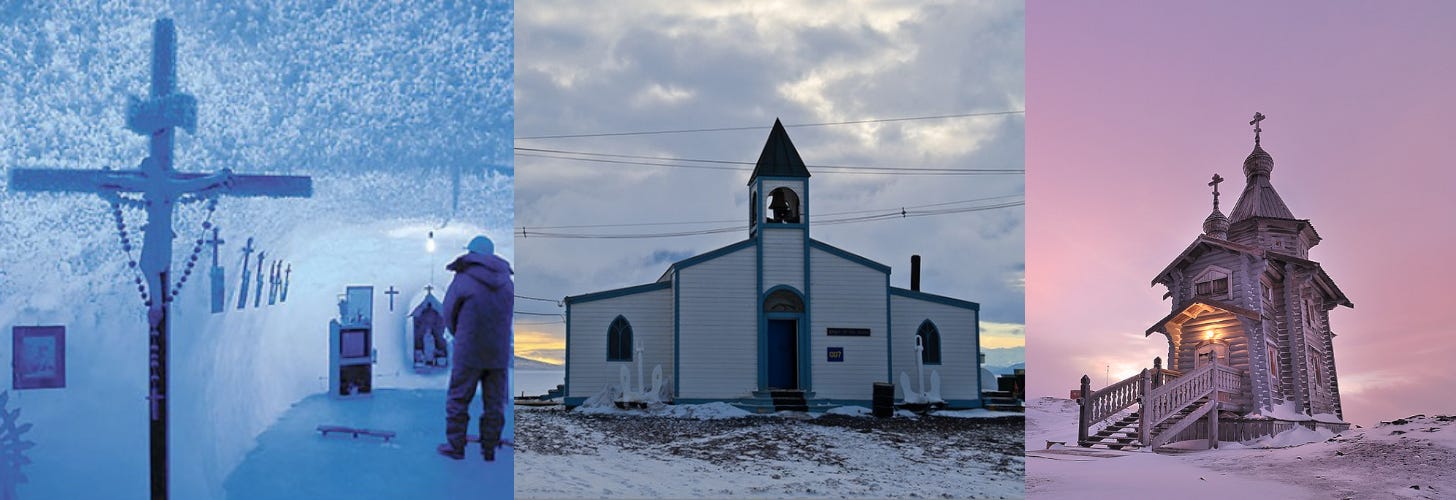
That shared rhythm is religion. It binds a global family into one body. It gives Christianity real weight and allows for doctrine to develop. It has the historical claim of a resurrection you can actually investigate. It has a whole way of living sketched out from the Sermon on the Mount. Now, run all the way down to the bottom and you find a living relationship with the God who made you. Christian doctrine cannot be divorced from the religion it finds itself in.
The five branches of theology
When most people say “theology,” they mean one specific branch. But there are five core branches that spring from the tree of theology.
Exegetical theology. This is reading a single text up close. Take the Gospels. Mark writes like a wire reporter, breathless, the word immediately firing off every few verses, the whole thing rushing forward like an action film—sans Keanu Reeves. Luke writes like a craftsman who refuses to let you miss a single detail. One reads like Hemingway, the other reads like Tolkien. Recognizing the difference, and asking what it means is exegetical work.
Historical theology. This traces how the Church’s understanding grew across the centuries. How did Augustine and the early fathers picture the cross? How did that picture shift by the time of the Reformation? Doctrine was never handed down in a sealed envelope from heaven. It was hammered out (Luther pun intended) over generations.
Practical theology. This is theology you live, It belongs to pastors, sure. But you are doing it at the kitchen table when you read Scripture with your kids, and you are doing it on a neighbor’s porch when you remind them in their grief that the story is not over.
Systematic theology. This gathers everything Scripture says about one theme and organizes it. Christology is the study of what the Bible says about who Jesus is. You have the doctrine of salvation, doctrine of the Bible, doctrine of the Holy Spirit and the list goes on. When someone uses the word “theology” with no other context, this is usually what they mean.
Biblical theology. This follows the single story of rescue running from the first page to the last. You can hold the whole arc in six words. God creates, man sins, Jesus saves. It moves through four acts: creation in Genesis 1 and 2, the fall in Genesis 3, then redemption beginning at Genesis 3:15, where God promises to crush the serpent’s head. Theologians call that verse the proto-evangelium, the first whisper of the gospel, and the story it tells runs all the way to the last two chapters of revelation which is where act four starts; the new heaven and new earth.
Here is a tip, start with the last branch. A lot of our worst theology comes from starting the story at Genesis 3, at the fall, as if brokenness were the sieve theology was filtered through. The healthiest theology starts two chapters earlier, in a world God called good, with people made in his image; handed real work to do.
Full disclosure, theologians carve this up in different ways, and in practice these five bleed into one another, but it is a helpful mental model for thinking about theology.
What makes theology good
Knowing what theology is does not guarantee you are doing it well. So here is the rubric I use that was first shown to me by one of my seminary professors, Dr. Derek Thomas.
Accurate. It tells the truth about who God really is, not the version of him we would find more convenient.
God-centered. It keeps pointing back toward his glory instead of bending it around us.
Doxological. It ends in worship. Watch Paul in Romans, mid-argument about the deepest things, suddenly breaking into song, like a scene from Hamilton.
Christological. It keeps circling back to the work of Jesus.
Eschatological. It leans toward Christ’s return. This has nothing to do with rapture charts or end-times timelines. It is remembering that the King who came is coming again.
Ecclesiastical. It is given for the church, the people God loves.
Motivational. It moves you to actually do something.
This also serves as a litmus test. If your study of God has made you harder to live with, more certain and less kind, something has gone wrong upstream. Good theology should leave you smaller and more loved and the God you are studying larger.
How you actually do this
Say you want to understand the Trinity better. Not to win an argument but to really understand the triune God: here is a path.
You start with the Bible, and you start wide. Not one proof text, but every passage in the Old and New Testament that touches on the doctrine you are studying. Pull all these verses together and begin sorting them into themes. Where does Scripture speak of God as one? Where does it focus on the plural nature? Like in Genesis where it says, “let us make mankind in our image.” Where does the weight fall on Jesus and where on the Spirit? The first thing you are doing is building a map of your own before you consult anyone else’s.
The whole time, you are praying, this is the art painted into the science. You are asking the Spirit to show you what your study alone cannot reach, and you are watching your own life for the places you have already felt the Trinity at work.
Only then do you open up to the theologians. A helpful tip is to first look at how the early fathers wrestled with this. Then the medieval theologians such as Thomas Aquinas and then the Reformers and modern theologians. After you have surveyed what theologians across the centuries have thought move beyond your own culture. How do believers in Seoul or São Paulo see it differently than believers in Florida? This gives you a broader perspective then the way your own cultural filter has shaped your thinking.
And the whole time you hold your goal loosely. You will not fully crack the Trinity open, nor should you think you will find an easy answer, any attempt to flatten the Trinity usually ends in heresy anyway. The Trinity is not water turning to ice and steam. It is not a three-leaf clover. Every tidy analogy collapses. The aim however, was never mastery, but a deeper relationship with the One you are studying, which is the whole point of theology in the first place.
Jesus loves me, this I know
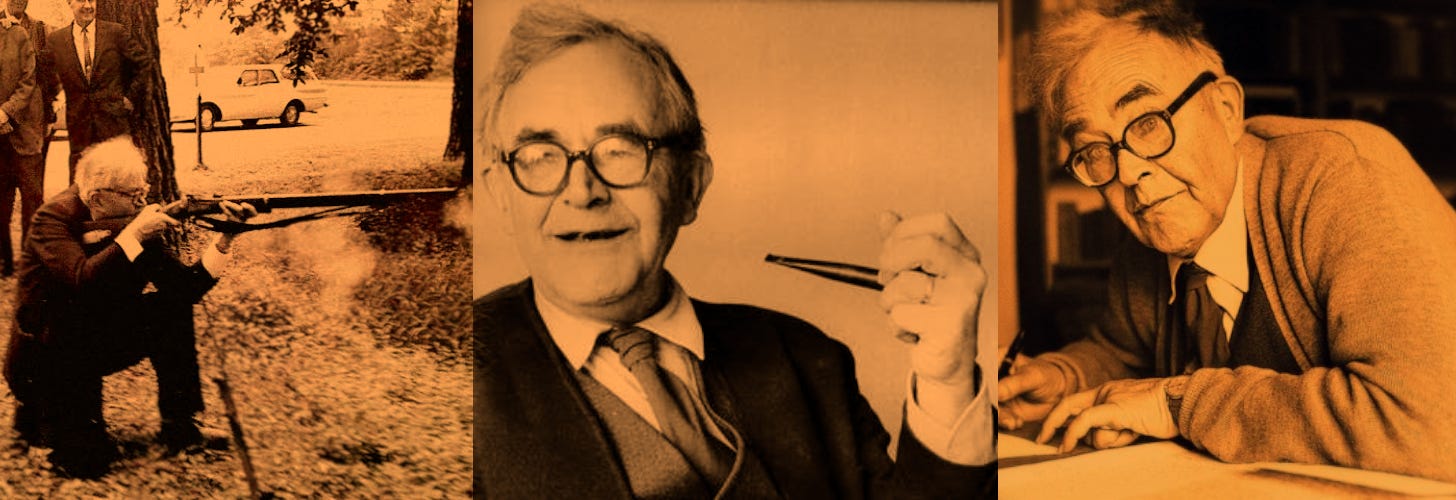
I want to leave you with Karl Barth. On his only visit to America in 1962, Barth was lecturing in Chicago, and during a question-and-answer session a student stood up and asked whether he could sum up the whole of his theology in a single sentence.
This was a man who had filled millions of words with the densest systematic theology of the twentieth century. He leaned back, paused, then he said it was something he had learned at his mother’s knee. “Jesus loves me, this I know, for the Bible tells me so.”3
That is the test. Good theology should never puff you up, it should undo you. It should walk you back, degree by degree and verse by verse, to the smallest and truest thing there is to say about God. So pick one thread and pull. The atonement, perhaps. Or maybe the theological reality that your smallest prayers land on the desk of the God who flung the stars into the dark and still leaned over to catch your words.
If you want help pulling that thread, that’s what the Theology Made Workshop is for. In about 40 minutes I walk you through the framework I spent twenty years building, so you can study any doctrine without getting lost or drifting into the weeds.

Not to be confused with Cryptology (the study of secure communication) Cryptozoology is a pseudo science that studies “hidden” or undocumented creatures like Big Foot, Mothman, or the Cowboys winning a super bowl.
Original quote found in: Perkins, William. A Golden Chaine, or The Description of Theologie, Containing the Order of the Causes of Salvation and Damnation, According to Gods Woord. Cambridge, 1591.
Karl Barth, Fragments Grave and Gay, trans. Eric Mosbacher (London: Collins, 1971), epilogue by Martin Rumscheidt.
Thank you. Very informative and thought provoking. Especially liked your comment that if our theology makes us more rigid and less kind, we're doing something wrong.
Wow thank you for this. God bless you.