
What Is the Unforgivable Sin?

I am in 8th grade, Fort King middle school. And I did it. I committed the one sin the youth pastor warned about (or at least I think I did). I was at my locker, before the next period when Trey asked if I believed in God? I froze, choked, closed the locker and sheepishly said no. I said no. The kid who grew up in church, read the Bible and served on Saturdays denied God. I lay in bed that night thinking to myself, did I just commit the unforgivable sin?

Right now someone is lying awake at 3 a.m. fixated on the spinning blades above convinced they have committed it. It’s the doubt that never disappeared, is God really out there, this can’t actually be true? It’s the sin that has tendrils suffocating their heart; they wonder, “is it too late for me?” Or perhaps they read the verses and saw their name written in the white ink.
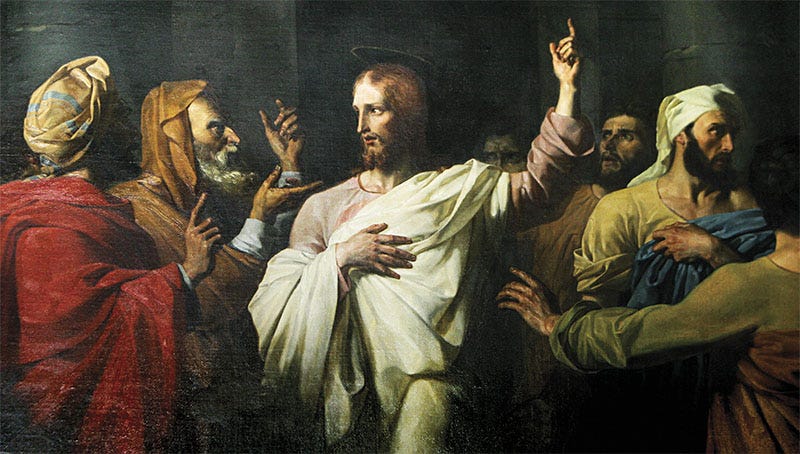
The verses in question are Mark 3:28-29. Here is the context, Jesus has just cast out a demon. The Pharisees, unable to deny the miracle, explain it the only way that lets them clutch at the illusion of control: “He is possessed by Beelzebul. By the prince of demons he is driving out demons.” Jesus responds by saying what has lead to more sleepless nights than any sentence in the Bible: “Truly I tell you, people can be forgiven all their sins and every slander they utter, but whoever blasphemes against the Holy Spirit will never be forgiven; they are guilty of an eternal sin.”
Every sin and every slander can be forgiven, but not this. The God who said He would leave the ninety-nine to find the one lost, has drawn a single line in the sand (maybe that is what He was writing in John 8:61). When Jesus spoke, He intentionally used the introductory clause that carried the most prophetic weight: “Truly I tell you.”2
What exactly is the unforgivable sin? Can you commit it by accident? Have you already done it? Does the God of love place someone beyond His forgiveness? Here are three serious answers that wrestle with this question; don’t panic.
The Specific Context View (It Was One Particular Moment)
The first view argues that much of the anxiety surrounding this verse comes from ripping it out of its original context. Look specifically at who Jesus is talking to, He is not responding to a confused seeker, someone deconstructing faith, or an individual in crisis. He’s talking to the Pharisees. These were trained religious experts, who knew and taught the miracles of the Tanakh (Hebrew Bible). They had just watched Jesus perform an undeniable miracle, and their public theological verdict was: that power came from Satan.
New Testament scholar D.A. Carson argues that blasphemy against the Holy Spirit in this passage is specifically the act of consciously, willfully, and publicly attributing the clear, undeniable work of God to the devil.3 This act doesn’t come from a place of confusion or spiritual weakness, but is a sober minded choice to attribute the work of the Kingdom of God to the work of darkness. In this case, it was a deliberate act of hardened, eyes-wide-open rejection, performed by teachers of the law who had every possible evidence in front of them and chose to call it evil. Under this view, the sin is not something anyone stumbles into accidentally. It requires three things to take place:
1. A direct encounter with the unmistakable work of the Holy Spirit
2. Full knowledge that it is divine
3. Willful, public rejection (this is not doubt nor fear), but active attribution of God’s work to Satan
This is why, proponents argue, the person lying awake at 3 a.m. almost certainly has not committed it. The Pharisees didn’t lose sleep over their verdict. The very fact that someone is terrified of having crossed a line reveals a conscience still alive and responsive to the Spirit, which is the opposite of what this sin requires. There is also a grammatical clue, though it's not in the word “blasphemes” itself. That verb in Mark 3:294 simply marks out the category of the person in view. The interpretive key comes one verse later. Mark 3:30 tells us Jesus issued this warning, “because they were saying, 'He has an unclean spirit.'” The verb “they were saying” (ἔλεγον) is imperfect, denoting ongoing, repeated speech, not a single outburst. The book of Mark frames the offense as a pattern. This is not the Pharisees having a one-time slip of the tongue, but is a sustained, settled posture of rejection. A life of looking at God's work and calling it demonic.
Now the challenge with the specific context view is that it can make the sin sound so rare and specific that it no longer carries any real weight. If the main theological context was the Pharisees in that moment, why does Jesus frame it as a general warning? The specificity is reassuring for sure, but it raises its own questions.
The Hardened Heart View (The Point of No Return)
The second view takes a longer view of the sin, not seen in a single moment or a few dramatic ones, but as a process. This perspective, held by theologians including John Calvin and more recently Scot McKnight, argue that blasphemy against the Holy Spirit is the final state of a heart that has spent a lifetime resisting the Spirit’s invitation until the capacity for repentance no longer functions.5
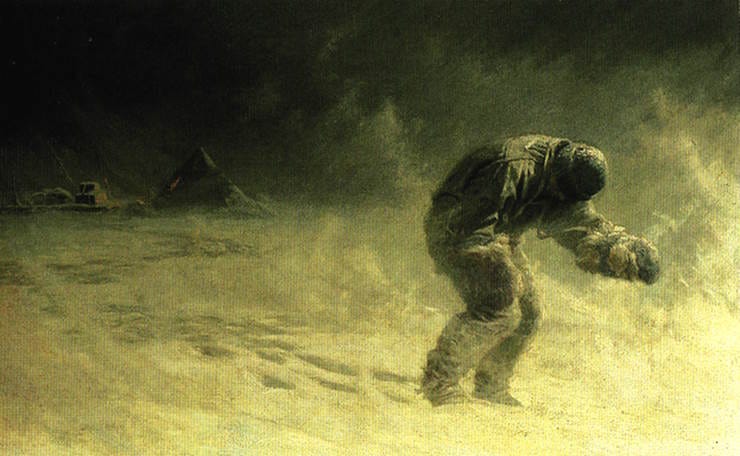
During Robert Falcon Scott’s doomed return from the South Pole, Captain Lawrence Oates developed severe frostbite in his feet. Initially he complained of the pain, then grew silent as the days passed. By the end, he could barely walk, but stopped mentioning the agony. His famous last words before walking out into the blizzard to die were, “I am just going outside and may be some time.”6 Oates suffering had gone silent before his body gave out. This is the hardened heart view. Like the effects of frostbite if exposure is repeated and ignored, the tissue gradually loses sensation. The damage is real, but the warning system is gone. Every time a person knowingly suppresses the Spirit’s conviction, the next suppression becomes easier, until they are completely numb to the process.
The sin, under this view, is not a dramatic single act. It is the accumulated result of ten thousand smaller choices to harden. The Pharisees of Mark 3 had not committed this sin in that one moment, but through years of building a theological system specifically designed to resist Jesus and the kingdom at every turn. Their public verdict was not the cause of their condition; it revealed the symptom of it.
This framework draws on several other passages for support. In Romans 1, Paul describes God “giving people over” to their desires, not as punishment, but as a consequence of sustained rejection.7 In Hebrews 6:4-6, the author warns of those who have “tasted the heavenly gift” and yet fallen away, suggesting that proximity to grace, if repeatedly refused, can harden into something irreversible.8 The danger is greatest for those who have been closest to the Truth, the ones who have felt the weight of it, who have seen it work in the lives of others and have spent years choosing deliberately, to look away.
The difficulty with this perspective, is that it can create a level of theological vertigo. If the line is drawn not by a single act but at the end of a long process, how does anyone know where they are in that process? What assurance can be held in the present?
The Paradox View (If You’re Asking, You Haven’t Done It)
The third view does not contradict the first two so much as it answers a slightly different question; not what is the unforgivable sin, but who has committed it?
Its answer: nobody who is worried about it.
Augustine was one of the first to articulate this clearly. The person who has truly blasphemed the Holy Spirit, he argued, is not anxious about forgiveness, because the defining feature of this sin is the complete absence of the desire for it.9 The Pharisees of Mark 3 were not wracked with guilt. They were not lying awake questioning themselves; but were satisfied with their verdict.
The troubling anxiety that drives people to this question is evidence they have not arrived at the answer they fear. This view draws its force from the broader New Testament picture of what the Holy Spirit does. In John 16:8, Jesus says the Spirit “will convict the world of sin.” The Spirit’s job is to create precisely the awareness and discomfort that drives people toward repentance. If you feel convicted, the Spirit is working. If you are asking whether you can be forgiven, you are demonstrating that the door is still open, because the desire to walk through it is still alive.
Charles Spurgeon, put it like this, “The sin against the Holy Ghost does not lie in a fear that you have committed it.”10 The person who has hardened past repentance does not fear they have done so—they have stopped caring. For Christians, this is not a permission slip to stop taking the warning seriously. The verse exists for a reason, and its weight is real. But the Paradox View reframes the question. Instead of asking have I committed the unforgivable sin? The more useful question is am I currently resisting the Spirit’s work in my life? That is something anyone can answer honestly.
The limitation with this view if taken too far it can flatten the warning entirely. If the mere act of worrying proves you are safe, the verse loses its sharp edge. The best version of this view holds both things at once; the genuine danger is real, and the anxiety about it is evidence you have not arrived there.
What the Question Reveals
The unforgivable sin is not a theological technicality designed to trap the careless. It is a description of what a human soul looks like when it has spent long enough moving so far from God, they can’t recognize His work even when it is in front of them. The Specific Context view says: it looked like Pharisees calling the Holy Spirit demonic. The Hardened Heart view says: it looks like years of deliberate resistance compounding into permanent blindness. The Paradox view says: it looks like a complete absence of the desire to come home.
What all agree on is this: it does not look like the person asking the question.
The fact that the verse disturbs you means the Spirit it describes is still at work. You do not mourn a door you never wanted to walk through. Which means the piece of theology that has haunted more Christians than almost any other is evidence that the door is still open.

If that’s you at 3am, I built Faith Without Fear for exactly that. It’s an online workshop, go at your own pace, and gain the tools to think confidently about God for yourself.
This they said to test him, that they might have some charge to bring against him. Jesus bent down and wrote with his finger on the ground.
In the Old Testament, prophets said “Thus says the LORD” attributing their authority to God. Jesus instead said “Truly I say to you” speaking entirely on his own authority. This was both a dramatic and a controversial shift, when Jesus would say this, he was making a direct personal authority claim and an implicit (which the original audience wouldn’t have missed) assertion of his divine-level standing. TLDR: This is God speaking not a prophet.
Carson, D. A. (1991). “Matthew.” In F. E. Gaebelein (Ed.), The Expositor’s Bible Commentary (Vol. 8). Zondervan.
βλασφημήσῃ, is an aorist subjunctive in a generalizing clause: “whoever blasphemes”
McKnight, S. (1996). Interpreting the Synoptic Gospels. Baker Academic.
Scott, Robert Falcon. Scott’s Last Expedition: The Journals of Captain R. F. Scott. Vol. 2. London: Smith, Elder & Co., 1913.
Therefore God gave them over in the sinful desires of their hearts. (Romans 1:24 NIV)
It is impossible for those who have once been enlightened… if they fall away, to be brought back to repentance. (Hebrews 6:4, 6 NIV)
Augustine of Hippo. (1887). Sermon 71: On the Words of the Gospel, Matthew 12:32. In P. Schaff (Ed.), Nicene and Post-Nicene Fathers (Vol. 6). Christian Literature Publishing Co.
Spurgeon, C. H. (1858). “The Blasphemy Against the Holy Ghost.” Sermon No. 193, New Park Street Chapel, Southwark.
Where I’m at in wrestling with that text: Could it be that the unforgivable sin is to think that there is such a sin that God cannot forgive or deems unforgivable (which would be to deny, to some degree, the work of Holy Spirit/Christ who came to destroy the works of the devil)?
I’m also thinking along the lines of Matt. 6:14-15, where one cannot receive forgiveness from God if it’s not extended to others, in tandem with Paul’s words in Romans about grace abounding more plentifully than sin.
Anyways, appreciate you Jordan!
This is a good overview of the positions and a great pastoral point about the person concerned about it.
Personally, I take a bit of a different position. It's merely calling good evil and calling evil good. That's mentioned fairly often in the Bible. It both happens in individual situations and becomes more prevalent over time as you continue to do it. It's unforgivable both because it can't be excused or overlooked (you can be mistaken about the nature of the father and the son but not about what is good and evil) and because you can't receive grace and forgiveness if it's given when you get it mixed up. So it's both a warning and a declaration. We've all done it - the key is to repent and turn back before it's too late.