
The Tower of Babel: When Human Unity Became Dangerous

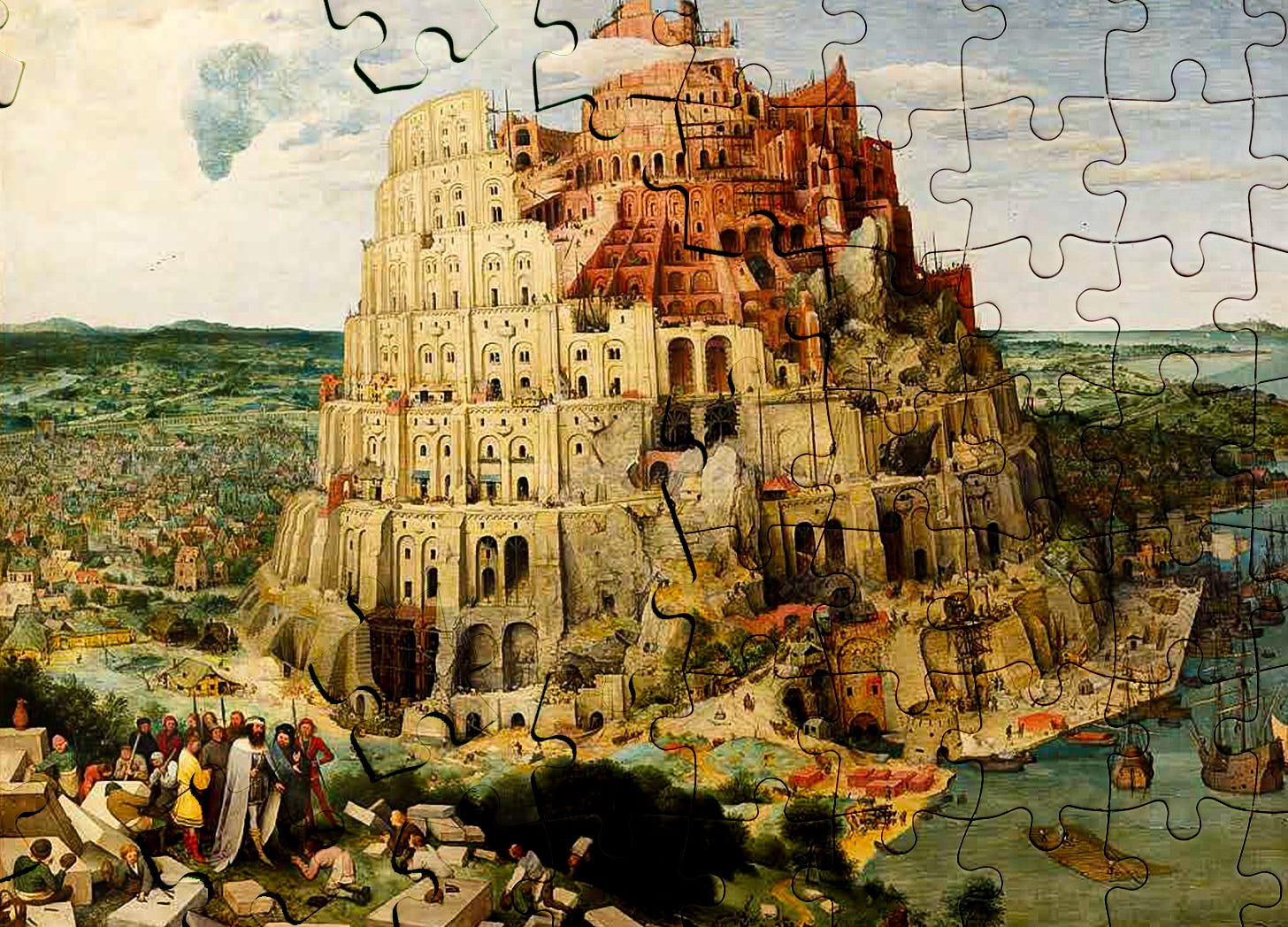
The Tower of Babel
Following the Flood in Genesis, the survivors were given a familiar command: “be fruitful, multiply and fill the earth.”1 Instead, they did the exact opposite. They huddled together in a plain called Shinar and built a “city and a tower with its top in the heavens.”2
And God was not happy about it.
Sounds like a strange reason for God to get angry. Why would the Creator of the universe be threatened by a pile of bricks? If God didn’t like tall buildings, He’d have a serious problem with Dubai or New York City.
The puzzle of Babel was not about the height of the building. At the foundation of the project laid this blueprint: “Let us make a name for ourselves, lest we be scattered over the face of the earth.”3 The issue with Babel wasn’t about architecture. It was a massive cultural and technological shift that threatened the future of the human race and spit directly in God’s face. Here are three views on what Babel was about.
1. The Technological Theory (The “Bricks vs. Stone” View)
The text gives a specific construction detail in Genesis 11:3 that feels minor at first, “They used brick instead of stone, and tar for mortar.” In the ancient world, stone was the standard.4 Stone was something you found; you didn’t “make” it. But bricks were a human-made technology. By moving to kiln-fired bricks, humanity was essentially inventing the Industrial Revolution of their age.5
Enter the birth of the autonomous city. By using tar (bitumen) as mortar, they were creating a waterproof, indestructible structure. The tower was going to be a Flood-proof fortress. It was a technological middle finger to heaven—a way of saying, “We don’t need to trust God’s promise never to flood the earth again. We’ve built our own safety.”
The answer to the Babel puzzle in this view wasn’t an issue of innovation in architecture. It was innovation leveraged to resist God’s command. Innovation that thought it could move beyond its Creator.
2. The Political Theory (The “Ziggurat & Centralization” View)
Now to view two. Archaeology gives a strong clue about what the Tower of Babel likely was: a ziggurat.6
These weren’t overpriced residential towers overlooking St. Pete pier7 or monuments to human achievement. Ziggurats were temple structures. They were massive stepped pyramids built as meeting points between heaven and earth.
At the top was a shrine where priests performed rituals to host and manage the presence of the divine. From this perspective, Babel was an attempt to centralize access to God.8 The tower wasn’t humanity trying to connect to God. It was humanity trying to put God under new management. Because where religion is centralized, power follows.
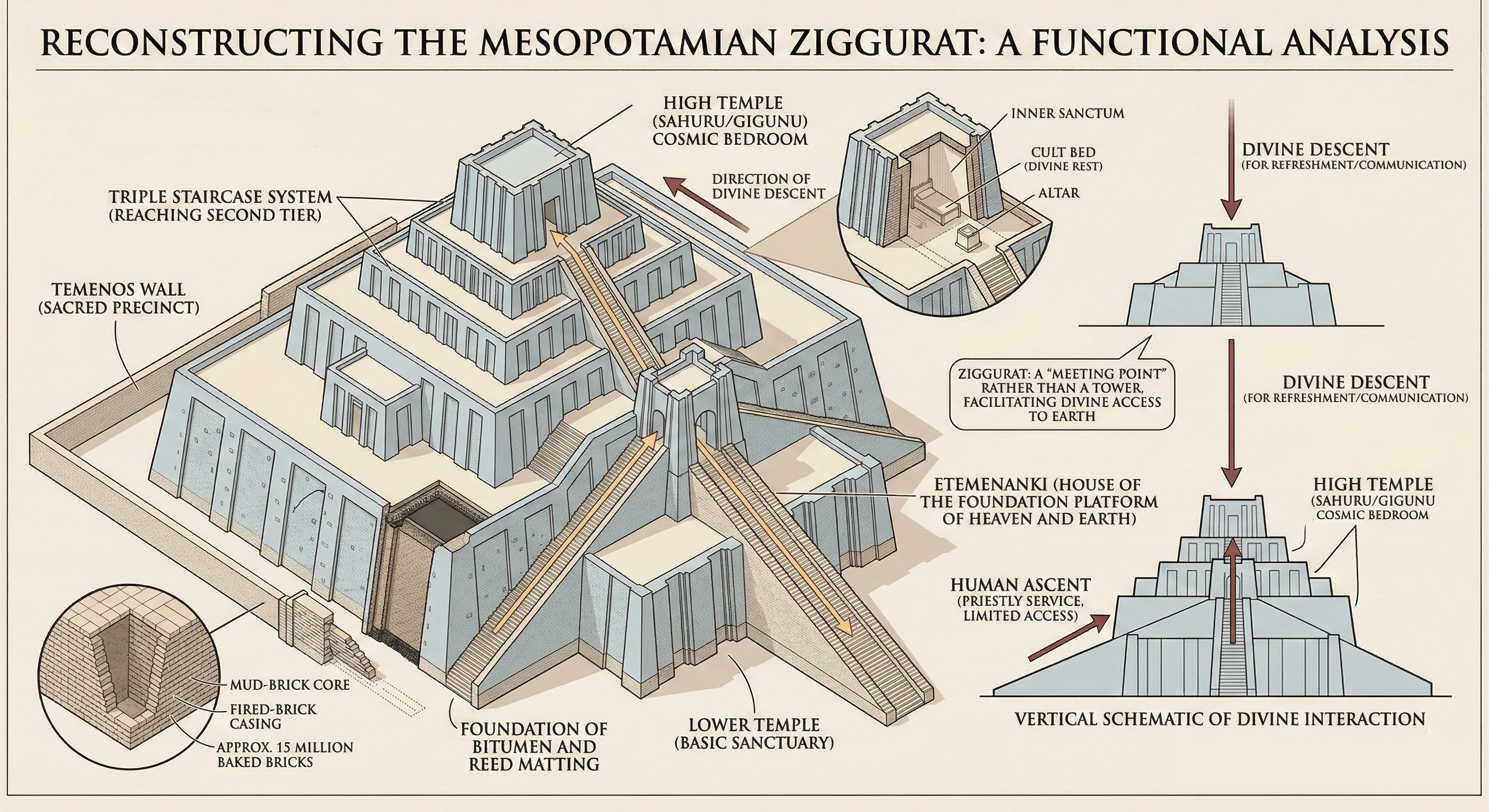
In ancient cities, the temple controlled the economy, the calendar, the workforce, and political order. By building a single city with a single tower, humanity wasn’t just uniting culturally, but creating a system where spiritual authority, political power, and social life were all concentrated in one place.
Genesis tells us the people had “one language and the same words.”
Which meant there could be complete coordination. A unified population, organized around a single vision, led by a centralized system with no friction, no disagreement, and no reason to spread out.
God’s judgment of confusing the languages broke the system before human unity hardened into something capable of scaling pride without limits. The confusion wasn’t chaos for its own sake, or that God was offended. It was restraint.
Diversity disrupted the concentration of power before human unity hardened into something dangerous.
3. The Historical/Babylonian Theory (The “Etemenanki” Connection)
Similar to the second theory, here is what a Babel-scale project may have looked like in history and why it would fall apart.
In the center of ancient Babylon stood a massive structure called Etemenanki,9 a towering ziggurat whose name meant “The House of the Foundation of Heaven and Earth.” Ancient inscriptions from kings like Nebuchadnezzar describe rebuilding this tower, claiming it had fallen into ruin in earlier generations and needed to be restored.
The parallels with Genesis are worth noting. The Bible places Babel in the land of Shinar;10 the same region where Babylon later rose to power. It describes a tower intended to reach the heavens and a unified population organized around a single massive project. Some scholars believe the Babel story reflects Israel’s theological memory of Babylonian culture; its architecture, ambition, and claim that human systems could bridge heaven and earth.11
Projects like building an Etemenanki, were also fragile.
Massive building efforts required political unity, economic stability, and a coordinated labor force (just imagine the HR nightmare). When empires fractured, supply chains collapsed. Workers disappeared. Funding dried up. Construction stopped. Ancient cities are full of unfinished monuments. The remnants of systems that lost the ability to hold themselves together.
In this view, what Genesis describes as the confusion of languages may reflect social collapse: the sudden breakdown of shared identity, coordination, and trust. When people no longer share the same vision, same loyalties, or the same story, the largest projects become impossible.
This could have been a civilization that simply stopped agreeing on who they were and what they were building.
4. The Theological Reversal
The story of Babel doesn’t end in Genesis. In Acts 2, the nations gather again—Jews, Medes, Egyptians, Romans—people from across the scattered world. But this time, something different happens.
At Babel, unity produced an empire with a single center. At Pentecost, the Spirit didn't restore that unity, instead He created something new: a community defined not by a common language or a single location, but by a shared Lord. The scattered nations weren't linguistically reunited. They were constituted into something Babel could never build; a people whose center was not a tower, but a Person. God didn’t erase the diversity of language. He spoke through it.
Babel was uniformity built on human ambition. Pentecost was unity created by the Spirit. Humanity tried to reach heaven by building a tower. At Pentecost, heaven came down.
Conclusion
So what does Babel look like today?
It looks like any system—a church, a company, a culture, a family—where one vision, one voice, and one power structure has quietly made God optional. The question worth sitting with isn't whether Babel is ancient history. It's asking if there are spaces where you've stopped needing to trust? Babel shows us that God isn’t afraid of our buildings; He’s concerned about our concentration of power.
And the gospel doesn't guarantee that institutions built in its name escape Babel's blueprint.
When humanity gathers in one place with one mind and one ego, we eventually decide we don’t need a Creator. God didn’t destroy the tower because it reached the clouds; He confused the language because He knew that if we stayed unified in our pride, there would be no limit to the damage done.
At Babel, humanity said: “We will rise.”
In the Gospel, God says: “I will come down.”

Enjoy the Bible’s “wait… what?” moments?
Here are three more puzzles to put together:
Genesis 9:1
Genesis 11:4
Genesis 11:4
Harriet Crawford, Sumer and the Sumerians, 2nd ed. (Cambridge: Cambridge University Press, 2004)
This is rhetorical. No ancient historian that I know of calls kiln bricks the “Industrial Revolution of their time.”
John H. Walton, Genesis, NIV Application Commentary (Grand Rapids: Zondervan, 2001)
Personal antidote: my wife and I were married at St. Pete Beach 15 years ago on March 25th.
John H. Walton, Ancient Near Eastern Thought and the Old Testament (Grand Rapids: Baker Academic, 2006)
Andrew R. George, Babylonian Topographical Texts (Leuven: Peeters, 1992)
Genesis 11:2
Gordon J. Wenham, Genesis 1–15, Word Biblical Commentary 1 (Dallas: Word Books, 1987); John H. Walton, Genesis, NIV Application Commentary (Grand Rapids: Zondervan, 2001); Victor P. Hamilton, The Book of Genesis: Chapters 1–17, NICOT (Grand Rapids: Eerdmans, 1990); Walter Brueggemann, Genesis, Interpretation (Atlanta: John Knox, 1982).