
The Rider of Worry: Why You Can’t Rest
Even When You Want To

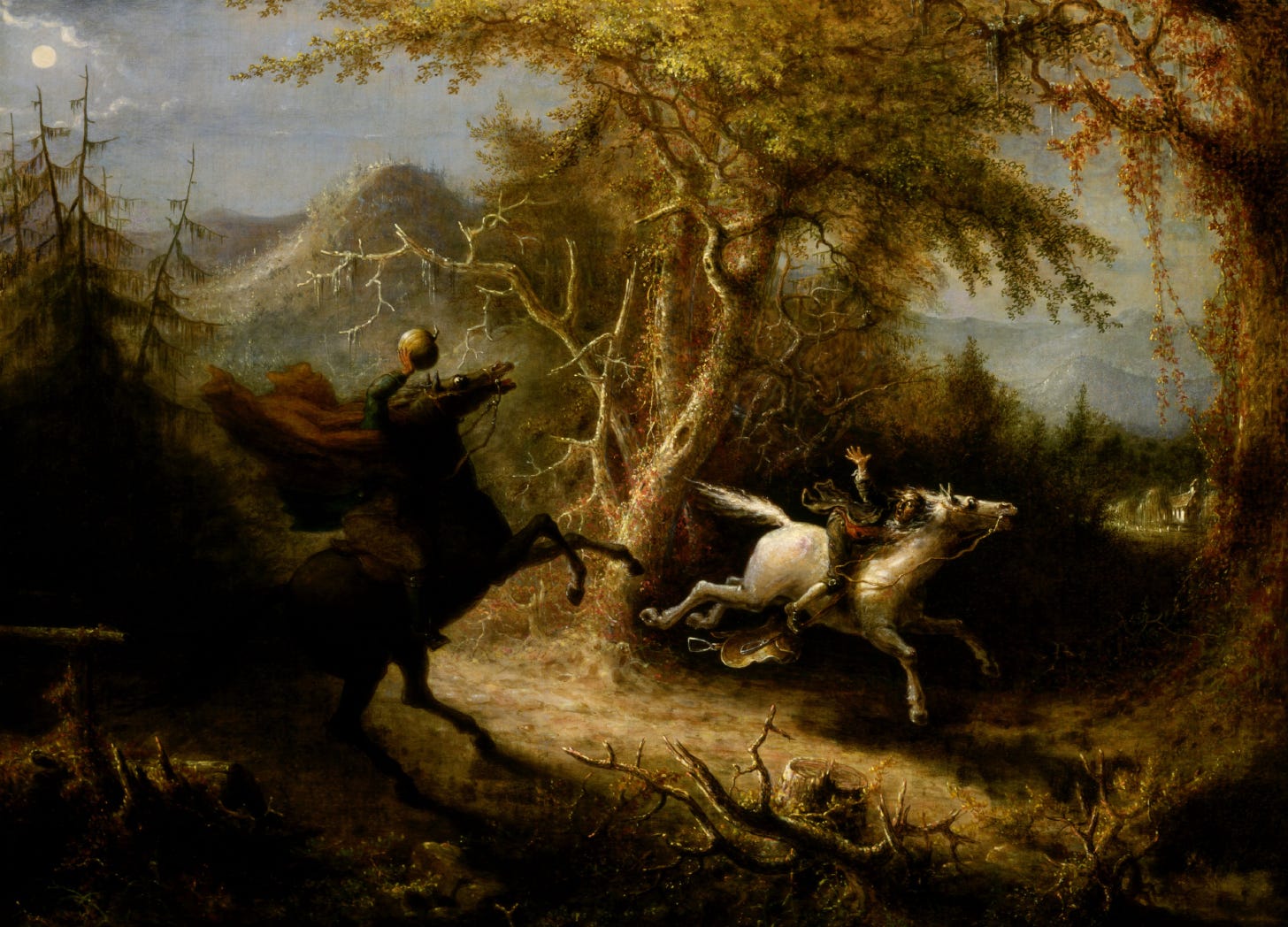
This is the article I need. I suck at resting and I don’t mean that in a self-deprecating way. I mean in the I have been watching the Dodgers in the playoffs, while editing Theology Made videos, and on commercial breaks I fold laundry type of suck at resting. Most of my adult life, time off meant catching up on grading papers or working on the next project. When I did take time to rest, it was rare I felt energized or engaged after. I would do the activities of rest, but something was missing. What I discovered were enemies that had been subverting my rest. Enemies standing in the way of peace.
I found there to be three horsemen of unrest.
This article will only look at one of the riders, else the dreaded warning from Substack beckons that my work is too long—or nay, I recklessly abandon the algorithm god’s expectation of sacrifices (I mean articles between 1000-2000 words).
Three horsemen, the riders seeking to depose our rest. Jumping in the way of the peace our souls crave. Their tactics are subtle and disloyal, but once identified, you begin to see, “Oh, that’s why I am not as rested as I could be.” My hope is this leads to a better path to peaceful rest for you.
The Rider of Worry
The rider of worry gallops quietly, showing up like a personal assistant. A personal assistant manages your tasks, handles communication, and anticipates needs. Exactly what worry wants you to think, it masquerades as a personal assistant there to offer it’s support.
The rider of worry trots beside you, whispering, “I’m helping you stay prepared. You don’t want to drop the ball.” Like a personal assistant with a clipboard, it keeps running through your mental schedule, rehearsing every worst-case scenario, trying to convince you it’s keeping you safe. But worry doesn’t manage your life, inevitably it micromanages your peace.
A good personal assistant manages the details, but worry attempts to grab the reins and control outcomes. However, there’s a problem. Worry can’t manipulate the future, so it ends up draining your energy in the present. A good personal assistant helps you identify what work is actually yours. Worry keeps you on the track working overtime on things that aren’t your responsibility.
Why do we allow the rider of worry to disrupt our rest?
We run to worry because it is more comfortable than the present. Like a good personal assistant, who you can lean on, worry is a sounding board.
Ultimately we find security in worry.
There are three reasons we keep letting worry ride beside us.
(1) Worry feels familiar and comfortable
The constant draw towards worry, forms a habit loop in our brains. Worry is a quick and accessible habitual coping mechanism that provides a facade of comfort. Worry tricks the brain into believing it’s doing something and activity must be better than inactivity.
Each time worry temporarily reduces uncertainty or anxiety (even if nothing actually changes), it rewards the brain’s “worry circuit.” Over time, it feels safer to worry than to not worry. Worry becomes our default response. This personal assistant Teams you (obviously worry would use Microsoft) for a quick chat, “let’s hit the track and work through worst-case scenarios, we don’t want to be surprised 🫨.”
(2) Worry gives us the illusion of control
Worrying feels like we’re taking action or preventing bad outcomes, even though it changes nothing. The act of worrying creates a false sense of agency, “If I think about it enough, I can keep it from happening.” Psychologists call this the illusion of control1. The quiet lie our minds tell us is that if we just keep worrying, we’re somehow steering the horse.
(3) Worry allows us to avoid dealing with the issue
This is a defense mechanism where we mentally or behaviorally avoid dealing with a stressor because confronting it feels too overwhelming. Worry makes it bigger in our minds than it actually is. Because it’s so ‘big’ worry tricks us into a false engagement—thinking, planning, analyzing—but it actually keeps us stuck in our heads rather than taking concrete action or facing the underlying emotion.
The result is that worry becomes a distraction from discomfort. We stay busy rehearsing “what ifs” instead of addressing, “what is.”
All that thinking feels helpful in the moment, but here’s what it actually does to your soul; worry becomes an unexpected hurricane of fear carving a path through your mind while knocking down every good and peaceful thought you have. Worry is living in a not yet that is imagined to be worse than your now. And the power of worry is that it puts blinders on your mind as you follow along its path.
Jesus regularly asked, What’s in the here and now? Not those exact words, but he drew people back to the present. Take off the blinders, leave the imaginary not-yet, come back to the now. This is on vivid display in Matthew’s gospel.
25 “Therefore I tell you, do not be anxious about your life, what you will eat or what you will drink, nor about your body, what you will put on. Is not life more than food, and the body more than clothing? 26 Look at the birds of the air: they neither sow nor reap nor gather into barns, and yet your heavenly Father feeds them. Are you not of more value than they? 27 And which of you by being anxious can add a single hour to his span of life? 28 And why are you anxious about clothing? Consider the lilies of the field, how they grow: they neither toil nor spin, 29 yet I tell you, even Solomon in all his glory was not arrayed like one of these2.
It would be easy to think of Jesus as a first century Bob Marley singing about how “Every little thing is gonna be alright.” (Don’t act like you didn’t just picture the music video, Jesus swaying with the birds and flowers.)
But that’s not what Jesus is saying here. He calls out birds and flowers because the birds live higher and the flowers live lower, rising above and below the circumstances in life. They know where they are supposed to be at every given moment. They don’t look around wondering if there’s something else they should be doing. The birds and flowers are simply present in the here and now. They are located in the only place they can actually be.
So, hold your horses. Worry is not your friend. Worry is not going to help you find the rest your soul craves. What’s here now? What’s in this present moment? Therefore do not be anxious about tomorrow, for tomorrow will be anxious for itself. Sufficient for the day is its own trouble3.
Rest begins when you let tomorrow’s storm stay in tomorrow.

And if you’re ready to turn this reflection into a rhythm, check out my devotional Grace Over Grind written for achievers learning to rest in grace, not exhaustion.
Langer, E. J. (1975). The illusion of control. Journal of Personality and Social Psychology, 32(2), 311–328.
Matthew 6:25-29
Matthew 6:34