
The Great Debate

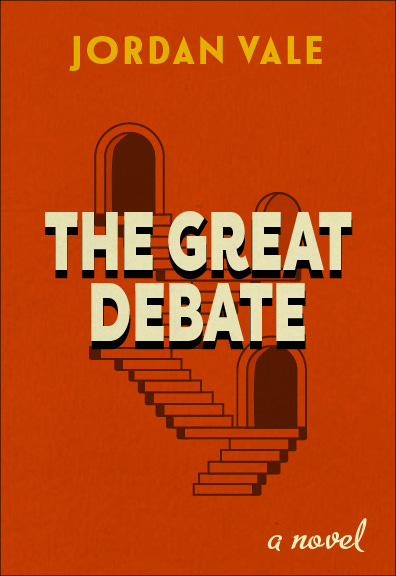
This is an excerpt from a novel I am working on called The Great Debate. It is a theological novel that follows a disillusioned pastor who stumbles into a supernatural realm where history’s greatest theologians are locked in an ongoing, spirited debate about the nature of God, truth, and faith. This is the first chapter.
Chapter 1: The Silence After the Storm
The rain hadn’t stopped for hours.
It tapped against the window panes of Elias’s upstairs study at the church with no consistent pattern. Why do we expect a pattern in nature’s chaos, like it owes us order? The storm had rolled in around dusk, but he hadn’t bothered to turn on a light. Only a burnt orange desk lamp cut through the darkness now, casting a dull circle across yellowed pages and a half-empty bourbon glass beginning to leave a ring on the desk.
He sat hunched in his chair, eyes fixed on a book he wasn’t reading.
Confessions, by Augustine. He wasn’t sure why he pulled it off the shelf. Hoping to find some sense of inspiration, or maybe hoping that this was all real. He used to quote parts of it from memory. Now the words bled together, distant and hollow.
On the wall behind him hung a photo, framed, yellowed from time and slightly crooked. It was the day Elias was ordained, elders arms outstretched behind him, his family in front of him, he looked so young and hopeful, but naive.
He hated that picture now. Not just because he looked young and naive but because every smiling face behind him had either walked away, turned on each other, or become a symbol of the very institution he no longer trusted.
He remembered how one elder told him to “just preach the gospel and stay out of politics” the week after George Floyd was murdered. That was the beginning of the end. Not because he got angry but because he stopped believing the gospel could reach hearts so calloused.
With a slow exhale, Elias closed the book and rubbed his face with both hands. The stubble on his jaw scraped against his palms. He hadn’t shaved in days. Maybe a week. Time had blurred like the ink on his sermon notes, the ones he stopped writing after realizing half the church cared more about parking lot drama than the gospel reaching their neighbors.”
He leaned back and stared at the ceiling.
“Where did You go?” he said aloud.
No answer. Not even the echo of his own voice. Just the inconsistent pattern of rain and the harsh tick of the clock on the bookshelf. The kind of tick you never notice, until silence makes it deafening.
“You were the fire in my bones. Now… nothing but smoke.”
A jagged flash of lightning lit the room. Thunder cracked seconds later, sharp and sudden.
And then back to the inconsistent tap of rain and the tick of the clock.
Elias stood. His chair scraped backward across the wood floor. He grabbed the book, Augustine’s well-worn volume and stood staring at the gold-lettered spine.
“St. Augustine,” he huffed.
“You had all the answers, didn’t you? Grace. Sovereignty. Hope. The words sounded more like sermon series branding than anything real.”
“Take up and read.” you said.
His voice broke.
“And yet here I am. Empty.”
With a grunt, he flung the book across the room. It struck a high bookshelf, knocking down a row of books. The impact echoed in a study full of books, yet somehow felt empty..
As Augustine’s Confessions thud on the ground, something was showing behind the other books it had knocked over.
Elias paused.
The old shelves, hand-carved, walnut, inherited from some dead seminary donor had shifted. A narrow seam had appeared where there hadn’t been one before. He stepped closer, the sound of the clock’s tick suddenly replaced by the sound of his heart beating.
Light was coming from behind the bookshelf and a sound as if faint voices were in the distance. He stood still. The whispering voices behind the shelf grew clearer layered, distinct, almost… familiar. Then the seam widened with a mechanical groan and the bookshelf creaked open slowly, revealing, stairs. A spiral staircase, descending into warm, golden light.
Elias starred.
“Wonderful. God goes silent and now the bourbon starts talking.”
He hesitated.
Then he stepped forward.
The air changed as he descended. Warmer, richer, tinged with incense and candle wax and something older, parchment, for a brief moment the smell brought him back to studying in the library as a first year seminary student, looking out over the courtyard as the works of Vos, Ridderbos, and Kuyper lay before him.
Vaulted ceilings stretched dozens of feet above, supported by columns carved with words in every language Elias could recognize and many he couldn’t.
The space was both a library and a sanctuary. Towering bookshelves arched like choir stalls, their shelves glowing faintly with golden script. In between them stood reading tables stacked with scrolls and illuminated manuscripts. Overhead, stained-glass windows floated not mounted, but suspended in midair, rotating slowly like planets in a solar system.
Each pane shimmered with motion: animated scenes from church history. The Council of Nicaea, robes swirling and fingers pointing; The hammer blow at Wittenberg echoing louder than it should, as if it still shook the earth. revival tents in the Appalachia, the wind lifting canvas and voices in equal measure.
Books drifted lazily through the air like birds migrating between shelves. Some murmured aloud, their voices distinctly old, learned, and thoughtful, while others seemed to whisper directly into Elias’s thoughts, snippets of Latin and Greek threading into familiar theological phrases.
And beneath it all, there were voices. Not sermons. Not shouting.
Debate.
It filled the space like organ music: complex, layered, respectful, even when sharp. Voices of conviction, not volume. Logic married to love, and disagreement without disdain.
Elias stepped forward, breath caught in his throat.
A figure leaned against a marble pillar near the center of the chamber, holding a delicate china teacup and wearing a suit three styles out of date. Rotund, bearded, and twinkle-eyed.
The man looked up. Smiled.
“Ah,” he said. “A visitor from the land of the living. Or is it the land of the merely existing?”
Elias blinked. “Who… are you?”
The man sipped his tea and tilted his head. “That’s usually my question. And before I respond, answer me this, why can angels fly?”
“I, uh, I don’t know.” Elias said.
“Few do. It’s because angels take themselves lightly. It is easy to be heavy: hard to be light. Satan fell by the force of gravity. And therein lies in plain sight the secret to living well.”
“Not sure I follow.” Said Elias.
“You will. You will by the end,” said the man.
“Who are you and the end of what?”
The man ignored the second part of the question. “Call me Tom Bombadil.”
Elias blinked. “Wait, what?”
The man grinned. “Kidding. I’m G.K. Chesterton. Though some do say I’m a hobbit in disguise.”
“Chesterton… as in Orthodoxy Chesterton?”
“The very same. Well. One of the versions or do you call them editions now?”
“I’m hallucinating.”
“Possibly. Or dreaming. Or maybe you are dead and this is purgatory, what a surprise for a Protestant like yourself. Should have made less Catholic jokes in the pulpit.”
“But perhaps, and this is my favorite, you were invited.”
Chesterton winked. “Come. You’re expected.”
“Expected by who?”
But the man had already turned, ignored the question and was walking into the grand hall with the slow, amused confidence of someone who’d seen too much and still found it all delightfully ridiculous.
Elias followed.
They passed rows of towering bookshelves and tables covered in scrolls and manuscripts. At one, two men debated animatedly in Latin. One wore a Dominican robe; the other, a long Danish coat.
“Aquinas and Kierkegaard,” Chesterton said. “Don’t worry about them. They’ve been at it for centuries, the only fear and trembling now is from those who have to listen to them.”
Further down, a woman in a worn cloak wrote in a leather journal, her eyes kind and knowing. Bonhoeffer sat across from her, nodding with the solemn gentleness of one who’d seen the cost of conviction.
“Julian of Norwich,” Chesterton whispered. “And Dietrich. They like to talk about suffering, it’s always suffering with those two.”
Elias stopped walking. “What is this place?”
Chesterton turned to him, eyes sparkling behind round spectacles.
“This, my dear Elias, is The Great Debate. A place between time and thought. Where saints and sinners, doubters and doctors of the Church, gather not to win arguments but to wrestle toward truth.”
So… is this heaven?”
Chesterton sips his tea. “Heaven argues less. Usually.”
Then clapped Elias on the back.
“Come. The others are eager to meet you. They've been waiting for someone who’s lost the ability to pray but still wants to argue.”
“And not all of them agree on what to do with you.”
The storm still whispered at the window above, but down here, another storm was waiting.
If this post helped you see God or the world a little more clearly, you can keep the coffee flowing and the ideas coming by supporting me here.