
The God Who Disappeared: Why Modern Faith Feels Empty

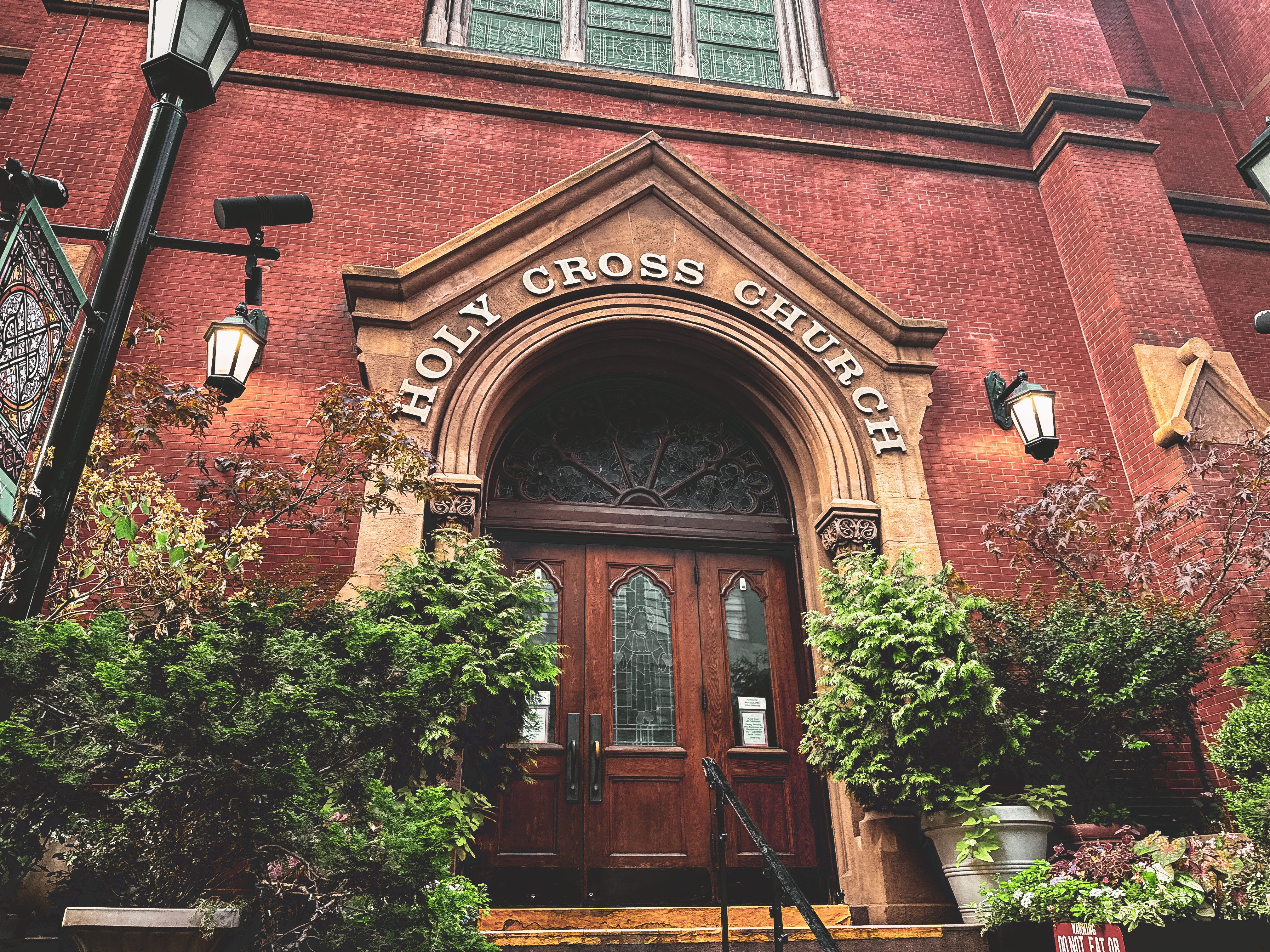
There was a time when people trembled at the mention of the name of God. Today we scroll past Him. The God of fire and thunder, who split seas and scorched mountaintops, has become tame. Domesticated. Manageable.
And thus, ignorable.
We’ve kept all the rituals: the songs, the sermons, the sacraments, but somewhere lost the reverence.
We still say His name every Sunday, but rarely sense His presence.
And what of the weight of glory?
Missing.
Where Did the Awe Go?
A shift happened in culture and what followed was a shift in many Protestant churches. It was a shift in the way we believed and ultimately in how we worshiped.
Which changed how we thought about God.
The result? We made Him small.
He became understandable. He was simplified in a way that made God easy to market and manage. Inadvertently He then became easy to miss.
While the outward rhythms of faith remained, the songs, the sermons, the Sunday attendance, something beneath the surface began to shift.
Today, people still go to church. In fact a lot of people do. Probably yourself and many around you.
Many still read the Bible. They still play worship songs driving their kids to school, and after drop off switch to their generation's bangers (can I put on Coldplay, or is that too triggering right now?).
But something’s off. A silence we keep avoiding. A weight that used to be there, but now feels missing.
You could call it reverence. Transcendence. Mystery. But now it’s fading.
The philosopher Charles Taylor calls this “disenchantment1.”
It’s the idea that we’ve moved from a world where spiritual presence was assumed to one where everything must be explained, measured, and managed.
Once upon a time, the world was alive with sacred presence.
Storms were more than just weather, they were seen as divine warnings. Martin Luther cried out in 1505, to Saint Anne when he found himself stuck in a thunderstorm, fearing for his life, he promised to enter the ministry if she saved him.
There are majestic Cathedrals that took over 100 years to create, because they were more than buildings, but windows to heaven.
It didn’t really matter, whether you were Christian, Jewish, Pagan, Muslim, Deist or something else, almost everyone believed the unseen world mattered.
Emperors with messiah complexes would still bow to that which was beyond themselves. Philosophers tried to fit reason into the idea of a divine order (instead of the other way around).
But, now? People barely flinch. Rather than living under God, they live above him (or at least, think they do).
God was put through the sieve of reason and reduced to a metaphor, moral compass, self-help coach or worse, a meme.
This reductionist ideology has not only tried to fully explain the unexplainable, but has made God optional.
Optional in ethical decisions. Optional in how to raise a family. Optional in whether being a part of a faith community really matters.
And it’s not that people hate God. Far from it, most don’t.
But many have forgotten what it means to stand in awe.
When God is shrunk down to fit our preferences, schedules, and desires, this type of God doesn’t create awe. He is not terrifying.
The God of Scripture, the One of Abraham, Moses, Isaiah, and Ezekiel. That God is not manageable.
He speaks from burning bushes. He shakes his hand and moves the Sea. He cracks open graves and says get up and walk.
This isn’t a God who politely waits for your permission, one who fits your preference. He thunders when He pleases and declares, “I AM.”
The great tragedy of modernity is that in our attempt to make God more accessible we have inadvertently made Him ignorable.
We took the mystery and gave it a marketing plan.
We placed liturgy under the pews and hung up LED screens.
Church services became indistinguishable from concerts.
And we wonder why souls still leave feeling empty.
There’s nothing wrong with technology. There is nothing wrong with excellence. However, when we remove awe from our theology in an attempt to gain relevance we lose reverence.
People are leaving church not because they want less God, they leave because they wanted more and didn’t find Him there.
They came for the glory and got branding. They came for the mystery of Christ and were given clever clichés.
They wanted the God who spins galaxies, heals the weak, and calls the dead back to life, instead they got a fog machine.
The irony is, we’ve tried so hard to make God “relatable,” we’ve forgotten He’s not intended to be.
He’s supposed to be Other. Meaning holy, set apart, beyond what we can fully understand.
And that’s well, what makes Him beautiful.
It is what makes worship, worship. We aren’t singing to the life coach in the sky, we are kneeling before the King of Kings and Lord of Lords.
Maybe the question isn’t, “Where did God go?”
Maybe the question is: “Did we stop looking for Him in the places He’s always been?”
Where can you find him?
In the silence. In the mystery. In the pain. And in the awe.
The God We Used to Know
The God of the Bible isn’t trying to be relevant. He’s not safe. And he certainly doesn’t ask for your approval.
When God showed up in Scripture, people didn’t clap. They collapsed.
Exodus 19:18 says,
“Mount Sinai was wrapped in smoke because the LORD had descended on it in fire…The whole mountain trembled violently.”
A mountain trembling. Thunder cracking. Smoke billowing like a volcano.
He didn’t say, “Hey, here’s a helpful devotional thought for your Monday motivation.”
He said, “Take off your sandals, this ground is holy.”
In Isaiah 6,
“In the year that King Uzziah died, I saw the Lord…high and lifted up…And I said, ‘Woe is me! I am ruined.’”
Isaiah was a prophet, he knew the Scriptures, he was a man of God. But the moment he stood in the presence of the Lord, his first instinct wasn’t worship. It was despair.
“I’m not worthy. I shouldn’t even be here.”
When you really encounter God, not ideas about God, or what God can do for you if you follow him, no no no, when you encounter the Other, when you experience Yahweh, when you meet Him, categories fall to pieces.
You begin to recognize that Holiness is bigger than morality and ethics, it’s the sense of standing before something so good, so utterly perfect, that you feel small.
And you were meant to feel small.
This is why standing in the valley of Yosemite looking up between El Capitan and Half Dome, you are struck with awe, lost for words. A part of you wants to stay forever and another part wants to look away.
That kind of holiness used to haunt people. They would, as Paul said, work out their salvation in fear and trembling2. They would fall on their faces and weep.
In Acts 5 were told,
Ananias and Sapphira lied to the church… and dropped dead.
Can you imagine that happening today?
We would block that church on Instagram. Call up the Roy’s Report, and write think pieces on Substack about “toxicity in religious spaces.”
But in the book of Acts?
“Great fear seized the whole church, and all who heard about these events.3”
The reason?
They understood something we’ve forgotten: God is not playing games.
Somewhere along the way, we lost that weight. We didn’t like trembling or mystery. We wanted a God who doesn’t frighten people.
So, we gave Him, what we do best, a makeover.
We airbrushed the Creator, changed the names of His houses from Trinity, Calvary, Grace, to Transformation, Elevation, Next-Level.
We wrapped Him in sound bite slogans.
We dressed Him up in stage lights and Golden Goose sneakers.
And what we got was a God who fits in your pocket, but no longer rules your world.
This God became a therapist, life coach, cosmic genie all rolled into one.
We moved from worshiping and started optimizing.
Church became a TED Talk, minus the red circle.
Sermon series titles with Tony Robbin’s stamp of approval; This Battle Is Your Breakthrough, It’s Already in You, Live Your Best Life Now (sorry, Joel).
Worship became songs about what God was doing for us and faith became a brand with a catchy tagline.
And somewhere in that exchange our souls got bored.
Because deep down, we don’t just want a helpful God. We want a holy one.
C.S. Lewis in The Lion, the Witch, and the Wardrobe4, has a classic line:
“Safe? Who said anything about safe? Of course he isn’t safe. But he’s good.”
If your God never confronts you, never humbles you, or undoes you, what kind of Lord are you worshipping?
Could it be you might be worshiping a more put together version of yourself?
Now of course accessibility matters. Jesus drew near to people. He walked among lepers. He touched the unclean. He broke bread with sinners. One the biggest accusations against him? “The Son of Man comes eating and drinking.5”
However, Jesus also flipped tables. He cast out demons. He told people to leave everything and follow Him.
Is He gentle and lowly? Yes.
But may we not forget He’s also the Lion of Judah. And you don’t pet a lion.
Because when we did, we declawed God.
We kept His kindness, but removed his crown.
We preached grace but forgot the trembling fear of the LORD.
We may have kept lifting our hands out of praise, but unconsciously lowered our expectations.
And then we are stuck wondering, why does our faith feel flimsy? Why does God feel absent? Why do we feel empty?
But maybe God didn’t disappear. Perhaps we forgot about the God who’s bigger than us.
The hunger you feel inside for more, is because you weren’t made for a manageable God. You were created to be overwhelmed by majesty. But majesty well, it has a cost.
Because majesty will break you. But it will break you in the best possible way.
Why We Need the Holy
There’s a reason we go quiet when we see something vast. The Grand Canyon. The Notre Dame cathedral. The Northern Lights. The sequoias.
It’s not quite fear, it's reverence. A sudden awareness that this is not about us.
And that’s holiness. Yes, holiness is moral perfection, but it’s also more, the weight of God’s otherness. His greatness and glory.
And holiness is what happens when small people stand before a vast God and realize they were never the hero of the story.
In our modern world we are obsessed with the self. Self-expression. Self-optimization. Self-help. Manifest your destiny. We play Snoop Dogg's affirmation song6 on our way to work.
But there’s a problem.
You can’t manifest your way into transcendence.
You need to be interrupted.
And that’s why we need a holy God, we need something bigger than our own reflection. We spend an inordinate amount of time trying to make ourselves feel enough. Smart enough. Productive enough. Attractive enough. Rich enough. Accepted enough.
When we finally look up (if we ever do) we’re exhausted.
But when you see God in His holiness, you realize something that shouldn’t make sense. You don’t have to be enough. Because He is.
In the presence of holiness, striving stops. The masquerading and pretending ceases. And something better is born.
Hebrews 12 tells us:
“Let us offer to God acceptable worship, with reverence and awe, for our God is a consuming fire.”
Fire does more than destroy, it is also an agent of purification. God’s holiness may be terrifying, but it is also healing. Because when God confronts your sin, he doesn’t do it to shame you, He wants to free you. He comes to break your pride and replaces it with peace.
And when He thunders, “Woe to you.”
Remember the second piece to Isaiah 6:
“Then one of the seraphim flew to me with a burning coal…and said, ‘Your guilt is taken away and your sin atoned for.’”
We need holiness because without it we’ll keep settling for the illusion of control. We’ll build our lives on sand and wonder, despite all our productivity, why we’re sinking.
Sure, we’ll achieve success, but after a while that feels empty.
Holiness is what gives your life weight and meaning. It reminds you that you are not God, and that’s great news.
Because without holiness, God is just a life coach.
But with holiness, He becomes the center of the universe and the blazing sun that every planet orbits.
This is why the early church trembled when they worshiped. It’s why they had the fortitude to meet in catacombs, the hope to sing in prison cells, and the courage to die in coliseums.
It wasn’t because they had great music or dynamic preachers, rather they had something better; a holy God.
A quote often attributed to G.K. Chesterton puts it like this:
“We do not want, as the newspapers say, a church that will move with the world. We want a church that will move the world7.”
Holiness didn’t make the early church afraid. It made them alive.
When you know God is holy, you stop playing church. You don’t fake it anymore, you don’t try to impress, rather you fall on your face and say, “Here I am, Lord.”
Our world tells us to make God small. Keep Him safe, don’t make Him too big of a cultural splash. Keep him contained to Sunday mornings and quiet times.
But your soul knows better. Your soul was made to worship something too great to contain.
God’s Holiness is the flame that burns off the fake and leaves what’s real.
So if your faith feels empty, if your soul feels numb, if things feel meaningless, maybe the answer isn’t more noise.
Maybe it’s more awe.
Because in the end, the God who disappeared was never gone. We just stopped bowing.
Want to go deeper?
In the Theology Made Simple course, we walk through how to develop a theology for yourself that is both charitable and clear. You can check it out here: Start Learning Today.
If this post helped you see God or the world a little more clearly, you can keep the coffee flowing and the ideas coming by supporting me here.
Taylor, C. (2007). A secular age. Belknap Press of Harvard University Press.
Philippians 2:12
Acts 5:11
Lewis, C. S. (1950). The lion, the witch and the wardrobe. Geoffrey Bles.
Matthew 11:19 and Luke 7:34
Snoops Affirmation Song. Couldn’t resist could you. Had to play it ;)
While this quote is widely attributed to G.K. Chesterton, I couldn’t find it verbatim in any of his published works. While used widely, It’s more than likely a paraphrase of his ideas.
Nailed it.
https://www.spaghettimonster.org/