
The Sermon Illustration Your Pastor Can't Source

Somewhere this weekend a preacher is going to describe the Valley of Hinnom as a smoldering municipal dump on the edge of Jerusalem. Fires that never went out, rotting refuse, and the corpses of criminals, while feral dogs foamed at the mouth pacing the tree line. When Jesus said Gehenna, the preacher explains, the listeners pictured that valley, they could feel the heat and taste the sulfur…boom—image lands. And in an ARC or AG church you will get a oh sooooo goood from the front row.
There is one problem. The oldest source anyone has found for the burning dump is a rabbi named David Kimhi, writing in southern France around the year 1200.1
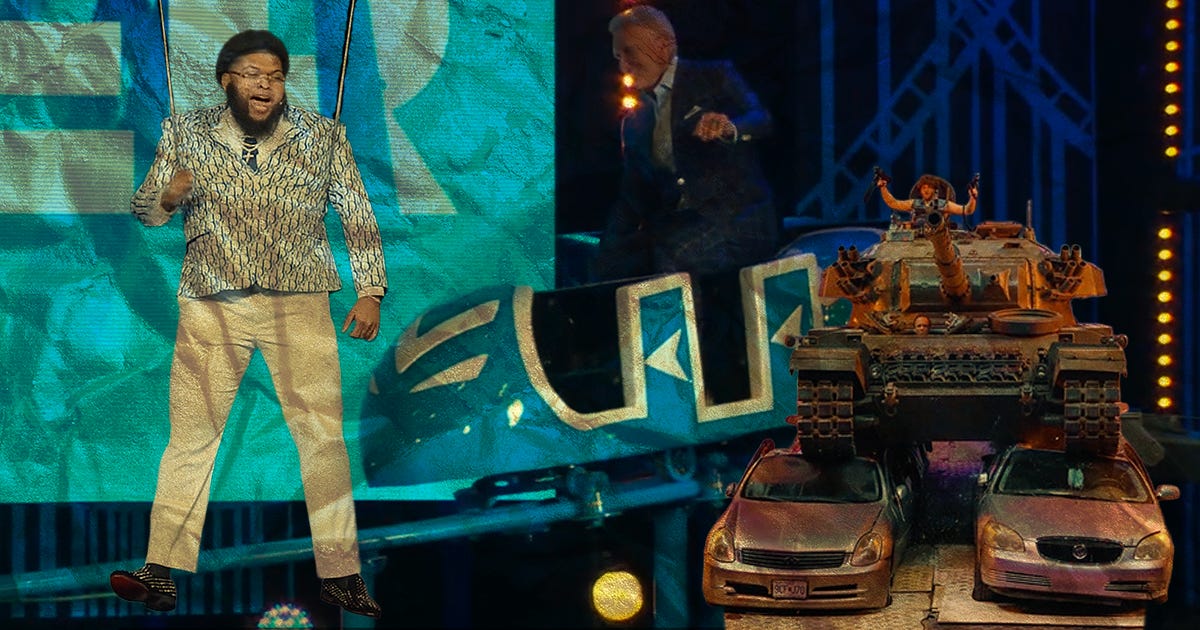
I am preacher, I love a good illustration, when something odd happens to me, the first thing I think is, “this will make a great illustration.” I have built whole sermons around one; that includes having a Jon boat on stage and cinematic thunder and lightning for a sermon on Mark 4:35-41. But, the preaching tradition has a way of handing down captivating illustrations like they are family heirlooms, without asking where they came from. So, here are seven popular sermon illustrations that dissolve on contact with a footnote.

1. The garbage dump of Gehenna
The claim is that Gehenna, the word Jesus uses for final judgment, referred to a perpetually burning trash heap in the Valley of Hinnom, and it is why the word came to mean hell. Kimhi (sometimes spelled Kimchi) is the earliest witness we have. In his commentary on Psalm 27, written around 1200, he says fires were kept burning in that valley to consume filth and cadavers, and that the wicked are therefore judged in a place called Gehenna by analogy. Strack and Billerbeck found no support for it in the intertestamental or rabbinic literature.2 G. R. Beasley-Murray said the notion has no basis beyond Kimhi’s single statement.3 There is no archaeological trace of a first-century dump there.
The real background though is worse than garbage. The Valley of Hinnom is where Ahaz and Manasseh burned their own children to Molech. Josiah defiled the place to end the practice. Jeremiah renamed it the Valley of Slaughter. When Jesus painted a picture of judgment, he took his brush to one location in Jerusalem’s memory associated with children passing through fire.4
2. The needle’s-eye gate
You know this one. There was a low gate in the Jerusalem wall called the Eye of the Needle. A camel could squeeze through only by kneeling and shedding its load. So the rich man can enter the kingdom, the sermon goes, if he unburdens himself of his greed. No such gate existed in the first century. The earliest reference to a gate is an anonymous gloss on Matthew 19:24 later attributed to Anselm of Canterbury (1033–1109), preserved in Aquinas’s Catena Aurea. The common claim that the eleventh-century commentator Theophylact originated it is a false trail traceable to a marginal remark in the Geneva Bible as noted by Agnieszka Ziemińska.5 The “gates” that tourists are shown in Jerusalem today are medieval or later. BTW: Camels do not crawl, they kneel to sit and rise, and that is the extent of it.
In the passage, Jesus tells you the point himself. The disciples are stunned and ask who then can be saved? His answer is that with man it is impossible, but with God all things are possible (Mark 10:27). The saying was used to show the impossible, so, don’t miss the forest for the trees.6
3. The rope on the high priest’s ankle
This one freaked me out as a kid; didn’t help that I first heard it from a fiery pentecostal preacher. Once a year the high priest entered the Holy of Holies, the other priests tied a rope around his ankle and hung bells on his robe, so that if his sin struck him dead behind the veil they could listen for silence and drag the body out.
It is a good story. It makes you think twice about your own line of work, though few of us risk being struck dead for not knowing what a KPI is.7 However it is absent from the Hebrew Bible, the Dead Sea Scrolls, Josephus, the Apocrypha, the Mishnah, and both Talmuds. The first known reference is the Zohar, a work of Jewish mysticism from thirteenth-century Spain.8 The NIV Study Bible has a version of the legend in a footnote on Exodus 28:35, which is probably how it keeps circulating in evangelical pulpits.
Leviticus 16 points against this idea directly. On the Day of Atonement the high priest set aside the ornate garments and entered in plain linen. The bells belonged to the ephod he wore in the Holy Place, not to the linen he wore behind the veil. No bells, no need to listen, so, no rope. Wave Nunnally, who teaches early Judaism at Evangel, has spent years putting this one down.9 But it keeps ringing back because it preaches.
4. The heartless innkeeper
Mary is in labor, Joseph is pounding on doors, sometimes when its preached the wind was blistering as the snow belted down on the young couple. Then comes the innkeeper who sets them in a stable because there was no room at the inn. Every children’s pageant shows the innkeepers insensitivity, with a little boy and a fake beard, wagging his finger going no room in the inn.
However, Luke never mentions an innkeeper. The word usually translated “inn” in Luke 2:7 is kataluma, the same word Luke uses chapters later for the furnished guest room where Jesus eats the Last Supper (Luke 22:11). When Luke wants to name a commercial inn, he uses a different word entirely, pandocheion, which shows up in the Good Samaritan (Luke 10:34).10
Bethlehem was Joseph’s ancestral town, packed with relatives. A typical village house had one main room where the family slept, with a lower area just inside where the animals were brought in at night, and a feeding trough cut into the floor between them. The guest room, which was more than likely the roof, was full, so the couple stayed in the family living space, and the baby was laid in the manger a few feet away. Nobody was thrown into the cold. The scandal is not that the world had no room for baby Jesus. It is that God arrived in the middle of an ordinary crowded house and almost no one noticed.
5. The three kings
Speaking of Christmas, the second chapter of Matthew has more decorations than the Griswold family home. There is no number given for the magi. Three got attached later because there were three kinds of gift: gold, frankincense, myrrh. They are called wise men or astrologers in the text, and the promotion to kings came centuries afterward, borrowed from Psalm 72 and Isaiah 60. The names Caspar, Melchior, and Balthasar are a tradition from around the sixth century.11

Nor were these men at the manger. Matthew says they came to the house (oikian) and saw the child with Mary (Matthew 2:11). Herod, working from what the magi told him, ordered the killing of boys two years old and under. The visit more than likely was a year or more after the birth.
Now, don’t get hasty, this doesn’t give you permission to remove the three wisemen from your grandma’s nativity set on the mantel this Christmas; it’s a family heirloom.
6. NASA’s missing day
Houston we have a problem. NASA scientists running orbital calculations, supposedly found a missing day in time, and then a missing forty minutes, which perfectly accounted for Joshua’s long day (Joshua 10) and the sun moving backward for Hezekiah (2 Kings 20). Proof, the illustration goes, that the Bible is true down to the clock.
It never happened. NASA has denied it for decades.12 The tale was popularized in the 1970s by Harold Hill, president of an engine company in Baltimore, in a book called How to Live Like a King’s Kid. Trace it back further and you find nearly the same story told by Harry Rimmer in 1936, and before him by Charles Totten in the 1890s, long before there was a space program to credit.13
Joshua 10 doesn’t need NASA clearance. Reaching for a fake story about NASA to prop up the text, tells your congregation, without meaning to, that God’s power needs modern proof.
7. The name that sounds like breathing
Here is a recent one, in the last decade a claim went viral that the four Hebrew letters of the divine name; YHWH, were meant to imitate the sound of breathing. Inhale Yah, exhale weh. The first sound a newborn makes and the last a dying person releases. Every breath, the meme says, is speaking the name of God—oh sooo gooood.
It is a lovely thought with no basis in Hebrew. The pronunciation of the name is genuinely uncertain, most likely something close to Yahweh, and the letters are consonants, some of them doubling as vowel markers. No ancient Jewish source treats the name as breath.14 It surfaced on social media a few years ago and spread because it is a powerful image and feels profound.
The oversold, not the false
A fair word in closing. Some familiar illustrations are not fabricated so much as expanded beyond the evidence, sort of stretched, like butter scraped over too much bread.15 When Jesus says tetelestai from the cross (John 19:30), preachers often tell you the word was stamped across ancient invoices to mean “paid in full.” The verb does mean finished, accomplished, discharged, and it does appear on settled accounts in the papyri. The vivid scene of a merchant slapping a receipt with a red stamp is flair16 we added.
Then there is Selah, sprinkled through the Psalms, this often gets preached as, “pause and reflect on that.” However, we do not know what it means; it is more than likely musical or liturgical instruction.17
I am not trying to take anyone’s favorite line away. I am saying that the true story is almost always available when you take the time to search, and while it may not always be theatrical or tweet worthy, we honor God, when we let the text speak for itself. The Valley of Hinnom really did swallow children in fire. The house in Bethlehem really was too full to notice God.
For pastors, if an illustration would still preach after you told the congregation exactly where it came from, keep it. If it only works as long as no one asks, you already know what to do. And the harder question for those of us who preach is how many of these did we keep, not because they were true, but because we thought they were too clever to leave on the desk?

Enigmatic Bible Passages: Gehenna: The Topography of Hell,” Biblical Archaeologist 49, no. 3 (September 1986): 187–91. Bailey quotes Kimhi’s comment on Psalm 27 (at 188–89) and concludes that the dump theory “finds no support in literary sources or archaeological data from the intertestamental or rabbinic periods. Kimhi’s exact wording was, “Gehenna is a repugnant place, into which filth and cadavers are thrown,, and in which fires perpetually burn…”
Hermann L. Strack and Paul Billerbeck, Kommentar zum Neuen Testament aus Talmud und Midrasch (Munich: C. H. Beck, 1922–28), vol. 4, in the excursus on Sheol, Gehinnom, and Gan Eden.
G. R. Beasley-Murray, Jesus and the Kingdom of God (Grand Rapids: Eerdmans, 1986).
On child sacrifice to Molech in the Valley of Hinnom, see 2 Kings 23:10; Jeremiah 7:31–32; 32:35. Jeremiah renames it the Valley of Slaughter (Jer. 7:32; 19:6). The undying worm and unquenchable fire that feed the Gospel imagery come from Isaiah 66:24 (cf. Mark 9:48).
This was a fascinating journal article on this. Ziemińska, “The Origin of the ‘Needle’s Eye Gate’ Myth: Theophylact or Anselm?” New Testament Studies 68, no. 3 (July 2022).
The earliest known English appearance of this idion comes from Thomas More in 1533, in his Confutation of Tyndale’s Answer. In the middle of hammering William Tyndale over Bible translation, More quips that his opponent is like a man who “may not see the wood for the trees.” So the idiom’s English debut is tied to the Tyndale controversy.
The tradition appears in no biblical, Qumran, Josephan, apocryphal, Mishnaic, or Talmudic text. Its earliest known form is the Zohar (Castile, late thirteenth century, traditionally attributed to Moses de León), in the sections Aḥarei Mot and Emor. See Todd Bolen, “That Rope around the High Priest’s Ankle,” BiblePlaces Blog (January 2009), and the extended refutation by Rabbi Dr. Ari Z. Zivotofsky.
Wave Nunnally, "The Myth of the High Priest's Rope," Assemblies of God / Center for Holy Lands Studies (PE News), October 2015.
See Kenneth E. Bailey, Jesus Through Middle Eastern Eyes: Cultural Studies in the Gospels (Downers Grove, IL: IVP Academic, 2008). BTW this is a must for any pastor.
The royal imagery is imported from Psalm 72:10–11 and Isaiah 60:3, 6. The names Caspar, Melchior, and Balthasar appear in Western tradition from roughly the sixth century (e.g., the Excerpta Latina Barbari) and became standard in the medieval West.
NASA’s Goddard Space Flight Center disclaimed any knowledge of the story in a 1970 form letter. Religion editor William Willoughby reported the denial in the Washington Evening Star, August 8, 1970.
Harry Rimmer, The Harmony of Science and Scripture (Grand Rapids: Eerdmans, 1936), 281–82, drawing on Charles A. L. Totten, Joshua’s Long Day and the Dial of Ahaz (New Haven, 1890). The underlying passages are Joshua 10:12–14 and 2 Kings 20:8–11.
The four letters yod, he, waw, he are consonants, with he and waw sometimes serving as vowel markers (matres lectionis), not aspirations, and no ancient Jewish source treats the Name as the sound of breath. The pronunciation is itself uncertain and is commonly reconstructed as “Yahweh.” On that uncertainty see standard reference works such as The Anchor Bible Dictionary, s.v. “Yahweh.” The breathing meme spread through social media in the 2010s.
Well done, looks like someone just earned their Mithril. ;)

The term is generally taken as a musical or liturgical direction, but its meaning is unknown. See the standard lexica, e.g., The Hebrew and Aramaic Lexicon of the Old Testament (HALOT), s.v. סֶלָה.