
The Bible Never Says You’ll Spend Eternity in Heaven
Why the Bible’s final hope is resurrection and new creation

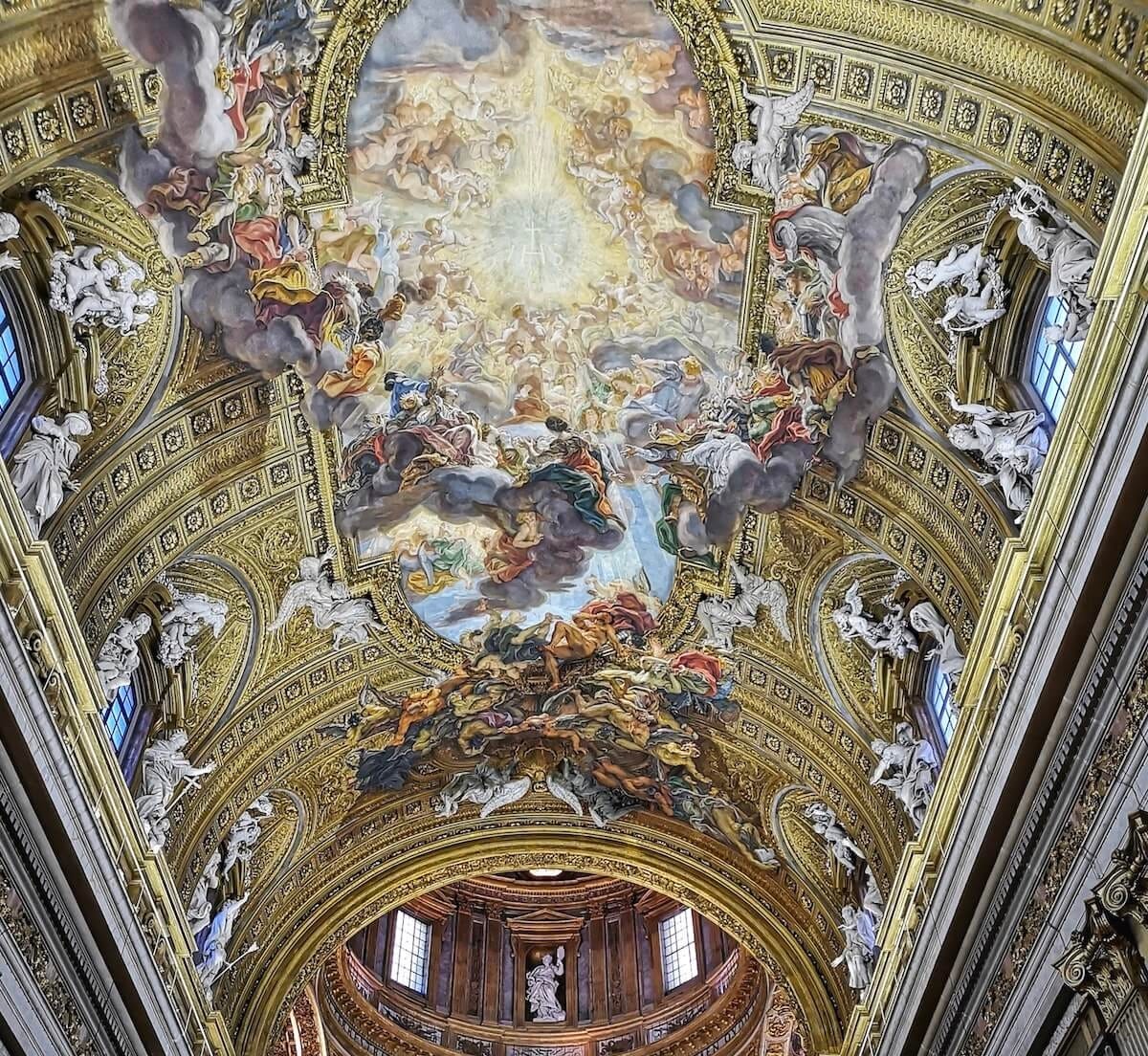
If today you saw your next-door neighbor and asked him, “what is eternity?” After the initial blank stare (he was just checking the mail), he would probably look up, and say, “uh, we go to heaven, we leave earth and are up there, with God and the angels.”
Then mutter to you as he swiftly walked back to his garage, “I can’t wait to play golf with Peter in the clouds, (garage door closes) I bet he slices, haha.”
The Bible though, never says you’ll spend eternity in heaven. At least not heaven as many think.
The image is a cultural construct, built from; Greek philosophy, medieval poetry, revival hymns, and bad “Christian” fiction books.
Let’s pull back the curtain on heaven and what eternity is actually like.
Where the Idea Came From
It started with philosophy (and your parents didn’t think your philosophy degree would be useful).
Four centuries before Christ, Plato taught that reality came in two layers1. First, was the material world, what you could touch, taste, and see. This world was temporary and decaying (cue up the cave): think of it like a shadow. Second was the world of Forms, this world was perfect, eternal, and here is the key—it was immaterial. In Plato’s construct, the soul belonged to that higher world. The body was a cage. Salvation meant escaping the prison of flesh and returning to the pure, spiritual realm.
Plato wasn’t alone in his thinking. Later Greek schools, such as Stoics, Neoplatonists, Proto-Gnostics2 all had their versions of the central theme. Now, it’s not that every Greek thinker trashed the material world: Stoics valued material order, Neoplatonistist spoke of emanations rather than outright escape, and Aristotle found purpose in it (He was one of the early developers of scientific knowledge). However, by the time Plato’s ideas filtered into Christian thought, the emphasis had become a developed cultural rut: the body was fragile, the soul was eternal.
The first-century Church was in this Greco-Roman culture. Over time, some Christians began to blur the lines between biblical teaching and Greek philosophy. The Apostle Paul warned against this in Colossians: “See to it that no one takes you captive through hollow and deceptive philosophy, which depends on human tradition and the elemental spiritual forces of this world rather than on Christ.3”
But the allure to return to Plato’s Cave was strong. When Christians thought about eternal life, it was easy to assume Plato had been right all along: the material world fades, the spirit ascends.
Fast forward to the Middle Ages, and this eschatological canvas gets painted. Over centuries, theology and art began to shape each other. Medieval poetry and cathedral frescoes weren’t inventing doctrine, but they did frame how ordinary Christians imagined eternity.
Dante Alighieri’s Divine Comedy4 in the 14th century vividly painted eternity. Inferno (hell) was mapped with layers of graphic detail. Purgatorio (purgatory) charted the slow purification of the soul. Paradiso (heaven) was a shimmering ascent into the celestial spheres. Dante’s Divine Comedy wasn’t trying to be church dogma, but for many it functioned like it all the same, putting vivid pictures in minds that shaped generations5.
During the Middle Ages, artists filled Europe’s cathedrals with these images: souls rising in beams of light, angels carrying the faithful into a sky of stars, and all of this left an indelible impression: the Christian hope must be to go away to heaven.
From the Middle Ages, into the modern era, revival hymns gave voice to the same escapist longing. Songs like “I’ll Fly Away6” or “When We All Get to Heaven7” reinforced the idea that salvation was about leaving earth behind, floating upward into eternal skies. This was carried further through preachers describing the streets of gold, the pearly gates, the crystal sea, all as if the believer’s destiny was to live forever far away. In the late 20th century this was burned into minds (pun intended) through fictional books like the ‘Left Behind’ series.
Now, Heaven is real. The presence of God is real. To die and be with Christ is gain. But there’s a problem: The hotel was mistaken for the final home. Greek philosophy, medieval poetry, Renaissance art, modern hymnody, and revivalist preaching all worked together to give Christians an image more cultural than biblical.
What the Bible Actually Says
The Old Testament doesn’t describe eternity as an escape from the world. It speaks of God renewing the world He created. Isaiah gives a stunning picture:
“See, I will create new heavens and a new earth. The former things will not be remembered, nor will they come to mind… They will build houses and dwell in them; they will plant vineyards and eat their fruit8.”
The picture is not escaping the material world, rather Isaiah paints something earthy and tactile. Human beings are eating, building, working, and living, all taking place in a renewed creation where death and sorrow are no more.
In the book of Daniel, “Multitudes who sleep in the dust of the earth will awake: some to everlasting life, others to shame and everlasting contempt9.”
This is not souls abandoning earth. Rather humans, who God made from the dust of the earth, are now raised from the same dirt. Daniel is giving us a hint. Resurrection is the final hope.
Then Jesus came, not to tell a new story, but to fill in the gaps.
In the Lord’s Prayer, Jesus doesn’t pray, “Get us out of here to heaven.” He prays, “Your kingdom come, your will be done, on earth as it is in heaven10.”
When Jesus speaks about the future, He promises His followers will inherit the earth11. He says there will be a banquet, not an immaterial world. Jesus tells His disciples that at the renewal of all things, they will sit on thrones judging the tribes of Israel.12
At the Last Supper, the hope isn’t escape, it is: “I will not drink from this fruit of the vine from now on until that day when I drink it new with you in my Father’s kingdom.”13
Finally, Jesus’ resurrection became the ultimate proof. His tomb was empty. His body was transformed, but still physical. He ate and bore scars. He walked on the shore and cooked breakfast.
That’s not Plato’s ghost, it’s the Christian’s hope.
St. Paul takes the baton and runs with this theme. His resurrection chapter in Corinthians, is emphatic: “If Christ has not been raised, our preaching is useless and so is your faith.”14
He speaks of a resurrection body, one that is imperishable, glorious—but still embodied.
In Romans, St. Paul, widens the lens:
“The creation waits in eager expectation… creation itself will be liberated from its bondage to decay and brought into the freedom and glory of the children of God.”15
The full scope of rescue is shown, salvation isn’t just for people, but for creation itself. The new heavens and new earth are a part of the glorious transformation.
Then comes the final crescendo (we’re talking Phil Collin’s ‘in the air tonight’ drum solo): Revelation 21.
“Then I saw a new heaven and a new earth… I saw the Holy City, the new Jerusalem, coming down out of heaven from God, prepared as a bride beautifully dressed for her husband.”16
We don’t go up, heaven comes down. God makes His dwelling place with humanity on earth. The throne of God and of the Lamb are in the city. The river of life flows through it. The tree of life bears fruit again. And John declares: “There will be no more death or mourning or crying or pain, for the old order of things has passed away.”17
The Bible’s final word is renewal, not escape.
Plato saw salvation as leaving behind a flawed creation. Scripture sees salvation as God redeeming the creation He called, “good.” The poets imagined heaven as an ascent into the skies. The Bible envisions heaven descending to earth. The hymns longed for escape. The gospel promises restoration.
So What Is Heaven Then?
To answer this question, we have to make an important distinction: heaven is real, but not the final destination.
In Scripture, “heaven” has a variety of meanings, often though, it refers to the invisible dimension of God’s reign. His throne room, His temple, the place where His will is perfectly done.
Psalm 103 declares: “The Lord has established his throne in heaven, and his kingdom rules over all.”18
Isaiah glimpses this reality and cries out: “I saw the Lord, high and exalted, seated on a throne; and the train of his robe filled the temple.”19
John echoes it in Revelation 4: a throne, elders, living creatures, and worship without end.
Heaven is not imaginary. It is God’s dwelling, the dimension where His glory is unveiled.
The Intermediate State: With Christ, Awaiting Resurrection
But what happens when we die today?
The early church wrestled with this question. The Apostle Paul gives the clearest answer: “To be absent from the body is to be present with the Lord.” And again: “I desire to depart and be with Christ, which is better by far.”20
From this, theologians speak of the intermediate state, the condition of believers after death but before the final resurrection. It is not soul-sleep, annihilation, or reincarnation, but a conscious, personal fellowship with Christ.21
Summarizing St. Augustine, he described this as being with God, but not yet in the fullness of God’s city.22
The Reformers, held this same hope. Calvin insisted, “For, when we say that believers, when they depart from the body, are present with the Lord.”23
Heaven in this sense, is temporary, blessed; but incomplete.
Misconceptions Through the Ages
Across history, this temporary state was often confused with the final destiny.
Platonism influence led some Christians to see heaven as the eternal escape of the soul. Medieval artistry at times blurred heaven with the beatific vision24, as though eternity were a static contemplation of God, detached from creation. Popular revivalist preaching often collapsed the distinction, describing heaven itself as the “forever home.”25 But the Bible insists: heaven is real, but resurrection (new heavens and new earth) is better.
N. T. Wright calls this the “two-stage hope”: first, life after death (with Christ in heaven), and then, life after life after death (resurrection in the new creation)26.
C. S. Lewis captured this in The Last Battle. As they enter Aslan’s country, they are not leaving the real world but arriving at it: “I have come home at last! This is my real country! I belong here27.”
In no way will this do it justice, but here is an analogy. Heaven is the hotel on the journey, it’s beautiful, more wonderful than we could imagine, but not where we unpack forever. New Creation is the home, the place where the story is heading, where body and soul are restored and heaven and earth are finally one.
Why This Changes Everything
Correcting our vision of eternity isn’t a theological fine point. Our eschatology forms the shape of our current reality.
If heaven is only a temporary resting place, and resurrection in God’s new creation is the goal, then everything about our identity, hope, justice, and worship will take on new meaning.
Philosophers like Plato taught that the body is disposable, a husk to be shed.
But the biblical story insists otherwise. When God made Adam, He formed him from the dust of the ground and breathed His Spirit into him.28 Humanity was created to be whole and integrated: dust and breath, body and spirit.
The resurrection confirms this, Jesus did not rise as a ghost. His tomb was empty. He ate fish with His disciples. He bore scars. His body was transformed, but it was still a physical body.
The early church clung to this truth so fiercely that they marked tombs with the word “Resurrexit” meaning “He is risen” not as a superstitious wish, but as a declaration of what was coming for every believer29.
If eternity was only “going to heaven,” then creation is abandoned. History is discarded. God’s “good” world ends in defeat. Through resurrection hope something else is declared, God does not throw away what He calls good.
This is why early Christians faced persecution with such courage. They believed death was not the end, for resurrection was the beginning. Tertullian in the 3rd century: “The resurrection of the dead is the Christian’s trust: by it we are believers.”30
If this world were a disposable shadow to be abandoned, why bother with justice? Why feed the poor, fight oppression, or care for creation? But if God plans to renew this world, then everything done in it matters.
St. Paul ends his thundering resurrection chapter, 1 Corinthians 15, not with speculation about eternity, but with this: “Therefore, my dear brothers and sisters, stand firm. Let nothing move you. Always give yourselves fully to the work of the Lord, because you know that your labor in the Lord is not in vain.”31
This is why the abolitionist movement, hospitals, schools, and human rights reforms so often sprang from Christian soil. Resurrection hope says: what you do now is not wasted.
Finally, this vision transforms worship. If salvation were just about getting souls into heaven, then worship would shrink to a narrow slice of life: church services, prayers, and spiritual exercises.
But if eternity is resurrection life in God’s renewed creation, then every part of life can be worship. Reading scripture matters, yes, but so does planting a garden. Writing a book. Loving a neighbor. Cooking a good meal. Reading a Substack article.
Philosophers like Plato’s student Aristotle thought the highest life was contemplation, escaping the mess of ordinary existence. The Bible declares that the highest life is resurrection: embodied, relational, creative, worshiping God in a world remade.
This isn’t less than heaven. It’s more.
Misunderstandings to Avoid
Whenever you talk about eternity, certain misunderstandings creep in. And most of them come from blending cultural imagination with fragments of Scripture.
Misunderstanding 1: “Heaven isn’t real.”
Some people hear that the Bible doesn’t teach eternal life in heaven and assume heaven must be fake.
But that’s not true. Heaven is real. It’s the dimension of God’s reign, His throne room, His dwelling place. It’s where Christ is right now. The problem isn’t that heaven doesn’t exist, the problem is confusing where we go when we die temporarily with where God is taking history ultimately.
Misunderstanding 2: “Resurrection is symbolic.”
Another common error is to spiritualize resurrection. Maybe it’s just a metaphor for new beginnings, or a symbol of hope. But Paul leaves no room for that. In 1st Corinthians 15:17, he insists: “If Christ has not been raised, your faith is futile; you are still in your sins.” For Paul, resurrection wasn’t a metaphor. It was the bodily reality of Jesus walking out of the tomb and the down payment on our own future. The early church guarded this truth with ferocity. When Greek-influenced groups like the Gnostics tried to turn resurrection into a symbol, the church pushed back (who do you think we are Prince?). The Apostles’ Creed is clear: “on the third day he rose again from the dead.”
Misunderstanding 3: “This world doesn’t matter.”
Perhaps the most damaging misunderstanding is the idea that the world is disposable. Since, “it’s all going to burn,” we can treat creation, culture, even justice as optional.
But that’s not the Bible’s vision. Peter’s talk of fire (2nd Peter 3) is about purification, not obliteration32. Romans insists creation itself will be liberated, not discarded. Revelation shows the New Jerusalem descending into a renewed world.
If God is going to redeem creation, then what we do in this world matters. Every act of mercy, every bit of beauty, every pursuit of justice, all of it is gathered up into God’s future. This is why the early church didn’t retreat into a cave waiting for escape. They built hospitals, cared for orphans, and loved the poor.
Final thought
Heaven is real and it’s good. But the Bible never says you’ll spend eternity there.
The final hope is greater: resurrection life, in a renewed creation, with God dwelling among His people. This is the gospel hope, not escape, but restoration. Not just heaven, but heaven and earth made new.
So next time you hear your neighbor say, “We’ll spend forever in heaven”, you can smile and tell ‘em, “Actually, it’s even better than that.”
If this vision of eternity made sense, you’ll love the Theology Made Course.
Plato. (1992). Republic (G. M. A. Grube, Trans.; rev. C. D. C. Reeve). Hackett Publishing. (Original work published ca. 380 B.C.E.)
This is a summary of trends, not a one-size-fits-all description; each school is more intricate than a paragraph allows. The general bent was the body is fragile and passing; the soul is ultimate.
Colossians 2:8, I don’t take this as Paul banning philosophy, rather I believe he is addressing the syncretistic mix that was forming, diluting Christ with prevailing philosophies of the day.
Dante Alighieri. (2003). The divine comedy (J. Ciardi, Trans.). New American Library. (Original work published ca. 1320)
Across the Middle Ages, theology and art shaped each other’s imaginations. Creeds and councils clearly affirmed bodily resurrection, yet poetry, frescoes, and mystery plays supplied the mental pictures. In a world where few people could read, ordinary Christians often pictured eternity as “up there,” even while official teaching still confessed “the resurrection of the body.”
Brumley, A. E. (1932). I’ll fly away. In Wonderful message. Hartford Music Company.
Hewitt, E. E., & Wilson, E. D. (1898). When we all get to heaven. In Songs of Salvation (p. 149). Philadelphia: Hall-Mack Co.
Isaiah 65:17, 21.
Daniel 12:2.
Matthew 6:10.
Matthew 5:5.
Matthew 19:28.
Matthew 26:29.
1st Corinthians 15:14.
Romans 8:20-21.
Revelation 21:1-2.
Revelation 21:4.
Psalm 103:19.
Isaiah 6:1.
2 Corinthians 5:8, Philippians 1:23
It's important to note, faithful Protestants, Catholics, and Orthodox Christians differ on some of the details.
Augustine. (1998). The city of God (H. Bettenson, Trans., Rev. ed.). Penguin Classics. (Original work published ca. 426 CE)
Calvin, J. (2008). Institutes of the Christian religion (H. Beveridge, Trans.). Hendrickson Publishers. (Original work published 1559)
In classic medieval theology, though, the beatific vision names the consummation of creaturely life in God, not a rejection of creation or of embodied resurrection.
Figures like Dwight Moody, Billy Sunday, Billy Graham, and Charles Finney reinforced the idea in their preaching that “heaven” was the final, eternal home.
Wright, N. T. (2008). Surprised by hope: Rethinking heaven, the resurrection, and the mission of the church. HarperOne.
Lewis, C. S. (1994). The last battle. HarperCollins. (Original work published 1956)
Genesis 2:7
Another common marking were the words Chi and Rho, which are the first two letters of "Christ" in Greek ΧΡΙΣΤΟΣ.
Tertullian. (1997). On the resurrection of the flesh (A. Roberts & J. Donaldson, Trans.; Rev. ed.). In A. Roberts & J. Donaldson (Eds.), Ante-Nicene Fathers (Vol. 3). Hendrickson Publishers.
1st Corinthians 15:58
When Peter speaks of fire (2 Peter 3), many read this as purification rather than total annihilation; others see a radical de-creation followed by re-creation. Either way, Scripture lands on the same hope: new heavens and new earth rather than a forever escape from creation.