
The Baptism of the Holy Spirit Made Simple

As a kid, my family’s idea of a good time was going to revivals.
This was the late 80s and early 90s. There were no cell phones, no IPads, my brother and I would bring coloring books, as we sat in those pews with the red cushions. As a little boy you can only color for so long, before you get fidgety. We then moved to counting ceiling tiles and seeing how many of the flags we recognized.
Looking back my biological dad chased after the sensational, we went from charismatic church to charismatic church with revivals in between.
This was my childhood; attending all sorts of churches up and down the coast of Southern California.
I want to take you back to my earliest church memory.
The church we spent the longest time in was called Jubilee. Now you know if your church is called Jubilee you can be guaranteed of two things. First, you are in for a good time, second they have flags. I looked the church up a few years back and it looked exactly the same as it did when I was a kid, flags and all.
And in 1992 at the age of five. I had one of my most significant encounters with the LORD.
I have few memories from my childhood. But this one, I remember vividly.
We had gotten to church early, and I walked back to the children’s ministry room, which was behind the sanctuary. There was one long but thin rectangle window on the back wall allowing in light. No kids or adults were around (relax it was the early 90s), just me in that room, surrounded by flannel graph scenes of Moses and Jesus.
And for whatever divine reason and intention, at 5-years-old, I was overwhelmed with the power and presence of the Holy Spirit and began to speak in tongues.
It is not something I expected, but drastically changed my understanding of God’s power.
In this article, I want to carefully unpack a nuanced view of the baptism of the Holy Spirit. If the baptism of the Holy Spirit has felt vague or confusing to you, let’s work through it together.
As we begin think about this thought for a moment.
If God has given us something that empowers us for extraordinary ministry and brings unexplainable peace, wouldn’t the Devil make that one of the prime areas he would want to bring confusion to?
The Day of Pentecost
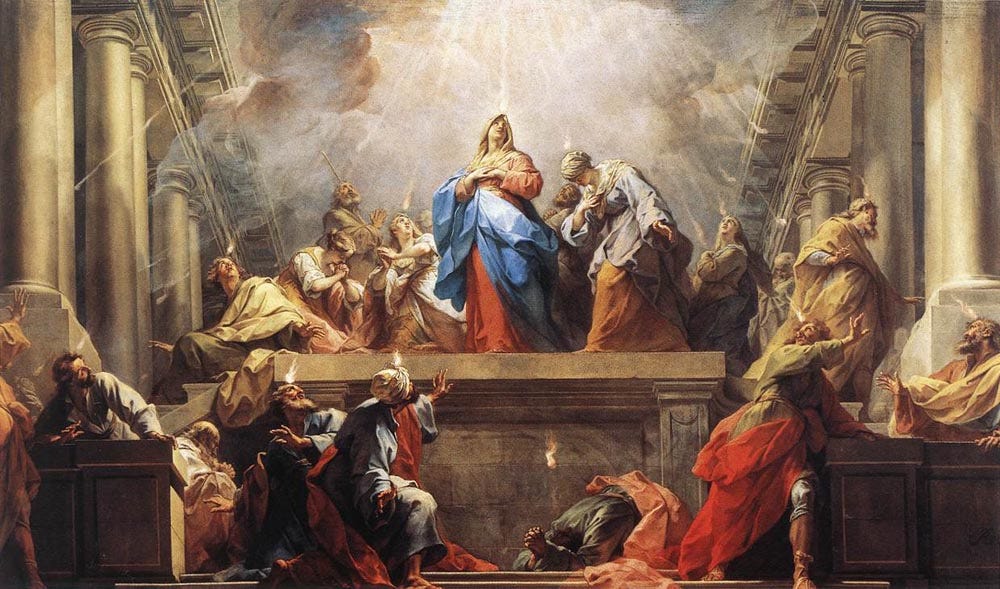
When the day of Pentecost arrived, they were all together in one place. 2 And suddenly there came from heaven a sound like a mighty rushing wind, and it filled the entire house where they were sitting. 3 And divided tongues as of fire appeared to them and rested on each one of them. 4 And they were all filled with the Holy Spirit and began to speak in other tongues as the Spirit gave them utterance.
Acts 2:1-4
The day of Pentecost arrived.
This is significant to note. Everything God does has divine intention. Why then does He choose the day of Pentecost as the day to pour out His Spirit?
There are two possible reasons, which are really one when you stop to think about it.
The first reason is this is a Jewish holiday, meaning there would be a considerable number of pilgrims in Jerusalem from across the known world. The majority of Jews did not live in Jerusalem. This was one of the three Jewish feasts that called for a pilgrimage to the Holy City. It got its name, Pentecost (fiftieth), because it took place 50 days after Passover.
The second reason, this was a Feast of Harvest, a time of celebrating the first fruits. In other words, there was a beautiful symbolic significance: the outpouring of the Holy Spirit in extraordinary power was meant for witnessing and evangelizing the world. What is that but a great harvest in the field of the world?
The central point of Pentecost was world evangelism.
It is a Feast of Harvest in Jerusalem and on this day the Lord pours out the Spirit in extraordinary power and notice what happens in verses 40-41 of Acts 2, this is Peter filled with the spirit and preaching.
40 And with many other words he bore witness and continued to exhort them, saying, “Save yourselves from this crooked generation.” 41 So those who received his word were baptized, and there were added that day about three thousand souls.
Jesus' ministry is over, He dies on the cross and how many people are really still following him? Just his female disciples and that is it. The only ones with the faith not to leave are the women.
The male disciples have run, they left Jesus on the cross. However, Jesus is raised from the dead and spends a few weeks with his disciples and now they all believe. He then ascends into heaven and who is left on earth following him? His male and female disciples.
In 1st Corinthians 15:6 we are told he also appeared to over 500 brothers and sisters. Many of whom we could assume were also followers of the Way.
A few weeks before Jesus had been with His disciples and told them that it was better that He go so that the Holy Spirit would come1.
And what happens?
On the feast of harvest in Jerusalem, Jesus pours out the Spirit in extraordinary power and 3000 people are brought from the kingdom of darkness into the kingdom of light.
In one day, 10x the amount of people are brought into the kingdom compared to how many were following Jesus before He left earth.
We will get to tongues, but the primary point of Pentecost is not tongues. It is the enactment of the Spirit in the life of believers.
In verse two were given an important adverb. What does an adverb do? It modifies a verb or adjective. Meaning it brings clarity to how something is being communicated.
“suddenly”
“And suddenly a sound came from heaven." I focus on this word to drive home the point that the Holy Spirit is free and sovereign. He is not bound to anyone's timing or technique for how to get His power. No pastor, no Christian leader has this special unique ability.
John Piper puts it like this:
We are to bank on his daily, indwelling presence and grace, walk in the obedience of this faith, and pray day and night for the outpouring of power from on high. But we cannot make the Spirit come. When he comes, he comes suddenly. He will never become anyone's bellhop. He loves and he serves. But he keeps his own hours. He knows what is best for us2.
As a 5-year-old boy in the back room of Jubilee church I was not expecting to have this encounter, I didn’t know it would happen. My Sunday school teacher had recently taught about the gifts and from a young age, I was trained to be open to the work of God. But that was it.
Friend, have you opened yourself up to the work of God?
Are you in a posture that says, “God do what you want when you want?”
In verses two and three we are shown a powerful image:
"And suddenly a sound came from heaven like the rush of a mighty wind, and it filled all the house where they were sitting. And there appeared to them tongues as of fire, distributed and resting on each one of them."
At times the Holy Spirit makes himself known through visible, audible, or touchable manifestations. In the Old Testament there was the pillar of cloud and the pillar of fire.
At Jesus' baptism a dove. In Acts four the building shakes. In Acts six Stephen's face was like the face of an angel. In Acts 16 an earthquake.
The Spirit will and can stoop to give us visible, tactile demonstrations of his presence and power. Why he does this for some and not others, and at some times and not other times we don’t know why. This is part of his sovereign wisdom.
He is not fire. He is not wind. He is not a dove. He is not a warm glow. But he can be any of those things.
However, He will not use these manifestations in a way that allows us to confuse him with them. He is free. But when he pleases, there may be fire and there may be sound.
When I encountered the baptism of the Holy Spirit, it was in a dingy room at Jubilee church in Camarillo California. Carpet stains, a flannel graph Moses and bright plastic chairs. There was no voice from heaven, no wind, no light. But what there was; the sovereign presence of the Holy Spirit filling me.
The disciples in Acts two saw tongues of fire and heard violent wind. It filled them with an overwhelming sense of the presence of God. Leading up to that moment they were praying and singing the Psalms. We could imagine they were singing psalm 27, I believe that I will see the goodness of God in the land of the living.
Then suddenly something happens that utterly transforms their knowledge of God's presence into the experience of God's presence. They see fire on each other's heads, and they hear a loud wind. They are filled not merely with a deductive certainty of God's present reality based on Psalm 27, but with an experiential certainty based on the extraordinary outpouring of the Holy Spirit. They become overwhelmed with the greatness of God.
So much so they are accused of being drunk and what’s Peter's response? He says, it's 5 o’ clock somewhere. That’s the CEV translation (the Country English Version), I am kidding.
No, it's only nine in the morning (Acts 2:15).
Rather they were so overflowing with worship, praise, and confidence in God, verse 11 tells us, we hear them telling in our own tongues the mighty works of God.
Luke calls this the fullness of the Holy Spirit in verse 4: "And they were all filled with the Holy Spirit and began to speak in other tongues, as the Spirit gave them utterance."
Being filled with the Holy Spirit is being overwhelmed with the greatness of God.
They weren’t filled with confidence in their own ability, rather they were filled with extraordinary confidence in the power of God.
Read how John Piper puts it:
The flames on their heads had set fire to the knowledge of God and turned it into passion. And the violence and loudness of the wind had drowned out all the puny voices of doubt and uncertainty. And so, every remnant of timidity and hesitancy and weakness is swallowed up in the experience of God's greatness. And a tremendous boldness and courage and zeal was unleashed as they gave witness to the greatness of God3.
That's the essence of the fullness and baptism of the Holy Spirit that they received. This overwhelming experience of the greatness of God spilling over in courageous, passionate praise and witness.
This is the core purpose and focus of the baptism of the Holy Spirit.
Speaking in tongues is a piece of the story, but not the center of the story.
We know this because the Spirit fell on the church again in Acts 4:31 and the house was shaken and the fullness came and passion and boldness was there. But there were no new tongues, nor wind or fire.
In other words, God seems to give whatever manifestations He pleases at different times. They are not the essence, nor required.
Nuanced Understanding of the Baptism of the Holy Spirit
Some Christians believe that certain miraculous gifts of the Holy Spirit, like speaking in tongues, prophecy, and supernatural healing were meant only for the early Church and are no longer active today. This view is called cessationism.
Cessationists believe these gifts were signs that confirmed the message of the Apostles and the authority of Scripture as it was being written. Once the Bible was complete and the Church established, they argue, these sign gifts were no longer needed.
While cessationists still believe in the power of prayer and that God can do miracles, they believe those specific gifts are no longer given to individuals in the same way.
Others believe that all the spiritual gifts mentioned in the New Testament are still active and available to believers today. This view is called continuationism.
Continuationists believe that the Holy Spirit continues to give gifts like prophecy, tongues, and healing to build up the Church and reach the world. They see these gifts not as temporary signs, but as part of the ongoing work of the Spirit until Christ returns.
While they may differ on how these gifts should function in the Church, continuationists agree that there’s no biblical reason to believe God has stopped working in those ways.
And I want you to think about this, the only gift we seem to question is speaking in tongues. Even those who believe the gifts ceased with the last apostle, they still believe miracles happen, still believe in the gifts of leadership, teaching, helps, and so on. So, if you are going to exclude one gift doesn’t that mean you need to exclude the rest?
But more importantly we find the scriptures support the Holy Spirit’s presence and power for every believer till Jesus returns.
Now I say all this recognizing everyone reading this comes from varied and diverse backgrounds. Some of you are ready to bust out the flags and others have only seen flags in front of schools.
My hope for this article is that it gives the opportunity for both cessationists and continuationists to grow in their understanding of the person and power of the Holy Spirit and His work in their lives.
This includes being able to seek the power, presence, and gifts of the Holy Spirit for yourself in a manner with which you are comfortable. The Holy Spirit does not work by coercing, rather He works by patient grace.
What we see in Scripture is that Jesus promised His Church they would receive a powerful encounter with the Holy Spirit after Jesus’ own death and resurrection.
In Luke 11:13, Jesus explained that it is our Heavenly Father’s pleasure to give the Holy Spirit to those who ask Him. Just like salvation, the Holy Spirit is a free gift from the Father received by faith.
Through the baptism in the Holy Spirit, God extends His power and the blessing of His presence to all believers. That we too may be overwhelmed with the greatness of God.
Our role is simple; to just receive.
This baptism is marked by an initial act of receiving and continues as a daily response of receiving what God has made available for our service and relationship with Him. Through this process of receiving, we choose to accept His good gifts and all His provision for our lives.
Baptism of the Holy Spirit is bigger than speaking in tongues.
There are opportunities everyday where we can experience the different ways God manifests His power as we draw closer to Him. Most of those experiences will have nothing to do with speaking in tongues.
Rather we are encouraged to seek the gifts of the Holy Spirit found in 1st Corinthians 12:8-104 and Romans 12:6-8. To learn, pray, and seek.
However, these gifts are not a reflection of spiritual maturity; they are a response of openness and faith to God.
I went to a Pentecostal university5 for my undergraduate degree in practical theology. One spring semester in my pastoral theology II course, a fellow student shared her story of being crushed at a Pentecostal summer camp because she could speak in tongues. She went on to share how she was treated as less spiritual. That is not God’s intent. Speaking in tongues doesn’t mean you have leveled up in your faith nor does it give you kingdom clout.
The Gift of Tongues
The gift of tongues has a dual purpose as outlined in the scriptures. First, when coupled with the gift of interpretation, it provides encouragement, comfort, and exhortation to the church.
However, like Paul says6 I would rather speak five words people understand than 10,000 words they don’t. I am not saying there is not a place for this, but it's not the pattern nor the normative function of tongues. It tends to be the norm during seasons of revival rather than ordinary seasons.
The secondary purpose of tongues is when it is used in prayer. Here it provides personal encouragement7 and serves as heavenly unction8 for prayer concerns that we lack words to adequately express. As a prayer force, it adds a new dimension to our partnership with God.
I can’t tell you how often I do not know what to pray or how to pray and find myself praying in tongues. A few years back my wife, our kids, and I were driving back from a trip to Asheville, North Carolina. As we are winding through the mountains, we are driving through a storm. The storm was the tail end of a hurricane that had started in the gulf. To this day, the worst weather I have ever driven through. There was nowhere to pull off, the only thing that kept me calm was praying in tongues.
So, how do we receive the baptism?
A person receives the Holy Spirit when they receive Christ according to Ephesians 1:13.
However, as demonstrated in numerous accounts throughout the New Testament, a believer must receive the Holy Spirit in a manner that accepts the full measure of His work in order for it to be activated in their life.
Many christians have been taught that the Holy Spirit’s role in our day and time is as the seal of the promise of salvation. This is true, but it is only one aspect of the Holy Spirit’s work in the believer’s life.
Receiving the Holy Spirit after conversion is based on a dawning awareness that His role is more than what is understood or explained at conversion.
When you first come to faith, it is like a fire hose, a transformation, and it takes time to understand and experience the fullness.
This act of receiving is accepting the broadened biblical role of the Holy Spirit by faith.
Sometimes this will manifest by speaking in tongues, but not always, and that is the key: just because you don’t speak in tongues doesn’t mean you are not filled with the spirit.
You may manifest other gifts. Like the gift of faith, words of wisdom, or the gift of teaching or encouragement. Encouragement is not my gift. But some of you can take another person who is down and out, gloomy and you are able to encourage in a way that brings the light back to their eyes. That's incredible, I can’t do that, it’s not one of my gifts.
I want to end by answering two important questions.
How Do You Receive the Baptism in the Holy Spirit?
You receive the Holy Spirit by faith based on the truth of Scripture and the desire of your heart to accept the promise of God for yourself. The acceptance of the promise of God’s power is by faith, the same faith used to receive Christ as Savior.
To receive the Holy Spirit, you approach God in an attitude of faith, because according to Luke 11:13, it is His good pleasure to give His Spirit to those who ask.
It's not spooky, not full of steps, you certainly do not need to be “slain in the Spirit” it's simply asking God.
When you are saved and come into the faith, Jesus does not come into your heart.
That’s bad theology.
Jesus is in heaven pleading on your behalf at the right hand of the Father. Jesus tells us He had to go and will come again.
Rather it is the Holy Spirit who makes your spirit alive. It is the Holy Spirit who is inside you. Which means you already have the Holy Spirit. That happened at conversion. Your heart, soul, spirit are regenerated through the application of the Holy Spirit.
Experiencing the baptism of the Holy Spirit is a deeper encounter, openness, and willingness to be used by the Holy Spirit who is already dwelling within you.
What Can You Expect?
You can expect things to be different in your life. As demonstrated in Scripture, when a person receives the baptism of the Holy Spirit, there may be a manifestation associated with the encounter.
Some become emotional or express a gift of the Holy Spirit such as tongues, while others notice a change in their insights into Scripture or boldness to witness.
While manifestations are not required to receive the Holy Spirit, they are not uncommon.
However, consider this.
God created you in His image. He created you in a unique way with your own wiring and personality. He looks and says it is good, you are fearfully and wonderfully made.
If God made you with intention and purpose, and you are not by nature an overly emotional person, perhaps you are more analytical, then wouldn’t the Holy Spirit more than likely meet you in the way you are wired?
Because God is not trying to change you. Rather he wants to transform you into being the truest, fullest and whole version of yourself.
Please don’t be discouraged if you haven’t had a wild experience with the Holy Spirit. Sometimes it's gradual, other times sudden.
But it’s choosing each day to say, “Holy Spirit I want to listen to you, follow you, I open myself up to allow the gifts you have to grow in me.”
This fullness can happen at church, in your car, at your home, or on a plane. This doesn’t have to happen in a church environment. This can happen when you are all alone or even while you read a Substack article.
But the desire of the Holy Spirit is not that you would be confused, but rather filled. That you would experience the fullness of your salvation.
If this stirred something in you, whether curiosity or discomfort, consider this your invitation to ask, seek, and knock. The Father delights in giving His Spirit.
If my work has encouraged or challenged you, you can fuel the next post (and my caffeine habit) right here.
Nevertheless, I tell you the truth: it is to your advantage that I go away, for if I do not go away, the Helper will not come to you. But if I go, I will send him to you. (John 16:7)
Piper, J. (2000, May 28). Tongues of fire and the fullness of God. Desiring God. https://www.desiringgod.org/messages/tongues-of-fire-and-the-fullness-of-god
Piper, J.
Word of wisdom – Divine insight for a specific situation.
Word of knowledge – Supernatural knowledge of something not learned naturally.
Faith – Extraordinary confidence in God’s power for a specific purpose.
Gifts of healing – Supernatural healing of illness or injury.
Working of miracles – Acts of divine power that defy natural laws.
Prophecy – Speaking God’s message under divine inspiration.
Distinguishing of spirits – Ability to discern the source (Holy Spirit, demonic, or human).
Tongues – Speaking in a language unknown to the speaker.
Interpretation of tongues – Supernatural understanding and explanation of that language.
Southeastern University, Lakeland, FL.
Nevertheless, in church I would rather speak five words with my mind in order to instruct others, than ten thousand words in a tongue. (1 Corinthians 14:19)
The one who speaks in a tongue builds up himself, but the one who prophesies builds up the church. (1 Corinthians 14:4)
For one who speaks in a tongue speaks not to men but to God; for no one understands him, but he utters mysteries in the Spirit. (1 Corinthians 14:2)