
No Christian Left Behind
The “Secret” About the Rapture

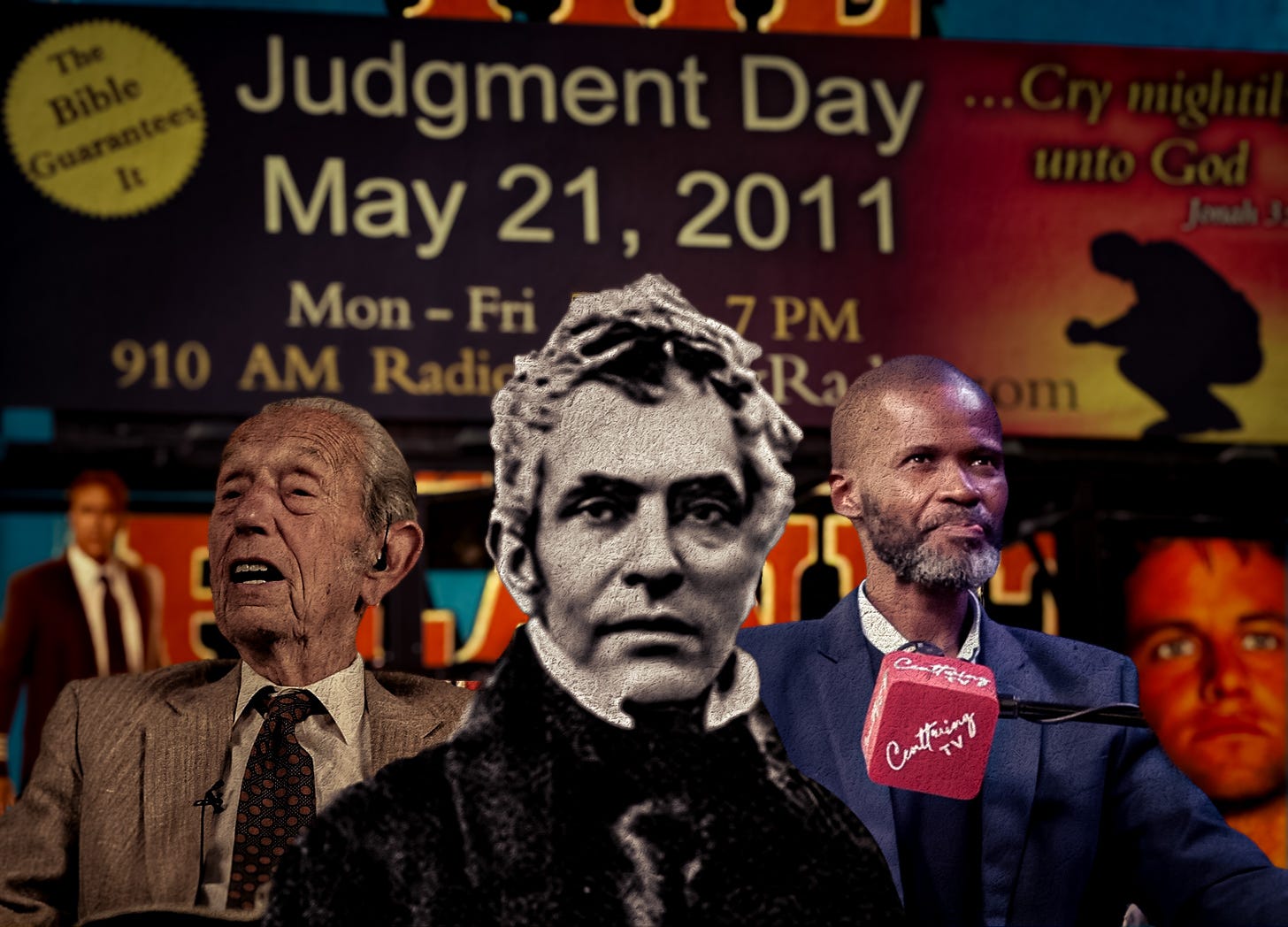
I was five-years-old playing in the upstairs bedroom I shared with my brother in Newbury Park, California. Suddenly, the house felt eerily quiet, that still silence of no one home. I ran to my parents room down the hall and lying on the bed were their outfits, perfectly laid out. I began to cry.
Turns out my mom was in the bathroom, but I thought I missed the rapture.
For decades, many Christians have heard the same song. At any second, without warning, millions of believers will, “poof,” vanish. Cars will crash. Planes will fall from the sky. Penguins will be released from the zoo.
This is what we find in the Left Behind novels and movies. If you’re familiar with Awana then you’ve heard preachers warn: “Don’t get left behind.” It’s become one of the most terrifying and popular images of the end times.
Just one issue. It’s not what the Bible teaches.
Where Did This Idea Come From?
The idea of a “secret rapture” is new. And by “new,” I mean “new” in the theological sense, not iPhone 17 new or whoever is currently JLO’s husband new. For the majority of church history, the concept of a secret rapture didn’t exist.
Augustine? Never taught it.
Aquinas? Never mentioned it.
Calvin? Never wrote it.
Edwards? Never preached it.
For nearly 1,800 years of Christianity, no one talked about believers vanishing into thin air. The idea ‘arose’ in the 1800s, from John Nelson Darby.
John Nelson Darby and the Birth of the Rapture Theory
Darby was an Anglican priest in Ireland who became disillusioned with the church and joined the Plymouth Brethren, a small separatist movement. Darby saw the institutional church as hopelessly corrupt, which catapulted him toward a more pessimistic view of history1.

During this period of his life, Darby experienced a near-fatal horse riding accident that kept him bed-ridden for months. He passed the time by intensely reading Scripture. While reading, he came to believe that the “kingdom” described in prophetic books like Isaiah was not about Israel or the Church, but prophecies of a future kingdom2.
Darby insisted on a strictly literal reading of prophetic texts. He divided history into “dispensations,” arguing God had separate plans for Israel and the Church. That framework became the foundation of his rapture theory3. Darby taught that before a future period of tribulation, the church would be secretly removed from the earth. This was a sharp break from traditional teaching and many theologians in his day rejected it.
Charles Spurgeon warned that Darby’s ideas undermined the continuity of God’s redemptive plan and distracted believers from the gospel4. But through conferences, pamphlets, and later the Scofield Reference Bible, Darby’s rapture theory spread like the 90s Beanie-babies craze in North America.
So, when people imagine pilots vanishing, cars without drivers, or clothes on the floor of Hobby Lobby, that’s not the Bible. That’s John Nelson Darby, 1800s dispensationalism, and a half century of pop culture novels and movies.
Which raises the real question: if the “secret rapture” doesn’t come from the apostles or church history, what does the Bible actually say?
Biblical Witness
When people talk about the rapture, there are usually three main passages they turn to.
1 Thessalonians 4:16–17
“For the Lord himself will descend from heaven with a cry of command, with the voice of an archangel, and with the trumpet of God. And the dead in Christ will rise first. Then we who are alive, who are left, will be caught up together with them in the clouds to meet the Lord in the air, and so we will always be with the Lord.”
This is the famous “rapture verse.” The word rapture itself comes from the Latin Vulgate translation where we find the word rapiemur, meaning, “caught up or snatched up.”
However, what’s actually happening here?
In the text, the Lord descends, there’s a cry of command, the voice of an archangel, and the trumpet of God. Then the dead in Christ are raised and believers are caught up to meet the Lord. There is nothing quiet, hidden, or secret about that.
In the ancient world, when a king or emperor visited a city, the citizens would go out to meet him and then accompany him back in triumph. The Greek word Paul uses for “meeting” (ἀπάντησιν) carries that connotation. Paul isn’t picturing believers disappearing to leave earth behind. He’s imagining them welcoming their returning King.
Matthew 24:30–31
“Then will appear in heaven the sign of the Son of Man, and then all the tribes of the earth will mourn, and they will see the Son of Man coming on the clouds of heaven with power and great glory. And he will send out his angels with a loud trumpet call, and they will gather his elect from the four winds, from one end of heaven to the other.”
Jesus presents similar imagery, it is highly visible, “all the tribes of the earth will see.” It is audible, “a loud trumpet call,” and theological, the elect are gathered. Jesus is not presenting phase one of His return, this is the return itself.
1 Corinthians 15:51–52
“Behold! I tell you a mystery. We shall not all sleep, but we shall all be changed, in a moment, in the twinkling of an eye, at the last trumpet. For the trumpet will sound, and the dead will be raised imperishable, and we shall be changed.”
1st Corinthians connects the transformation of believers directly to the resurrection and the last trumpet. Not the “next-to-last,” nor “part one,” it’s the final trumpet, the last note in God’s redemptive plan.
The Pattern Across All Three
Putting these passages together, a consistent theology is displayed. Jesus returns in glory. A trumpet sounds. The dead are raised. Believers are gathered to Him. A public one time event.
There’s no hint of Jesus coming halfway, secretly whisking believers away, and then returning again years later. The “two-stage return” is simply not in the text.
What Paul and Jesus both describe is the same event: the resurrection of the dead and the gathering of the saints when Christ comes in glory.
Which leads to the next issue: where did the idea of splitting Christ’s return into two parts even come from?
The Myth of the Two-Part Return
Teachers of the rapture claim the Bible describes two different comings of Christ. First, a secret rapture where He takes believers out of the world, and then second, years later, His actual Second Coming to judge and reign.
On their charts, it looks neat and tidy: two stages, separated by seven years of tribulation.
But a close reading of scripture shows one event, not two. Going back to the three passages, imagine them each as a melody in a Bach fugue, entering at different times with their unique contribution. All three give a new angle on the same motif.
(Have a listen to Fugue in G, by Bach as you continue)
1 Thessalonians 4 opens with Jesus descending, the dead rising, the living caught up, its loud, visible, and climactic. Matthew 24 follows with The Son of Man coming in glory, a trumpet sounding, His elect people are gathered. Then the crescendo, in 1 Corinthians 15, the dead are raised, and the living transformed at the last trumpet.
These aren’t two different events. The texts are describing the same event from different angles.
Then, here’s a detail hard to get around: Paul says this transformation happens at the last trumpet5.
If the rapture is supposed to happen years before Christ’s return, then Paul’s “last trumpet” isn’t really last, it’s more like the “next-to-last.” But Paul doesn’t leave wiggle room, there is not a later encore, he presents finality.
The Imagery of Meeting the King
Remember that word from 1 Thessalonians 4, ἀπάντησιν, the “meeting.” Again, in the ancient world, citizens would rush out to greet a visiting king and escort him back into the city in triumph.
Paul isn’t describing Christians being evacuated from earth. He’s describing the church going out to meet their returning King and accompanying Him in victory. This is a welcome party, not an escape party.
The Real Source of the Two-Part Theory
Where does the idea of splitting Christ’s return into two stages come from? Not from the apostles, not from Jesus, nor from the early church fathers. It comes from John Nelson Darby in the 1800s.
Darby took these passages, separated what belonged together, and built a system of “dispensations” that treated the rapture and the Second Coming as distinct events. The idea caught on in certain evangelical circles, particularly in North America.
But biblically, the return of Christ is a single, astonishing moment: resurrection, judgment, renewal. Not two acts, no split timeline, but one glorious unveiling of the King. The Bible doesn’t talk about a secret escape plan. It talks about the public, victorious return of Jesus.
Why This Matters
If Christians disagree on the details, why should we care about whether a rapture is secret, public, or in two-parts? It matters because what we believe about the end shapes how we live in the now.
1. Escape vs. Engagement
The secret rapture has fueled an escapist mindset. If Christians are going to vanish at any moment, then why invest in the world? Why fight injustice, care for creation, or build for the long haul? After all, it’s all going to burn, right?
Scripture sings a different tune. When Christ returns, He doesn’t abandon the world, He renews it. The resurrection and new creation mean our work, our witness, and our love in this life are not wasted. We are not to bunker down, but to engage, that it would be as Jesus prayed, “on earth as it is in Heaven.”
2. Fear vs. Comfort
The rapture teaching that terrified so many millennial Christians in the 90s, was originally built on a text meant to bring comfort.
Paul closes his words in 1 Thessalonians 4 with this line: “Therefore encourage one another with these words.” Not to scare each other or speculate endlessly. But to encourage one another. The rapture isn’t about living in constant anxiety that we’ll be left behind, because we listened to Korn on a burned CD in Middle School. It’s about reminding believers; death isn’t the end, and that we will be with the Lord forever.
3. Counterfeit Hope vs. True Hope
A theology of escape trains us to look for shortcuts, a secret exit strategy. But the gospel doesn’t promise escape, life is not a video game. What the gospel does promise is endurance, resurrection, and victory.
That’s why Jesus warned against false messiahs who promise an easier way6. The true hope isn’t that we’ll disappear, it’s that Christ will reappear to set all things right.
4. The Mission Now
If Jesus is coming again to renew the world, then our mission today is clear. Preach the gospel. Love our neighbors. Serve the poor. Live faithfully in the tension of the “already, not yet.”
That we would practice faithful transformation and not wait for evacuation.
The rapture isn’t an escape plan. It’s about the public, victorious return of Jesus, when the dead are raised, the living are transformed, and the whole creation is made new.
So don’t spend your life afraid you’ll be left behind. Spend your life leaning forward to the day when Christ comes again, because when He does, no one will miss it.
And mom BTW, next time please be more careful laying out your clothes, “this was the early 90s, we’re talking about.”

Don’t get ‘left behind’ (the joke wrote itself) in confusion, the Theology Made Simple course gives you the tools to make sense of doctrines like this.
Gribben, C. (2018). John Nelson Darby and the roots of dispensationalism. Oxford University Press.
Darby, J. N. (1867). Synopsis of the Books of the Bible: Isaiah to Malachi (Vol. 2). London: G. Morrish.
Darby, J. N. (1857–1862). Synopsis of the Books of the Bible (5 vols.). London: Morrish.
Spurgeon, C. H. “Mr. Grant on ‘The Darby Brethren.’” The Sword and the Trowel, June 1869.
1 Cor. 15:52
Mark 13:21–23
Thank you Jordan this is what I have always believed and have been ridiculed for not believing the rapture doctrine. I am so thankful to have confirmation.
This is such a helpful and succinct articulation.
I’ve done my homework on this since my job has been on the line over not believing a secret rapture and I wish I’d just had this article to refer to!