
Is the God of the Old Testament the Same as the New Testament?

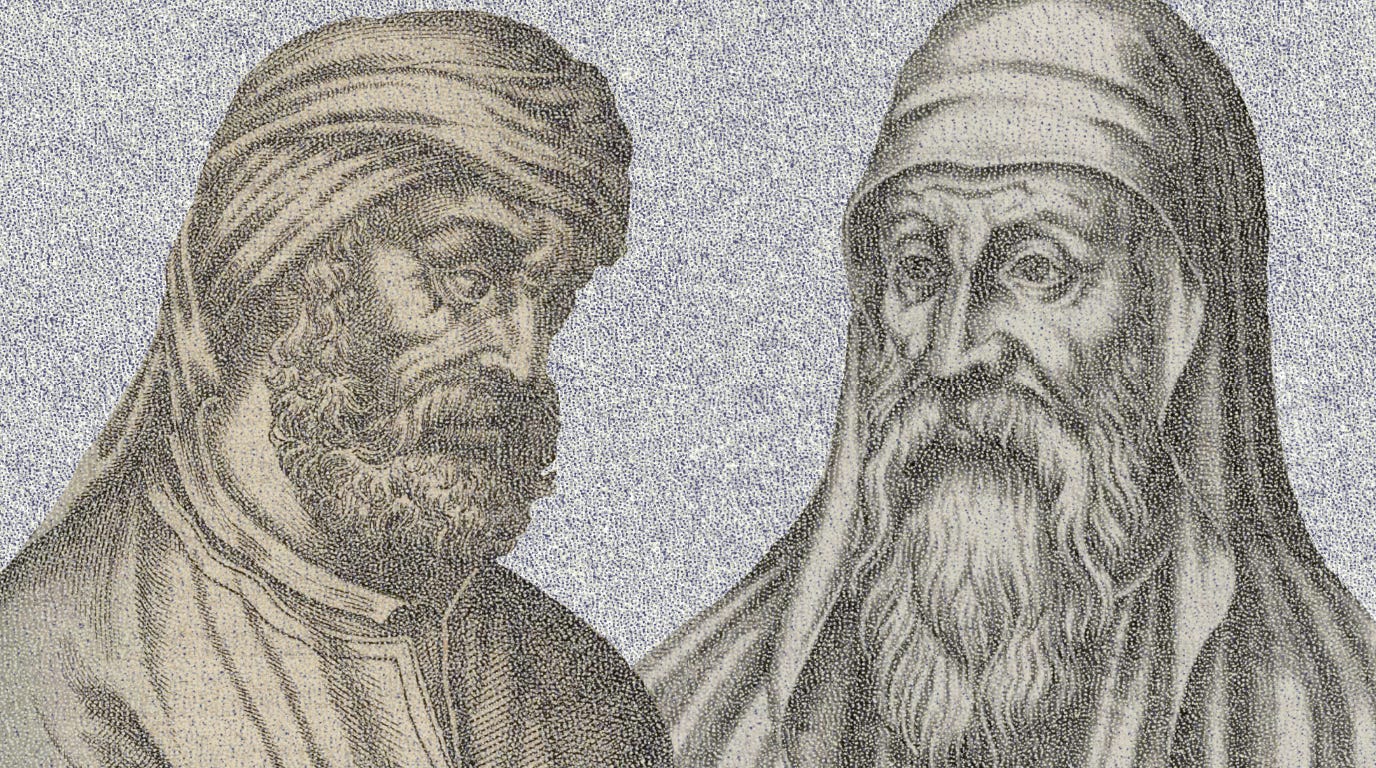
In the second century, a wealthy shipowner from the Black Sea almost split Christianity in two. He read the Old Testament, then the New Testament, and reached the conclusion that these two books couldn’t possibly be describing the same God.
His name was Marcion and he had a point.
The God of the Old Testament commands Abraham to murder his son, drowns the entire world, and orders Joshua to kill every man, woman, child, and animal in Canaan. In Exodus, He personally hardens Pharaoh’s heart, then punishes Pharaoh for having a hard heart. Then you open the New Testament and Jesus says: “Love your enemies.” “Blessed are the merciful.” “God is love.”
So which is it? Here are three distinct answers to the question is the God of the Old Testament the same as the God of the New Testament?
The Marcionite Solution: Two Different Gods
Marcion’s answer (at least in his mind) was the cleanest possibility: they’re not the same God. The God of the Old Testament, he argued, was the Demiurge, a lesser creator-deity, powerful but cruel, obsessed with law and ethnic favoritism. The God Jesus called Father in the New Testament was a completely separate being, a higher hidden God of pure love, previously unknown to humanity, who sent Jesus to rescue us from the Demiurge’s world.1
The picture often painted of Marcion is one of a fringe lunatic; a wealthy man who got obsessed with some radical ideology (glad rich dudes don’t do that anymore) but that was not the case. He was educated, theologically serious, and yes—well-funded. His version of Christianity spread at a swift pace; within a few decades, Marcionite communities existed across large portions of the Roman Empire. By the time the early Church condemned him as a heretic around 144 AD, his movement had spread east and west through the empire's trade routes and urban centers. What makes this wild is the math. Christianity was barely a century old, still small, still decentralized. Yet somehow Marcion created a network with bishops, congregations, and his own canon of scripture. That last part is particularly significant because those who opposed him realized they’d never formally defined what the canon actually was. Marcion had forced them to. The Bible as a bound collection exists partly in response to him, though it would not be formalized until centuries later.2
The Biblical evidence he gave to support his perspective was real. He looked to Galatians 3:19, where Paul said the law was “ordained by angels,” not given directly by God. He pointed to Matthew 5, where Jesus repeatedly says “You have heard it was said… but I say to you,” as evidence that Jesus was overriding the old commands. A God who regrets creating humanity3 and a God who is love4 were two different beings in Marcion’s perspective.
The early Church's counter-argument was that if you cut the Old Testament, you lose the framework that makes Jesus make sense. There would no prophecy, no temple, no exile, and no covenant promise that these are my people and I will be there God.5 The cross would have nothing to do with the eternal promises of the triune God and instead be a tragic execution, rather than the climax of redemption. Further, you end up with a God who appeared out of nowhere in 30 AD, with no history and no reason to be trusted. Marcion solved the problem by amputating half the patient. Most Christians refused the surgery, but the question never went away.
The Progressive Revelation View: Same God, Different Classroom
In this view, the Old Testament and New Testament present the same God, but He reveals himself in stages, as humanity matures enough to receive him. Think of it like teaching a child to read. You don't sit a five-year-old down with War and Peace and expect them to track 1,200 pages of Russian aristocracy and Napoleonic warfare. You obviously start with Crime and Punishment. I'm kidding. You start with a Bluey picture book and work up from there.

Within this view, the Old Testament violence reflects God meeting people where they were. The surrounding cultures of Canaan practiced child sacrifice and ritual prostitution. Against that backdrop, the Torah was a dramatic moral upgrade; don’t sacrifice your children, care for the widow and orphan, free your slaves every seven years. So, to an ancient Canaanite, the Torah would have looked like radical mercy. The Old Testament scholar John Goldingay argues that if you read the Old Testament as a story in motion rather than a static rulebook, you can see God consistently pushing Israel toward a larger, more inclusive vision.6 Abraham is called to bless all nations. Jonah gets sent to Nineveh, Israel’s hated enemy. Ruth, a Moabite outsider, becomes the grandmother of David. The story keeps expanding its definition of who belongs and what love looks like. By the Sermon on the Mount, Jesus isn’t contradicting the Old Testament, He is fulfilling it, “You have heard it said, love your neighbor and hate your enemy.” That’s the early understanding, but here’s a fuller revelation, “But I say to you, love your enemies.” That’s where the spiritual formation arc was heading in God’s plan. He was taking a nation as His own, one that was to be different from the others: counter-cultural, holy, mature, set apart. That type of development takes time.
The objection to this view is this: if God’s character is perfectly good and unchanging, why does the revelation appear to change? The God of Judges and the Christ of the Gospels look like different gods to the modern reader (which is the wedge Marcion drove down the middle of the church).
The response of this view would be that God's character didn't change, but the way He taught met people where they were. The same way a parent tells a four-year-old the truth at a four-year-old's level, then tells more of it as the child can handle more. The revelation given to Israel was complete for that stage. Theologians call this divine accommodation. Calvin called it God’s “lisping,” speaking baby-talk to us so we could hear anything at all.7 To use a a different analogy, prescribing penicillin to someone in 1200 BC doesn’t make you a better doctor. It makes the medicine useless. There’s no germ theory, no sterile technique, no diagnostic language to make the dose make sense. The patient dies confused, holding a pill he had no framework to use. Revelation in this view works in a similar way.
The Christological Rereading: Jesus is the Lens
The third view is the most demanding, and for many modern biblical scholars, the most persuasive. In this perspective Jesus doesn’t complete the Old Testament or simply build on top of it. He reinterprets it from the inside, and in doing so, reveals the aspects that we have been misreading. The starting point is John 5:39, where Jesus says, “You study the Scriptures diligently because you think that in them you have eternal life. These are the very Scriptures that testify about me.” When He speaks this, there is no New Testament. Jesus is talking about and describing the Old Testament. In Luke 24:27, after the resurrection, Jesus walks for seven miles with two disciples and goes through the entire Hebrew Bible showing how all of it points to Him. For theologians like N.T. Wright and Scot McKnight, this means Jesus is the interpretive key to the whole library of God.8 You read the Old Testament through Jesus. He becomes the lens that brings the rest of Scripture into focus, and passages are read in light of the whole canon with Christ at the center. Theologians call this the Christological hermeneutic. A fancy phrase for a simple idea: Christ is the key that unlocks the rest of the Bible.
Augustine put it like this, “the New Testament is hidden in the Old, the Old is unveiled in the New.”9
Here are a few examples of this. In Matthew 5 Jesus quotes Exodus 21, “an eye for an eye,” then carries it forward to its full conclusion, pushing a principle that already limited retaliation all the way to non-retaliation. In Mark 7, He reframes the Torah’s food laws around inner purity, a reframing the apostles later finalize in Acts 10 and 15. In Matthew 19, the Pharisees cite Moses’ allowance of divorce as God’s word; Jesus replies that Moses allowed it “because of the hardness of your hearts,” implying that even parts of the Law were concessions to human failure, not eternal commands. This means not every statement in the Old Testament carries equal divine authority. Some texts reflect where God was leading Israel. Others reflect where Israel actually was. The way you tell the difference, in this view, is by running the text through the filter of the cross. Does it look like Jesus? Does it fit a God who’d rather be crucified than retaliate?
Here’s the fair pushback on this view that you may be thinking, if Jesus overrides Moses in some places, what stops anyone from overriding the parts of the Bible they find inconvenient (Jefferson party of two, anyone)? Proponents of this view spend real effort explaining why the Christological filter is principled rather than a convenient option (done correctly it is anything but convenient). Their claim is that Jesus explicitly said He is the lens, the work is on us to have Him be our hermeneutical filter for the Bible.
The Same Question, Three Different Shapes
All three views are arguing about different things underneath this question. Marcion was asking a character question: is the God of Joshua the same person as the God of the Sermon on the Mount? The progressive revelation view is asking a pedagogical question: is God’s teaching method consistent with how moral development actually works? The Christological rereading is asking a canonical question: which texts within Scripture get to interpret and define all the others?
What you make of God in the Old Testament depends on which question you think matters most. You won’t find a flat, simple answer. The texts are too strange and the distances too large. The God in the dock resists being managed neatly. But the question itself produced some of the most important developments in historical theology. It gave the Church its biblical canon. It gave theology the doctrine of progressive revelation. It gave Christian thought the discipline of hermeneutics. Not bad for a problem that started with one shipowner deciding the Old Testament didn’t count.

At 18 I decided I wanted to be a pastor. There was one problem. While I grew up in church, I didn’t have a clear understanding of how I thought about God. So, I spent 20 years pursuing that. This framework is the result of those 20 years.
You can get it in 40 minutes. The Theology Made Workshop
Tertullian, Against Marcion, in Ante-Nicene Fathers, vol. 3, ed. Alexander Roberts and James Donaldson (Buffalo: Christian Literature Publishing, 1885).
Harry Y. Gamble, The New Testament Canon: Its Making and Meaning (Philadelphia: Fortress Press, 1985).
Genesis 6:6.
1 John 4:8.
This covenantal formula is found throughout the Old Testament from Genesis through the Prophets. We also find its continuation in the New Testament in both 2nd Corinthians and Revelation.
John Goldingay, Old Testament Theology, vol. 1, Israel’s Gospel (Downers Grove, IL: IVP Academic, 2003).
John Calvin, Institutes of the Christian Religion, ed. John T. McNeill, trans. Ford Lewis Battles (Philadelphia: Westminster, 1960).
N.T. Wright, The New Testament and the People of God, Christian Origins and the Question of God 1 (Minneapolis: Fortress Press, 1992); the Christological hermeneutic is developed more fully in N.T. Wright, Jesus and the Victory of God, Christian Origins and the Question of God 2 (Minneapolis: Fortress Press, 1996), Scot McKnight, The Blue Parakeet: Rethinking How You Read the Bible (Grand Rapids: Zondervan, 2008).
This is a repharsing over time of what Augustine said in his commentary on Exodus, the rougher translation would be more like: It is much and solidly signified that fear pertains rather to the Old Testament, as love does to the New although even in the Old the New lies hidden, and in the New the Old is opened up.
This was a very interesting discussion. When reading the Old Testament, I realized nothing Jesus said was totally original, all the seeds WERE there in the OT, just not as prominent as the more obvious, seeming contradictions. I think Psalms most accurately reflects the NT perspective.
Hi Jordan,
Intriguing article; I recall a similar argument about Marcion in a class I had on church history last year. The pastor obviously wasn't agreeing with Marcion but the conclusion he had was similar to yours, albeit far more brief because he had to compress all the major happenings in the first 4 centuries into a 2 hour lecture / sermon. I appreciate you being able to expand on the subject!
Side note - I think the man on the right in your header picture is supposed to be Origen of Alexandria, not Marcion of Sinope.