
How to Weigh Different Theological Views

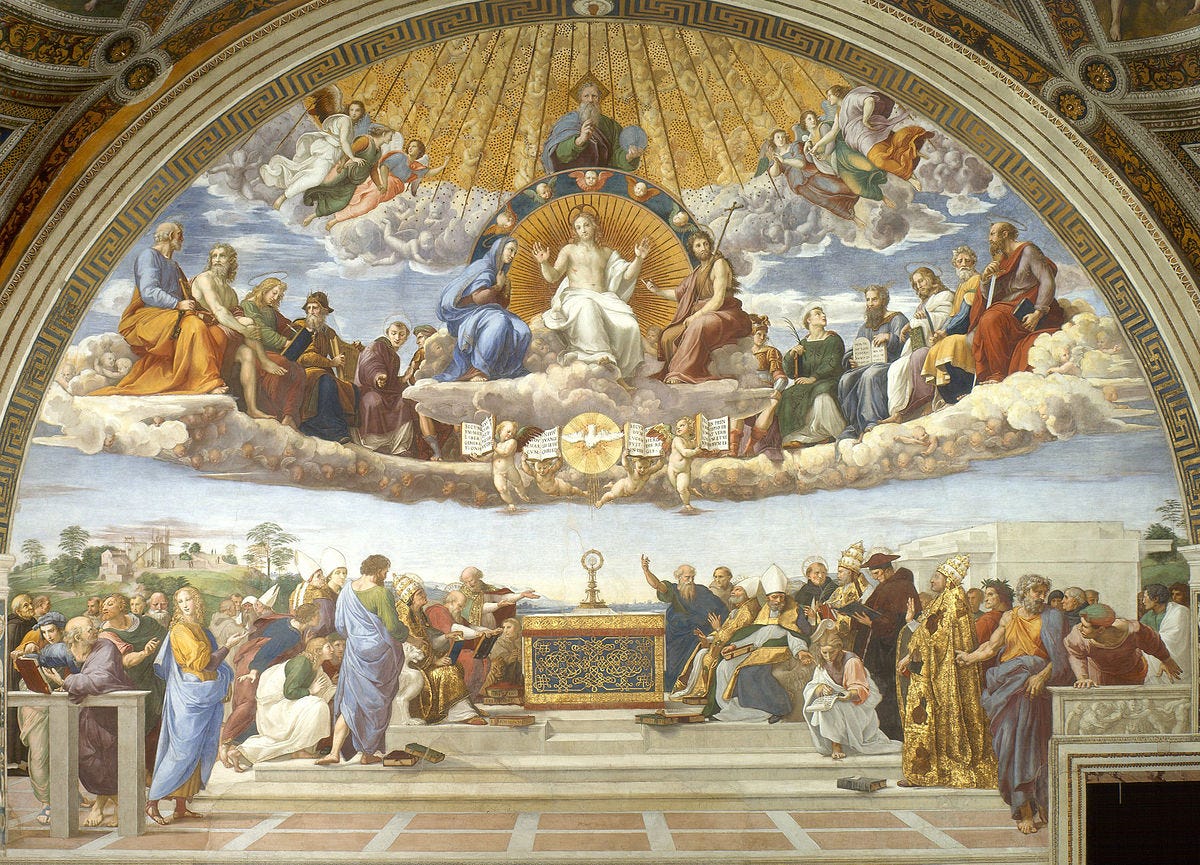
The food fight started over Calvinism.
Senior year of college, I came into the cafeteria for a quick lunch before my Homiletics class. The table across from me was having a conversation about Calvinism and Arminianism, to say it was a conversation is charitable.
Two guys going back and forth, barely waiting for the other to finish before they started into their defense. They weren’t listening, just waiting to pounce. As you can imagine it didn’t take long before the “discussion” turned into yelling at each other. Then the crescendo, one of them pushed back their seat as it scraped on the linoleum floor, he stood, and threw a dinner roll at the other. Yes, a stale, cafeteria, dinner roll. Which in turn the other guy threw that same dinner roll and a carrot back.
Thank God the food was so unseasoned and dry, it didn’t make a mess. The calvinist ended up storming out of the cafeteria. I finished my sandwich and thought, that will make a great story someday.
Have you ever heard two Christians argue about theology and thought, are they even reading the same Bible?
Let’s bring it to the living room.
You're at bible study and everything is normal, until someone mentions the idea of eternal security (once saved, always saved). And normally quiet Todd who was sitting there spilling nacho Doritos crumbs on himself, begins to point with his orange stained finger, shouting that salvation is conditional upon ongoing faith and obedience to God.
Before you know it, you’re caught in the crossfire, wondering if there is a better way.
Here’s the good news.
There is a better way.
However, the problem isn’t different theological views. That will always be the case.
The problem is most people don’t know how to weigh them well.
In this article, I’m going to give you a simple framework for evaluating different theological perspectives without getting overwhelmed, confused, or ready to throw your Bible at Todd.
Why Theology Can Feel So Confusing
Theology can feel intimidating because there are so many different views on everything.
It starts at the beginning of our faith with salvation. Are we predestined and chosen by God, or do we choose to come to faith?
Once someone is saved, their declaration of faith is through baptism. Is immersion the only way (fully put under the water) or does sprinkling count?
Or fast-forward to the finale. What is the correct view on the end-times? Is it Pre-millennial, post-millennial, amillennial? Or maybe pan-millennial, it will all pan out in the end ;).
And it doesn’t help that some pastors and theologians can make it worse by insisting on using five dollar words like “supralapsarianism1” and “hypostatic union2” instead of just explaining things in a simple way.
But the existence of different views isn’t the problem.
It’s a good thing.
What it shows is a sign of serious thinking and engagement with Scripture. The real issue is when we don’t have a way to process these views.
Here is a simple three-step framework to help you evaluate different theological positions without losing your mind.
Step 1: Categorize the Issue Properly
Not all theological disagreements are created equal. Some are essential to Christianity itself, while others fall into the category of denominational distinctives or personal opinions.
And a lot of well-meaning Christians don’t know how to tell the difference (unfortunately some pastors too).
Churches split over secondary issues. Friendships end over personal convictions. And some people treat core, non-negotiable truths, like they’re just a matter of preference.
So how do you sort through theological differences without getting caught in unnecessary debates or incorrect thinking?
Here’s a simple way to categorize them:
1. Essentials (Core Christian Beliefs)
These are the non-negotiables. The truths that define historic, biblical Christianity. To not embrace them is to fall outside the bounds of orthodox faith.
What makes a doctrine essential to Christianity? There are three essential criteria the doctrine must meet.
It's necessary for salvation or the gospel itself to be true.
It’s affirmed in the earliest Christian creeds (e.g., Nicene, Apostles’, Chalcedonian).
Its denial constitutes heresy or results in a fundamentally different faith.
With some nuances you could make an argument for 10 core doctrines of Christianity, they are as follows.
The Trinity
One God in three persons: Father, Son, and Holy Spirit.The Deity and Humanity of Christ
Jesus is fully God and fully man.The Resurrection of Jesus
A literal, bodily resurrection. The cornerstone of the Christian faith (1 Cor. 15:14-17).Salvation by Grace Through Faith
Salvation is a gift of grace, not earned by works (Eph. 2:8-9).
The Authority and Inspiration of Scripture
The Bible is the trustworthy, inspired Word of God (2 Tim. 3:16). While views on how it's inspired may vary, its divine authority is considered essential in that it reveals the Gospel to us.The Virgin Birth of Christ
Affirms both Christ’s divine nature and the fulfillment of prophecy (Isa. 7:14, Matt. 1:23). It protects the sinlessness and incarnation of Christ.Original Sin / Human Depravity
Humanity is fallen and in need of salvation, not merely in need of moral improvement.The Substitutionary Nature of the Atonement of Christ
Jesus died in our place, bearing the punishment for our sins. While theories of atonement (e.g. penal substitutionary, Christus Victor) may differ, substitution is a core piece of historic orthodoxy (Isa. 53, Rom. 3:25-26).The Return of Christ
Jesus will return personally and visibly to judge the living and the dead (Acts 1:11, Rev. 22:12). The timing and details are debated, but not the fact of His return.The Final Judgment and Eternal Life
There will be a resurrection of the dead, final judgment, and eternal destinies, heaven and hell (Matt. 25:31-46, Rev. 20:11-15).
If someone denies these truths, we’re not just talking about differences in theology, we’re starting to talk about a different religion.
For example, Jehovah’s Witnesses deny the deity of Christ. Mormons redefine the Trinity. Both groups claim to follow the Bible, but because they reject core essentials, they fall outside historic Christianity. This is why essentials matter. These are the truths Christians throughout history, across denominations, cultures, and traditions, have agreed on.
So when you’re weighing theological views, start here. And ask the question: Is this about the core of the gospel? If the answer is yes, then hold on tightly. This is a hill to die on.
2. Secondary Issues (Denominational Differences)
Now, not all theological differences are make-or-break. Secondary issues are important, but faithful Christians can disagree on them and still be united in the gospel.
These are the kinds of issues that shape denominations or different traditions within Christianity, like:
Baptism (Should we baptize infants or only believers?)
Church governance (Should churches be led by elders, a bishop, or the congregation?)
Spiritual gifts (Are tongues, prophecy, and miracles for today?)
These debates can get heated. People care a lot about these topics. However, passion doesn’t have to lead to division.
Let’s take baptism, for example.
Presbyterians baptize infants as a sign of the covenant. Baptists only baptize believers (say that 10 times fast) as a public profession of faith. Both believe in salvation by grace through faith, they just apply baptism differently.
Does this mean baptism isn’t important? No.
Baptism is important. However it is a secondary issue. A Presbyterian and a Baptist are still brothers and sisters in Christ.
Here’s the mistake a lot of people make: They treat secondary issues like essentials.
If you believe your view on baptism determines someone’s salvation, you’ve taken a secondary issue and turned it into a gospel issue, which scripture doesn’t do. This is when you see churches split unnecessarily. When believers start treating each other as enemies instead of family members with different views.
Secondary issues matter, but they shouldn’t divide the body of Christ.
3. Personal Convictions (Opinions & Preferences)
These are issues where Scripture isn’t explicit, and Christians have to rely on wisdom, conscience, and spiritual discernment. A few examples.
Worship styles (Traditional hymns vs. modern worship?)
Entertainment choices (Is it okay for Christians to watch rated R movies beyond Passion of the Christ?)
Political views (How should faith influence our voting?)
These are areas where Christians won’t always agree, and that’s okay. But when you turn your personal conviction into a universal law, you end up in error.
For example, let’s say you feel convicted about not drinking alcohol, cool. But that doesn’t mean drinking is sinful for everyone.
Paul addresses this idea in Romans 14. He says there are some issues where Christians have different convictions based on their personal conscience. And instead of judging each other, we should respect those differences and focus on what unites us.
So here’s question to think about:
Is this something the Bible clearly commands, or is it an area of personal conviction?
Why This Matters: Avoiding Confusion & Division
Here’s why categorizing theological issues correctly is important. When we confuse these categories, things get messy, we’re talking college cafeteria food fight messy.
Let’s look at a few ways this can play out.
1. Treating Secondary Issues Like Essentials = Division
When we elevate denominational differences to Gospel issues, we start treating other Christians as if they’re outside the faith just because they have a different view on baptism or spiritual gifts.
This leads to unnecessary division, broken relationships, and a church that spends more time fighting itself than preaching the gospel.
2. Treating Essentials Like Secondary Issues = Compromise
On the other hand, if we start acting like core Christian beliefs as secondary, we risk compromising the gospel itself.
For example, someone might say:
“Does it really matter if Jesus rose from the dead? Can’t we just focus on His teachings?”
That’s a resounding “No.”
Paul says in 1 Corinthians 15:14, “If Christ has not been raised, our preaching is useless and so is your faith.”
3. Treating Personal Convictions Like Universal Rules = Legalism
And if we take personal opinions and turn them into absolute laws, we end up with legalism, where faith becomes more about rules than following Christ.
For example, some churches ban certain types of music, yoga, Starbucks, Halloween (unless you dress up for a trunk or treat), or drinking. And God forbid you are a democrat and try to go to ‘that’ church. This is not because the Bible says so, but because someone’s personal conviction became a rule for everyone.
That’s not biblical Christianity, that’s adding to scripture.
So before you stress out over a theological debate and get ready to point your Dorito stained finger, ask yourself: “What kind of issue is this?”
If it’s essential, hold tightly.
If it’s secondary, discuss with humility.
If it’s a personal conviction, respect differences and don’t judge.
Because at the end of the day, theology isn’t about winning arguments. It’s about knowing God and growing in truth together.
Now that we’ve categorized theological issues, let’s talk about how to actually evaluate different views. Because not every argument is equally biblical, and I’m going to show you how to weigh theological positions with clarity.
This leads us to the next step.
Step 2: Examine the Biblical Evidence
Once we’ve categorized the issue properly, it’s time to do the real work: examining the biblical evidence.
A lot of people get stuck here. People will cherry-pick verses to support what they already believe. Others rely too much on their favorite pastor or theologian. And some just throw up their hands and say, “Well, everyone interprets the Bible differently, so how can we even know the truth?”
But please, listen, the Bible is meant to be understood.
Yes, some passages are complex, in 2nd Peter, Peter says, “have you seen Paul‘s letters, geez, you gotta read that dude with a thesaurus.” Okay not quite the translation, but you get the point. Even in the New Testament, there is a recognition that some parts are difficult to understand, but that doesn’t mean we can’t learn and grow.
Let me give you a clear, three part process for evaluating different theological views without getting lost in proof-texting wars (similar to Star Wars in that the shots also miss).
Part 1: Start with Scripture
Too many well-meaning Christians start with their favorite preacher, book, or Substack author (you like me, you really like me), and then go to the Bible looking for verses that back up what they just heard.
Bad move.
You end up in confirmation bias3, and it’s one of the fastest ways to get bad theology.
Instead, start with Scripture itself. When you’re evaluating a theological question, ask:
What does the Bible actually say about this?
Are there direct passages that address it, or is it more indirect?
Is this a major theme in Scripture, or just mentioned in passing?
For example, let’s take the Trinity.
Nowhere in the Bible does it say, “God is one essence in three persons.” But the idea is woven throughout Scripture. From Genesis 1, “Let Us make man, in Our image.” To Matthew 28:19, “Baptizing them in the name of the Father, Son, and Holy Spirit.” While no single verse defines the Trinity, when you look at all the evidence together, it becomes clear.
Rather than starting with what your favorite preacher, Substack author (okay, I’ll stop) or denomination teaches, start with the text of Scripture itself. Then, once you’ve studied what the Bible says, you can compare your findings with what theologians have taught.
Part 2: Look at the Whole Bible, Not Just One Verse
Have you ever heard someone say, “This verse proves (fill in the blank)!”
That’s called proof-texting, and it’s not how theology works. Theology is built on the full counsel of Scripture, not just one hand-picked verse.
There is a better way to study any theological issue.
Look at all the relevant passages on the topic.
Don’t just use the one that supports your position. Look at the whole of scripture, are there other verses that challenge or perhaps expand this view?
Consider both the Old Testament and the New Testament.
How was this idea developed over time? Does the New Testament clarify or change anything from the Old?
Take the idea of righteousness.
In the Old Testament, righteousness is about covenant faithfulness, living in right relationship with God and others. In Paul’s letters, righteousness is tied to justification, being made right with God through faith in Christ. In Revelation, righteousness points to final vindication, God restoring justice to the world. Notice at the end righteousness is about God restoring, God bringing to completion.
The concept of righteousness expands when you follow the thread through the whole Bible.
Look at the immediate context.
Read the whole chapter, not just a single verse. What’s the author’s main point? Who is he writing to in this book? What are the socio-political implications going on in the context?
Here is one more example, before we move on: Faith vs. Works.
Ephesians 2:8-9 – “For by grace you have been saved through faith… not a result of works.”
James 2:24 – “You see that a person is justified by works and not by faith alone.”
At first glance, seems like a contradiction. But when you read the full context, Paul in Ephesians is saying, “You can’t earn salvation.” And James is saying, “True faith results in good works.” They’re not contradicting each other, they’re emphasizing different aspects of the same truth.
This is why we never build theology on one verse. We take all of Scripture into account, and we let the clearer passages help us interpret unclear ones.
Part 3: Consider Church History
If no Christian in history believed what you’re arguing until the last five years (although I would say 150 years, but that’s another post for another day), that’s a red flag.
Now, does this mean church history is equal to Scripture? No.
But it does mean that we should pay attention to how faithful Christians for 2,000 years have understood the Bible.
When evaluating a theological issue, ask:
What did the early church fathers say? (These were the closest to the apostles)
What did the Reformers teach? If the Reformation was all about returning to biblical truth, how did they understand this doctrine?
Has this view been widely accepted, or is it a recent innovation? If this idea is brand new, why wasn’t it taught before?
Let’s look at the deity of Christ.
This doctrine wasn’t invented at the Council of Nicaea, but was defended against false teachings because the church had always believed it. On the flip side, if someone comes up with a completely new interpretation of Scripture that no one in church history has ever taught, we should be very skeptical.
Now, does that mean older is always better? Not necessarily. But if we find that faithful Christians throughout history have consistently agreed on something, we should take that seriously. The goal here isn’t to blindly follow tradition, it’s to learn from those who have gone before, have they walked this same trail, or am I starting to cut through brush making my own path?
In step one we categorize the doctrine correctly, step two we examine the Biblical evidence. This leads us to our final step, step three.
Step 3: Approach Theological Differences with Humility
Theology isn’t about winning arguments. It’s about knowing God.
In grad school, I always resonated with my seminaries mission statement, A mind for truth. A heart for God4.
That’s what theology is about.
But I think if we are honest with ourselves, we don’t always approach it that way. We love being right (or at least I do). And sometimes, we care more about defending our position than we do about seeking truth.
But, theology is a lifelong journey. And no matter how much you know, there will always be someone who sees things differently. The question is: How do we handle theological disagreements in a way that honors Christ?
Here are three simple principles to help you approach theological discussions with humility.
1. Assume the Best in Others
Let’s address a hard truth. Not everyone who disagrees with you is a heretic or is wrong.
Yes, some people genuinely teach false doctrine, and that’s a big deal. But a lot of theological disagreements and I would argue the majority, aren’t about heresy, they’re about interpretation. People aren’t always rejecting Scripture, they’re simply interpreting the concept differently than you.
Before you jump to conclusions, sit with these questions for a bit:
Why do they believe this? What scriptures are they relying on? What can I learn from their perspective? Does my view need to change?
When we assume the worst about people, we stop listening. But when we assume the best, we open the door for real conversation and growth.
2. Hold Primary Issues Tightly, but Secondary Issues Loosely
Not every theological issue is worth fighting over.
Some hills are worth dying on. Others, not so much.
Here’s a simple rule:
ClosingEssentials? Hold them tightly. These define Christianity.
Secondary issues? Hold them loosely. These shape our practice, but we can disagree.
Personal convictions? Respect others, even if you don’t agree.
3. Stay Curious, Keep Learning
The best theologians aren’t the ones who think they know everything. They’re the ones who keep asking good questions. Instead of, “I already have the right answer,” replace it with, “What if I’m missing something?” Yes, read people you already agree with, but also read people from different perspectives. And when you find yourself getting frustrated by a theological debate, remember Ice Cube, “check yourself before you wreck yourself.” And instead try on a curious posture.
You will change your mind on things. If I could go back and talk to 20-year-old me, I’d probably argue about some of the theological positions I held back then. Unfortunately 20-year-old me would leave convinced he was right.
But at the end of the day, the goal of theology isn’t just to be “right.” It is to know God more deeply. So don’t let theological differences discourage you. Let them push you deeper, into study, prayer, and seeking truth.
Conclusion
There you have it.
Step 1: Categorize the issue properly (essential, secondary, or personal preference)
Step 2: Examine the Biblical evidence
Step 3: Approach theological differences with humility
Three simple steps to follow so you can weigh different theological views without losing your sanity.
BTW, Don’t forget to dust the Doritos from your shirt.
Want to go deeper and learn how to think theologically without getting overwhelmed?
This article was adapted from my course Theology Made Simple, a 12-lesson video guide to making complex ideas about God finally click. You can check it out here: Learn Now
If this post helped you see God or the world a little more clearly, you can keep the coffee flowing and the ideas coming by supporting me here.
Supralapsarianism is the belief that God planned to save some people and not others before He planned for humans to sin. It means God's choice to show mercy or justice was part of His plan from the very beginning. In this view, the fall into sin wasn’t a surprise, it was part of God’s bigger purpose to show His glory.
An academic way to say Jesus was both fully God and fully man. Not 50/50, but 100% of both.
Confirmation bias is when you only notice or believe things that already agree with what you think and ignore the rest. It’s like cheering for your team and only seeing the calls that go against them, even if the other team got bad calls too.
Because some of you were curious, I went to Reformed Theological Seminary. I am a bit of a theological mutt. I got both my undergrad and doctoral degree at a pentecostal university with a reformed school in between.