

How to Read N. T. Wright
Where to Start (and Where Not To)

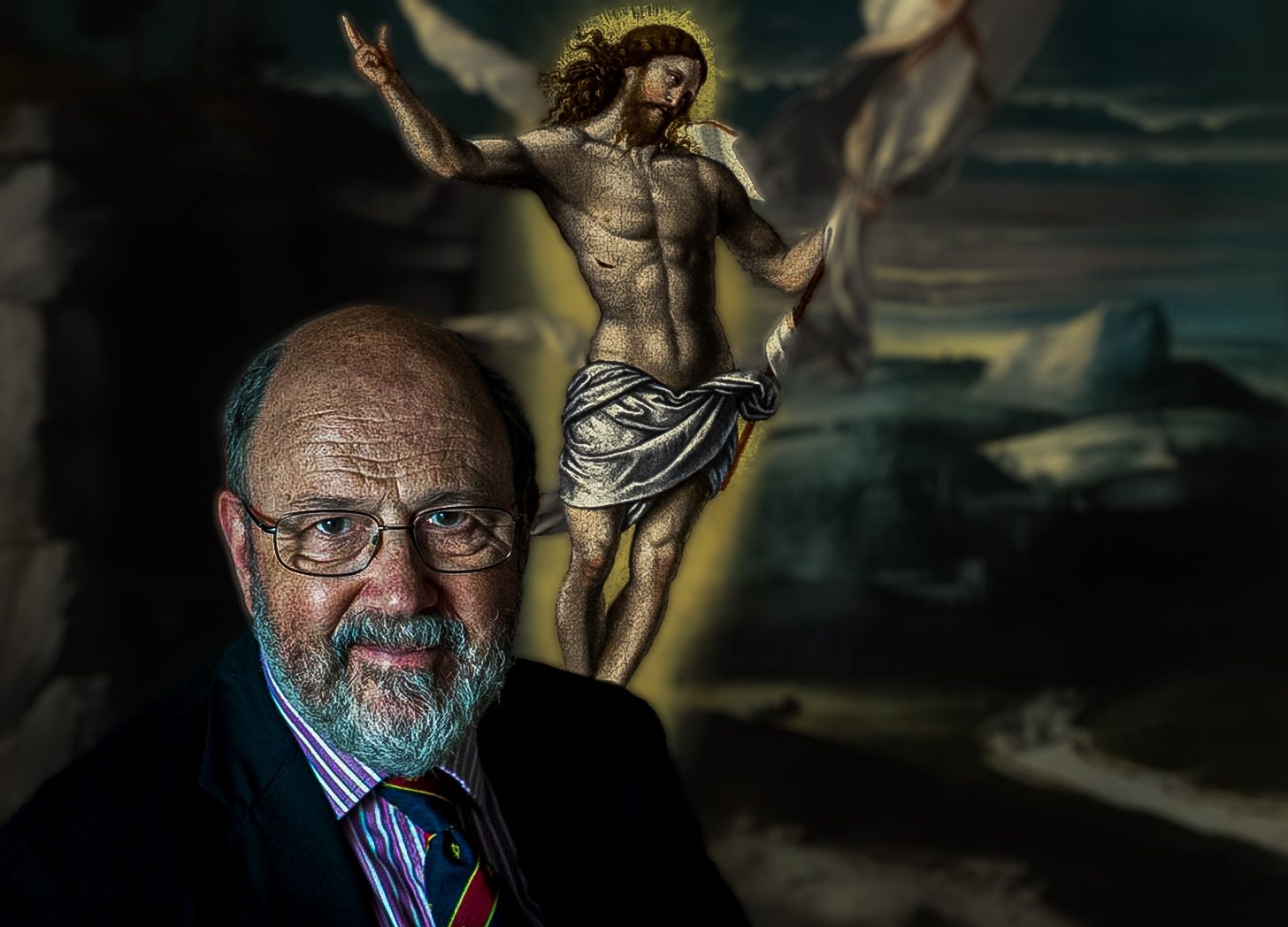
Reading N.T. Wright
My first encounter with N.T. Wright’s work was as a college senior in my Romans course. Since then, I’ve made it a goal to read one Wright book a year. Here’s a path to reading him well.
If you’ve spent any time around modern theology, you’ve run into N.T. Wright. He’s written more than eighty books. He’s a New Testament scholar, a former Anglican bishop, and one of the most influential Christian thinkers alive today.
He’s also easy to misunderstand. Some people think Wright is just about history. Everyone's heard him talk about the Kingdom, but a lot of folks aren’t sure what he means by it. Then of course his work on justification has generated significant debate, especially regarding Paul and covenant identity (I won’t be “piping” up about that in this article). The problem however isn’t that Wright is confusing. You just have to know what questions he is asking, understand his big idea, and then everything he writes starts to make sense.

Step 1: Start with the Big Idea
Here’s the key to Wright’s theology: The gospel is not about how individuals go to heaven when they die. The gospel is the announcement that Jesus is king and God is putting the whole world right.1
That’s it. Everything for Wright connects to this.

If you read him looking only for personal salvation language, you’ll miss what he’s doing. Wright is a “zoom-out” theologian, helping readers see the Bible’s story at its full scale.
Step 2: Understand What He’s Reacting Against
Wright’s work makes more sense if you know what he’s pushing back on. Since the revival era of the 1800s, much of Western Christianity reduced the gospel to this: Humans are sinners. Jesus died so you can go to heaven.
That became the entire message.

Wright isn’t denying that salvation is personal (an accusation that gets lobbed his way), he’s saying that view is too small. The New Testament, he argues, is about something bigger. God fulfilling his promises to Israel, Jesus defeating the powers of sin and death, God becoming king through the Messiah, and the beginning of new creation. For Wright, salvation isn’t rescue from the world but the renewal of it.
Step 3: The Three Themes That Unlock Wright
1. The Kingdom Is the Center
When Jesus talks about the Kingdom of God, Wright takes that seriously. The Kingdom means primarily three things: (1) Jesus is becoming king, (2) His rule is breaking into history, (3) the world is being set right.
2. The Resurrection Changes Everything
For Wright, the resurrection isn’t just proof that Jesus is divine (while it certainly is that), it’s the beginning of new creation.2 If Jesus is risen, then death doesn’t win, the future has already begun, and what we as Christians do now matters. This is why Wright frequently talks about justice, beauty, and mission. If God is renewing creation, the church should live like that renewal has already begun.
3. Justification Is About Identity
This is where the most confusion happens. When Wright talks about justification, he’s asking, how do you know who belongs to God’s people?
His answer is that justification is God’s declaration that someone is part of the covenant family through faith in Christ. They are people under the king’s reign; this includes both covenant membership and a forensic declaration.3 He’s not denying forgiveness or grace. He’s putting justification inside the larger story: God’s promises to Israel, the creation of a worldwide family, and the church as the people of the Messiah. If you read him expecting a purely individual framework, it can feel like he’s changing the doctrine of salvation. But when you zoom out with him, you see he’s expanding the context.
Step 4: Read Wright in the Right Order
One of the biggest mistakes people make with N. T. Wright is starting with his academic work. He writes at three different levels:
Popular (Simply Christian, Surprised by Hope)
Pastoral (How God Became King, The New Testament for Everyone series)
Academic (Jesus and the Victory of God, Paul and the Faithfulness of God)
If you start at the academic level, you’ll assume he’s dense and overly technical. If you start where he intends most readers to start, you’ll discover something different. His writing is clear, practical, and deeply hopeful. Here’s the path that helps his ideas build instead of overwhelm.
Level 1: Start Here (Best Entry Point)
Simply Christian
If you want Wright’s big-picture vision in one place, start here. This book answers a simple question:
What is Christianity actually about?
Instead of starting with doctrine, Wright starts with the human experience. Our longing for justice, desire for beauty, and that internal sense that something in the world is broken and fractured. From there, he walks through who Jesus is, what the cross and resurrection mean, what the church is for, and how Christians live in the world now.
Reading tip
Watch how often Wright connects faith to the real world through culture, justice, art, and relationships. That’s the heart behind his mind for theology.
Or: Surprised by Hope
If you want the core of Wright’s message in one area, read this. This book also focuses on one question:
What happens after we die and why does it matter now?
Wright challenges two common assumptions: that Christianity is about going to heaven forever and that the physical world doesn’t really matter. Instead, he argues that the Christian hope is resurrection—not escape. God’s aim is not and was not to abandon creation but to create it anew. Therefore, what Christians do now actually matters for the future God is creating. This is the book when read carefully many readers discover that Wright isn’t revising Christianity, but helping people recover the New Testament’s original hope.
Level 2: Core Wright
How God Became King
Once you understand Wright’s focus on the Kingdom and new creation, this book pulls everything together.
Why do the Gospels tell the story they do?
Wright’s argument is that many Christians read the Gospels like this; Jesus came to die for our sins and the rest is background. But that’s not the story the four Gospels present. They are historical narratives telling the story of Israel’s long-awaited king, God returning to rule His people, the defeat of evil and launch of new creation. Which means the Gospels aren’t just how we are introduced to the cross (while that is true) they are the heralds that God has become king through Jesus.
Reading tip
As you read, pay attention to how Wright connects Jesus’ life, teaching, and actions to the larger story of Israel.
Level 3: Advanced Wright
Jesus and the Victory of God
If you want to see Wright’s full case for what Jesus believed and what He was actually doing, this is the book. Here Wright does his extensive historical work on Jesus. He steps into the world of first-century Judaism and examines what Jesus thought his mission was. Wright’s argument is that Jesus wasn’t just teaching timeless spiritual truths. He believed Jesus was acting within Israel’s story bringing its long crisis to a climax. Here are three key elements you will find.
1. Jesus saw Himself as announcing the end of exile
Even though Israel was back in the land, Wright argues that spiritually and politically, the exile wasn’t really over.4 Jesus’ message of the Kingdom was a declaration that God was finally returning to put things right.
2. His actions were symbolic, not random
Healings, parables, table fellowship, even the cleansing of the temple, Wright shows how these were deliberate signs that God’s rule was breaking in.
3. The cross was the climax of His mission
For Wright, Jesus believed His death would be the moment when Israel’s story reached its turning point; where the powers of sin, judgment, and exile were dealt with once and for all.
This book helps you see that the Kingdom of God isn’t a vague spiritual idea that sounds better in an South African accent. It was the story Jesus believed He was living out and the one we participate in today.
Reading tip
Don’t try to track every historical argument, instead, read it asking one question in mind: How does this explain what Jesus thought He was doing?
A quick note
Wright’s most technical academic work is Paul and the Faithfulness of God, a massive, two-volume study of Paul’s theology. It’s brilliant but, unless you’re working at a graduate level, it’s not the best starting point.
The Path in One Line
Start with the vision and mission (Simply Christian or Surprised by Hope). Then understand the story of Jesus (How God Became King). And, if you want the deeper historical case (Jesus and the Victory of God).
That progression allows Wright’s big idea to come into focus; God became king through Jesus and new creation has already begun.
Step 5: Don’t Read Wright Like a Systematic Theologian
This is where many readers get frustrated. Wright isn’t writing a traditional systematic theology. He writes primarily as a historian of early Christianity. He certainly touches on systematic theology, but it’s not the focal point (nor is it fair to say he is strickly a New Testament scholar). He’s asking questions like: What did first-century Jews expect? What did Jesus actually claim? How would Paul’s words have sounded in their world?
If you read him through modern theological categories, it is possible you will miss the point. He’s trying to help you read the New Testament in its original story. However, if you stick with Wright (and I hope you will), here’s what changes: The gospel gets bigger. The resurrection gets more central. The church gets a mission. Christianity stops feeling like an escape plan and starts looking like what the New Testament actually describes: God becoming king. New creation beginning and the future breaking into the present.
He isn’t trying to make Christianity more complicated. He’s trying to restore its original scale.

For readers who want a structured introduction to the core framework of Christian theology, I also offer an online course, Theology Made Simple. It’s designed to help you understand how the major pieces of theology fit together without needing a seminary background.
Course details are available here
N. T. Wright, How God Became King (New York: HarperOne, 2012).
N. T. Wright, Surprised by Hope (New York: HarperOne, 2008).
N. T. Wright, Paul and the Faithfulness of God (Minneapolis: Fortress, 2013).
N. T. Wright, Jesus and the Victory of God (Minneapolis: Fortress Press, 1996).
Oh what a gift. I have been dying to start reading Wright. I’ve listened to him, read excerpts and benefited from his influence on so many. Gonna save this!
An excellent plan! I also like his Paul book.