

How to Read Jürgen Moltmann
Where to Start (and Where Not To)

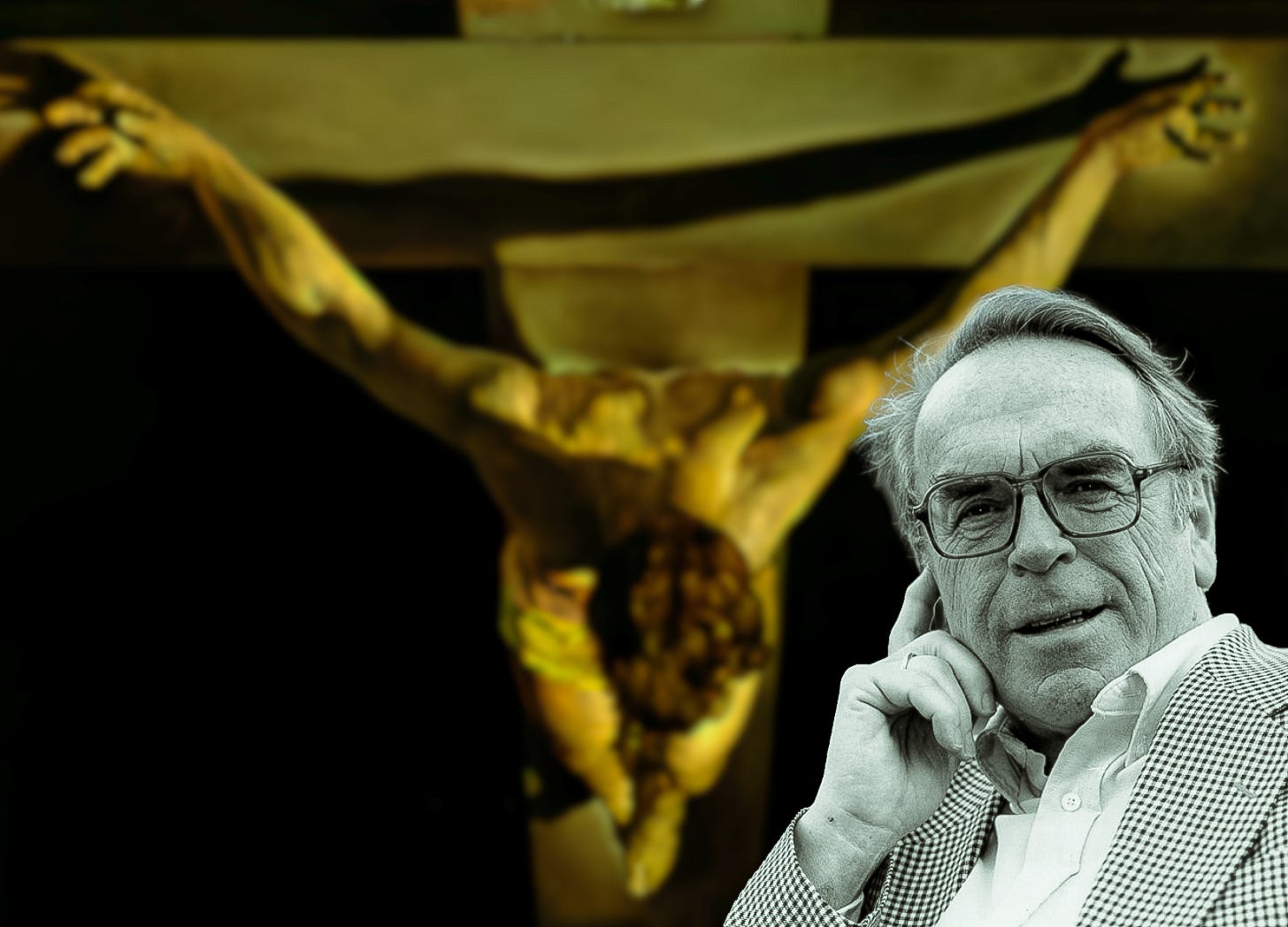
How to Read Jürgen Moltmann
Moltmann’s theology was forged in a British POW camp after WWII, where he wrestled with despair, guilt, and the question of whether hope was still possible after the devastation of Europe.1
His big idea? Christianity is all about hope.
Ironically, most people lose hope trying to read him.
Moltmann’s one of the most influential Protestant theologians of the late 20th century, particularly related to eschatology and political theology.2 His theology reshaped how we think about the future, the cross, and why Christianity isn’t just about waiting around for heaven. But his writing? Not exactly light reading by the pool. In this article, is a step-by-step guide to reading Jürgen Moltmann without getting lost in the complexity.
STEP 1: Don’t Start With Theology of Hope
If you are just getting into his work, do not start with Theology of Hope. Unless, of course, you enjoy dense German academic writing, long sentences, and well, the fact that he isn’t writing in a vacuum. He’s arguing with the biggest voices of modern thought: Hegel on the meaning of history, Marx on social transformation, Nietzsche on the death of God, and Ernst Bloch, whose massive work explored humanity’s longing for a better future.3 In Theology of Hope Moltmann is asking a question colossal in size:
If the modern world is searching for hope in politics, progress, or human potential, what does the resurrection of Jesus actually offer that those visions can’t?
Once you realize he’s writing theology and engaging the entire modern search for hope, the density crammed into 344 pages makes a whole lot of sense.
I made this mistake when I first graduated seminary. I thought to myself, “I have a theology masters, a graduate degree, I wrote a thesis no one will ever read. Why not dive into his most famous book, how hard can it be?” Turns out, very. But it’s not because Theology of Hope isn’t great (it really is), but it’s a lot if you’re not already familiar with his ideas and a working knowledge of the philosophers he is engaging in. However, once you understand his core ideas you find there’s a better path to take.
STEP 2: Get His Big Idea
Here is Moltmann’s big concept.
Christianity isn’t about escaping this world, rather, it’s God’s future breaking into the present. And that future? It’s good. So good that it redefines how we live right now.
Think like The Lion, the Witch, and the Wardrobe. When Aslan returns to Narnia, winter starts to thaw before the final battle is won. His coming signals that the old order of endless winter is breaking; even though the fight isn’t over yet. That’s Moltmann’s theology. Christianity isn’t about escaping to a better world later, it’s about God’s future breaking in now, bringing hope, renewal, and transformation before the final victory.

The resurrection of Jesus is like Aslan’s return: a sign that the new world has already begun.
Here are the three primary themes for Moltmann related to this.
1. The Future: Christianity moves forward
Most theology starts with the past—what God has done. Moltmann flips it. He says the real story of Christianity is about where we’re headed. We’re not just looking back at the cross; we’re looking ahead at resurrection, restoration, and God making all things new. Christianity then isn’t just about personal salvation, but a cosmic level renewal. Eschatology isn’t the end of the story, for Moltmann it is the story itself.
2. The Cross: God suffers with us
Moltmann wrote a book called The Crucified God, and if that title sounds intense, it’s because it is. His argument? The cross isn’t just about Jesus dying for sin, it’s about God choosing to suffer with the world.4 God enters into human pain, Jesus statement in John 10:18 takes on a whole new meaning, no one would take Jesus’ life, he would lay it down, to suffer for and with His people. For Moltmann, this means Christianity isn’t a quick escape from suffering, it is the faith that allows us to meet suffering head-on. If God suffers, then pain and injustice can’t be ignored, avoided, or forgotten; they’re seen and central to the story.
3. The Resurrection: The future starts now
If the cross is God stepping into suffering, the resurrection is proof that suffering doesn’t win. And here’s one of Moltmann’s biggest points: the resurrection isn’t just about Jesus coming back to life, it’s the beginning of a whole new creation. It’s not just proof that life continues; it’s proof that the future is breaking into the present. Through this perspective, the church isn’t a waiting room for heaven, but where we live out the coming kingdom now.
STEP 3: Read With a Plan
Alright, you’re ready to actually read him. But going in blind is a mistake. Moltmann layers his arguments like a theological version of Super Mario Brothers: The Lost Levels, here’s how to get started without getting lost.
Ready player one?
Level 1: Jesus Christ for Today’s World (Easy Mode)
If you read one Moltmann book to get your bearings, start here. This is Moltmann at his most accessible. It’s shorter, clearer, and written with the average (okay theologically minded average) reader in mind. This book gives you the framework for most of what he writes. As you read, three themes will emerge.
1. Jesus is the center of hope
For Moltmann, Christianity isn’t built around abstract ideas about God. It’s built around the living Christ; the one who died, rose, and is bringing the future of God into the present.
2. Salvation is bigger than individuals
Salvation isn’t just about getting your soul to heaven. It’s about the renewal of the world, relationships, creation, justice, and life itself.
3. The church lives from the future
The church doesn’t just remember what God did. It lives in light of what God is going to do.
As you read the book, keep asking one question: How does the resurrection change what Christians should expect from the future?
For Moltmann, this book presents the idea that the Christian faith is forward-looking. Hope is not optional. It’s the engine of the Christian life.
Level 2: Theology of Hope (Intermediate)
This is the book that made Moltmann famous. It’s also the one most people start with and then quietly abandon around page 40. The reason it feels difficult isn’t just the writing. It’s the shift in perspective Moltmann is asking you to make. When you first read Theology of Hope you experience cognitive reappraisal. Our brains run on mental frameworks called schemas, which are existing patterns for how we understand theology, God, suffering, hope, and so on. Moltmann isn’t just adding information (that would be one thing), rather he’s asking you to reorganize the framework itself.
Which is why if it feels hard to read the book even if the sentences make sense, it is like your brain is having to rewire the map, and not just add a new street. So, if you are reading Moltmann and feeling mental fatigue that is normal and probably showing you are truly engaging with his work.
Again, most theology starts with the past: creation, the cross, and what God has done. Moltmann starts with the future, that Christianity is defined by promise, not memory. The resurrection of Jesus isn’t just proof that the past event worked. It’s a preview of what God is going to do for the whole world. As you read through the book, notice a few things.
1. Eschatology isn’t the last chapter
This is the main storyline. For Moltmann, the future shapes everything; mission, ethics, worship, to how we face suffering.
2. Hope is not optimism
This isn’t positive thinking, or those cheesy motivational posters that were in your High School gym locker rooms. Christian hope is grounded in a real historical event; the resurrection, that guarantees the future belongs to God.
3. The church is a sign of the coming world
The church isn’t a waiting room for heaven. It’s meant to live now in ways that reflect the future God is bringing.
Reading Tip. Don’t try to track every philosopher he references. You don’t need to follow every academic thread. You have permission to not take all the side quests. Instead, keep asking: What future is Moltmann saying Christians should expect? If you hold onto that question, the book becomes much more manageable.
Level 3: The Crucified God (Boss Fight)
If Theology of Hope shows you where history is going, The Crucified God shows you where God meets us right now; in suffering. And this book on the surface can feel easier to read, but, Theology of Hope gives the framework to fully understand The Crucified God.
This is Moltmann’s most powerful work emotionally and theologically. Written after his experiences as a German soldier and POW, the book wrestles with a question that easy theology avoids: Where is God when the world is full of suffering?
For Moltmann God is not distant from suffering. God enters it. Here are the key ideas of the book:
1. The cross reveals the heart of God
The crucifixion is not just a transaction for sin. It shows that God chooses solidarity with the suffering, the abandoned, and the broken.
2. God suffers with the world
For Moltmann, the cross means God is not detached or indifferent. Divine love is willing to bear pain, loss, and even death.
3. Hope comes through suffering, not around it
Resurrection does not ignore suffering. It comes after it, through it, and because of it.
If you work in a ministry context, if you’ve sat with grief, injustice, or unanswered prayers, if you’ve ever wondered why hope feels fragile, this book will stretch your theology and deepen it.
Reading Tip. Keep this question in mind as you go: What does the cross tell me about the kind of God Christians believe in?
The Path in One Sentence(ish)
Start with Christ and the future (Jesus Christ for Today’s World). Then learn to see the future as the center of theology (Theology of Hope). Then wrestle with how that hope survives suffering (The Crucified God).
STEP 4: Don’t Go It Alone
Look, Moltmann isn’t a solo read. If you try to go through his work alone, you will hit a wall. Find a reading group, listen to podcasts, or grab a study guide. Even theologians Google his stuff—well at least pastors in their late 30s, who still occasionally listen to Creed. Moltmann’s not casual reading. His theology is weighty, but if you stick with it (I think it’s worth it), you’ll start seeing hope everywhere; in the Bible, in the world, and even in suffering.
Moltmann didn’t write theology for comfortable Christians. He wrote it for people who aren’t sure hope is still possible.

If you’re finding these guides helpful and want a clear framework for understanding theology as a whole (not just individual thinkers) I’ve created a course called Theology Made Simple. It’s designed to help you make sense of complex ideas about God without needing a seminary background.
Learn more about the course → Theology Made Simple Course
Jürgen Moltmann, A Broad Place: An Autobiography (Minneapolis: Fortress Press, 2008).
Richard Bauckham, The Theology of Jürgen Moltmann (Edinburgh: T&T Clark, 1995).
Jürgen Moltmann, Theology of Hope (Minneapolis: Fortress Press, 1993), Introduction.
Jürgen Moltmann, The Crucified God (Minneapolis: Fortress Press, 1993).
Love this! Love these guides you keep sharing. This one seems to align with my questions about the Kingdom breaking in and resurrection bring a demonstration of what Christ is all about. And I’ve been on board with dumping the ticket-pinching, hand-folding as we wait for rescue kind of Christianity. So, he sounds daunting but exciting!
Excellent introduction. I especially appreciated that you didn’t simply recommend Moltmann or dismiss him. You encouraged readers to engage him thoughtfully. That’s a refreshing approach. We grow as theologians by reading broadly while letting Scripture remain our final authority. Whether someone ultimately agrees or disagrees with Moltmann on various points, understanding his influence on modern theology is valuable, and your article provides a helpful roadmap for doing that. Thanks for making a complex theologian feel approachable without oversimplifying him.