
How Jesus Actually Died on the Cross: The Brutal Reality of Crucifixion

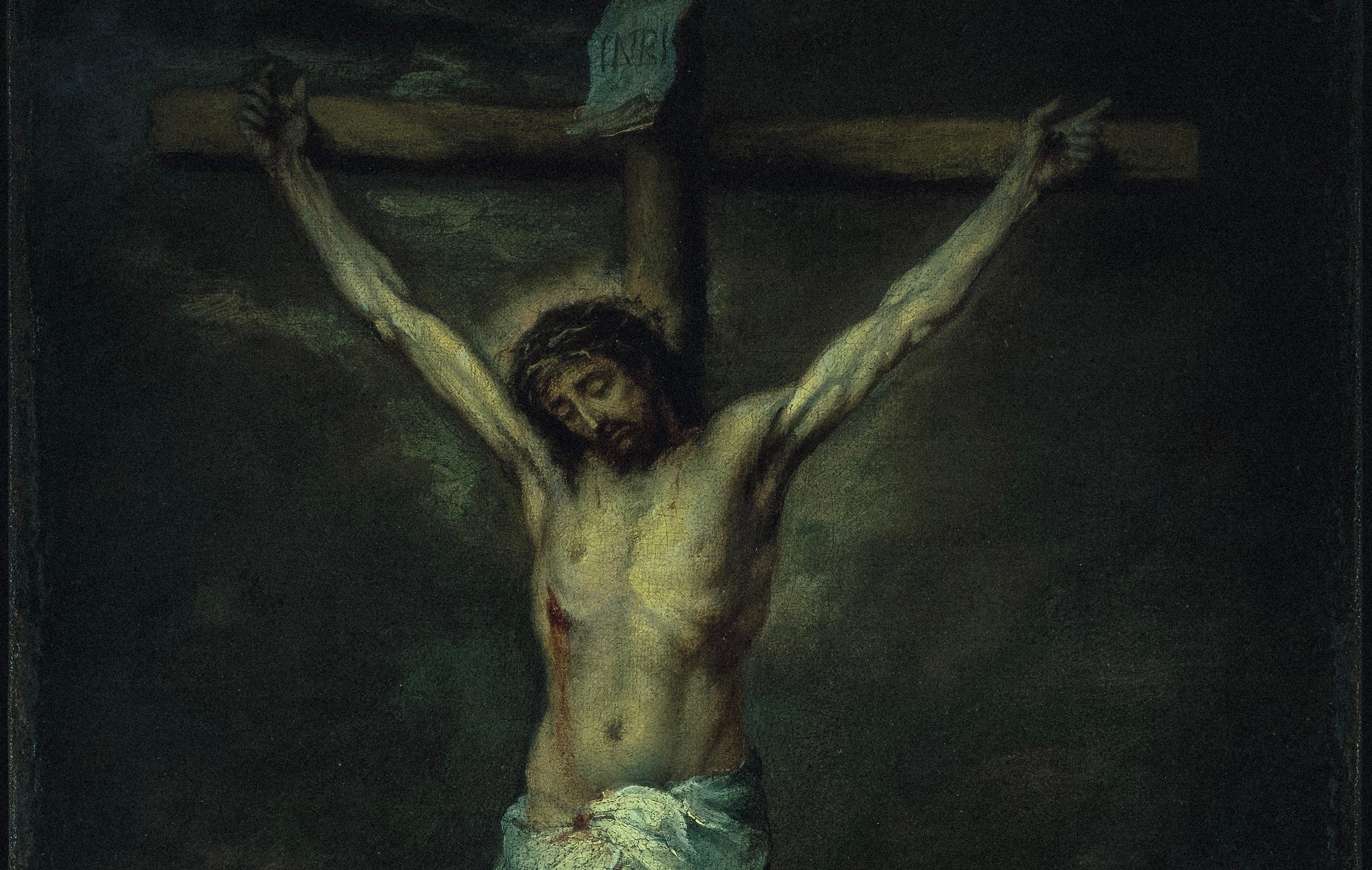
The Most Brutal Execution Ever Designed
Crucifixion was designed to be the most painful death a human being could experience.
The Romans did not invent it, but they perfected it. Their goal was to create a form of execution that produced the maximum amount of suffering while prolonging death as long as possible.
Victims typically died from exhaustion asphyxiation compounded by severe shock and blood loss.
Every breath required them to push their body upward against nails driven through their feet and wrists. When exhaustion finally made that impossible, the lungs filled with fluid and the victim slowly suffocated.
This is the death Jesus willingly endured. And it is far worse than most people imagine.
The Scourging Before the Cross
In 1986, the Journal of the American Medical Association published a landmark medical analysis titled “On the Physical Death of Jesus Christ,” which examined the physiological mechanics of Roman crucifixion.1
Jesus was first stripped naked, mocked, and then scourged. Scourging on its own was such a painful event that some people died from it before ever making it to the cross.
Jesus’ hands would have been chained above his head, exposing his back and legs to a Roman scourge called a flagrum, a whip with leather thongs embed with metal or bone, this would tear deep into the skin and muscle of the victim.
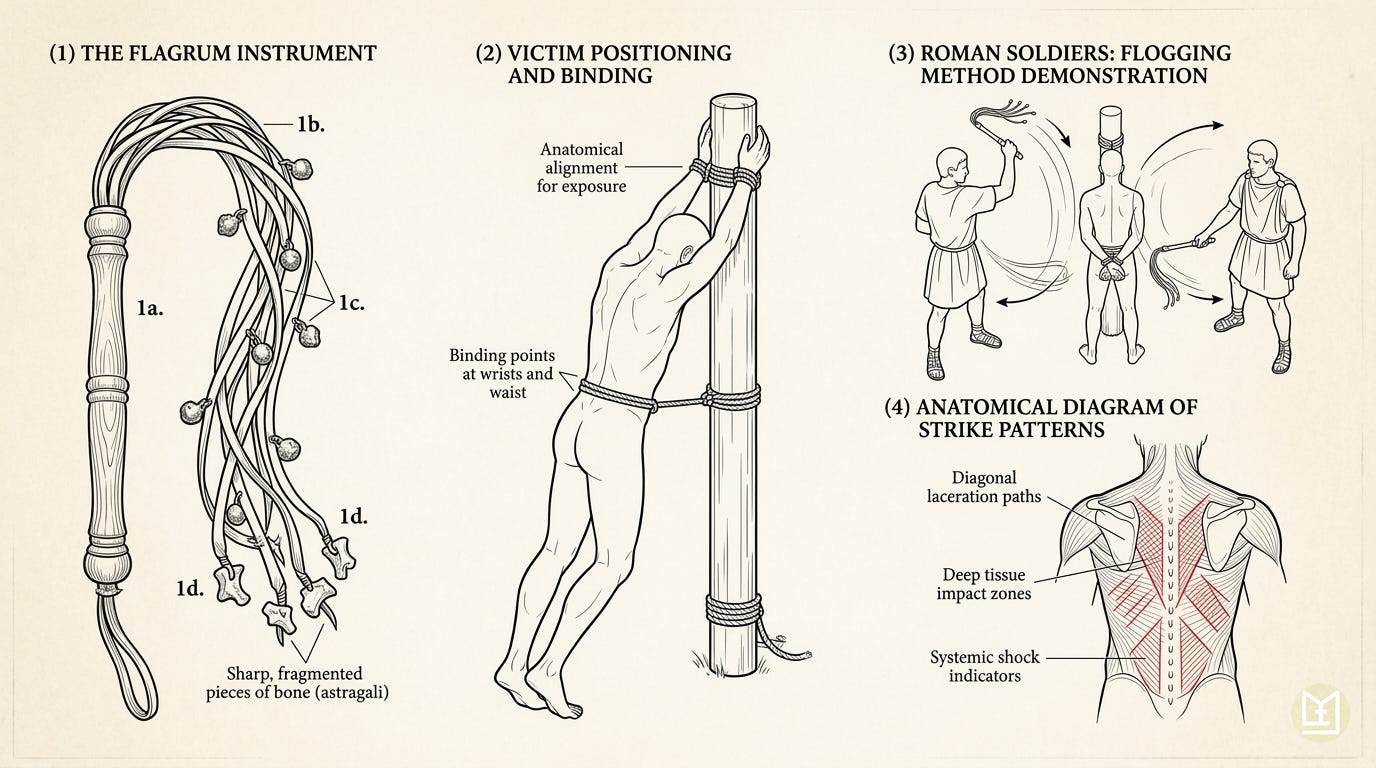
The barbs would go down to the nerves, the damage could be so deep that muscle and tissue were torn open, leaving the victim in severe shock even before reaching the cross.
With His back bloodied and hanging in strips of ribbons, Jesus carried the heavy rough cross-bar weighing well over 100 pounds on his back to the hill where He would die.
Physically devastated from a sleepless night, miles of walking, and the severe beating, Jesus collapsed under the weight of the cross. Jesus laid covered in the very dirt He created, not having the strength to get up on his own.
Upon arriving at his place of crucifixion, they would have spit on him, mocked him; in front of all his friends and his family.
The Moment of Crucifixion
The carpenter who had hammered many nails into wood, now had nails driven through His wrists and feet. 5 to 7-inch rough spikes beaten into His body, likely piercing major nerves and causing intense pain. As Jesus was nailed to a cross, His body would have twitched involuntarily; withered in agony.
The death of crucifixion would likely come from Jesus’ lungs being filled with fluid. To breathe He had to lift up His body, requiring that He placed His full weight on the spikes in his feet. The spikes would tear through the nerves between the metatarsal bones. By flexing His elbows and shoulders, He lifted Himself upward, pushing His torn and stripped back against the rough splintered wood of the cross. The twisting of elbows caused rotation of His wrist and the turning of His hands, produced a fiery pain along His nerves.
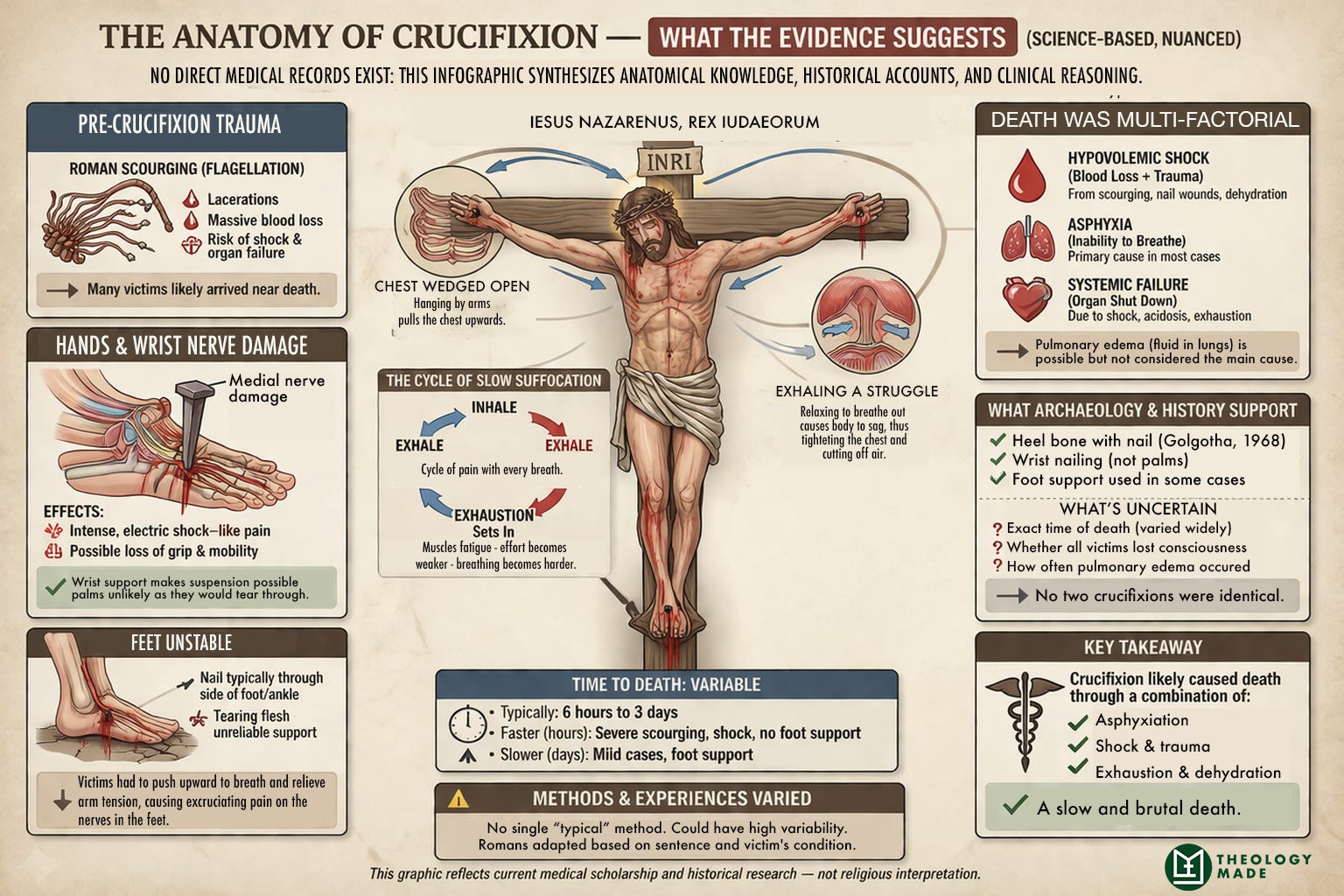
Every time He breathed this is what He went through. Eventually the victim could no longer push upward to breathe. When exhaustion finally made that impossible, the body sagged downward and breathing became progressively more difficult until suffocation likely occurred.
This explains why the Gospel of John records the soldiers breaking the legs of the other victims. Without the ability to push upward, death would come quickly.
The Final Hours on the Cross
Jesus not only lived through all this, but spoke lucidly and clearly with enough volume for those to hear. These short utterances would have been difficult and painful to utter. Jesus used His final moments to declare his victory over sin.
He would have hung on the cross for around 6 hours.
It was not just physical pain that Jesus felt on the cross, but also emotional and spiritual pain. On the cross, Jesus took upon Himself the judgment that sin deserved. As the sky turned black like a bruised lung gasping, Jesus bore the weight and gravity of human sin. Hanging from the wooden tree, Jesus took every sin we have committed and every sin we will ever commit and carried it on His bruised and tattered back so we could be free.
The Meaning of the Cross
Jesus bore one of the most excruciating deaths the world has ever known. But He was not a helpless victim. It is tempting to look upon the crucified Christ and want to plug our ears, we don’t want to hear this; it’s too intense, too sad, it’s just too much.
But Jesus was not caught in the wrong place on the wrong day.
He was not unprepared—nor shocked.
No, Jesus clawed his way to Calvary. Nothing would stop the Lion of Judah from climbing that tree to experience an excruciating death, knowing He was setting His brothers and sisters free.
Nothing would keep the Son of Man from dying for His family. In the book of John, Jesus says, No one takes my life, I lay it down, and I will rise in victory.
Jesus now looks at us and says, you were worth every drop of pain. You were worth every second of agony.
You... Were... Worth... It…
The cross is not only a statement of the ugliness of sin and its seriousness before a holy Judge. But the proclamation of God’s unending love for His people. At the cross Jesus was saying, I love you, you were worth suffering for, I want you for eternity.
For our sake he made him to be sin who knew no sin, so that in him we might become the righteousness of God.2
Jesus is not looking for your pity over the immense pain of his death. The Son of Man did not die to be pitied, He died to set captives free.

If you found this article helpful, you might also like:
William D. Edwards, William J. Gabel, and Floyd E. Hosmer, “On the Physical Death of Jesus Christ,” Journal of the American Medical Association 255, no. 11 (March 21, 1986).
2 Corinthians 5:21