
Beyond the Three-Leaf Clover: The Harmony of the Triune God

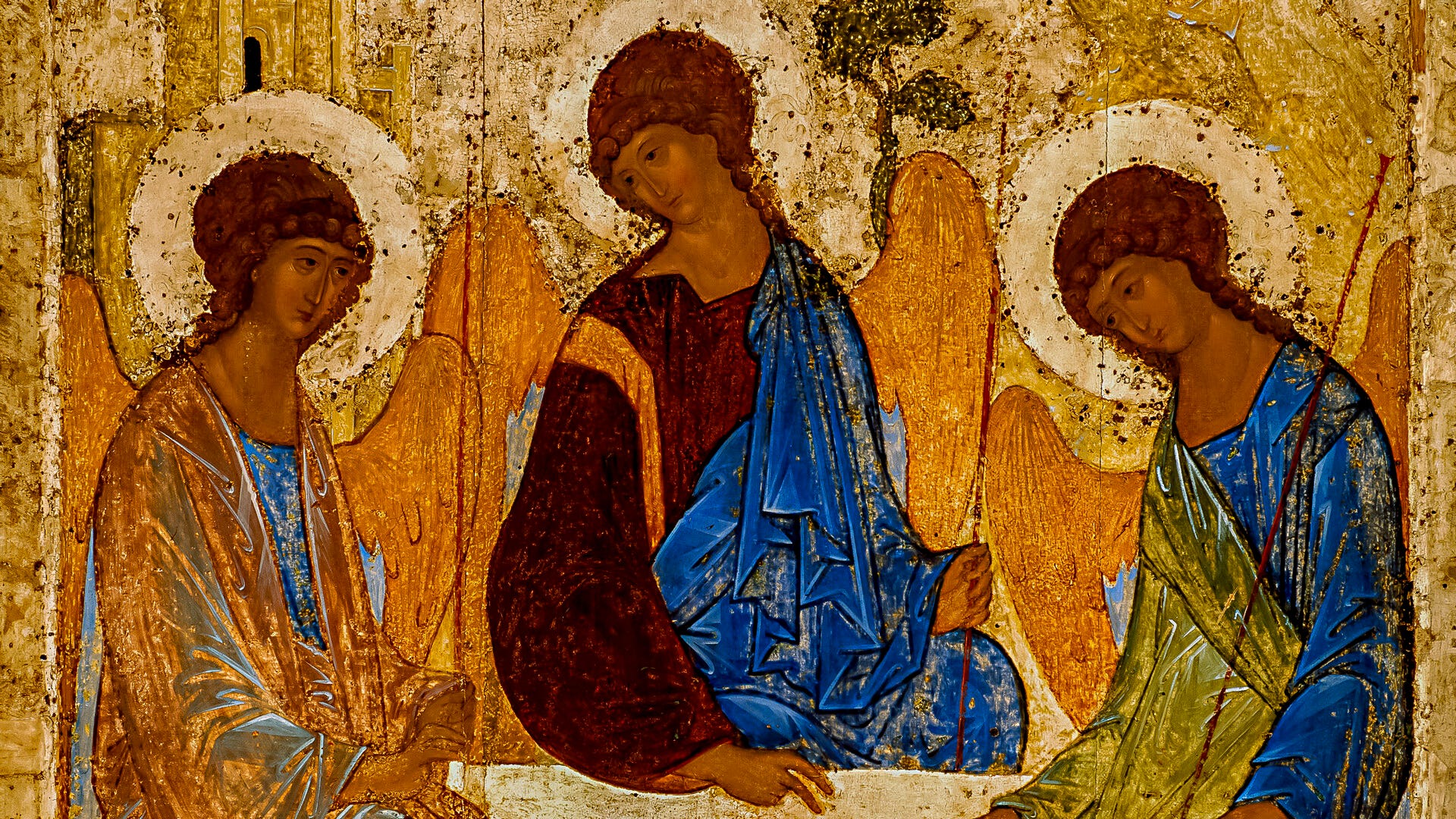
What comes to your mind when you hear the word Trinity? Is it confusing? A sense of mystery? Or maybe something you wish you knew more about? The Trinity is the lifeblood of Christianity, everything flows from the Trinity. Yet, many Christians don’t fully understand or realize all that the Trinity is. Let’s begin with a core statement defining the Trinity in one sentence.
God is one Being in three Persons—Father, Son, and Spirit—each fully God, co-equal, and co-eternal.
This means within the Trinity there are not three gods nor is there one person with three masks. The Father is not the Son; the Son is not the Spirit; the Spirit is not the Father and yet God is one. In the core statement are three claims: (1) one being, (2) three persons, (3) equal and eternal. Each claim can be supported through biblical anchors. When you are in a boat and you drop an anchor, you may sway, you may be rocked by the waves and wind but you won’t drift away. These three anchors are the core of the Trinity.
The first anchor is one being.
This can be supported from Deuteronomy 6:4 and Genesis 1:26. In Deuteronomy we are told, “Hear, O Israel: The Lord our God, the Lord is one.” This verse is known as the Shema (שְׁמַע), a foundational prayer in both Judaism and Christianity. Notice the singularity, the Lord is our God, and he is one. In the Old Testament the Trinity is presented to us in mystery waiting for the full revelation to come when Jesus enters into our world. It is not that the Trinity isn’t there, rather it is that the Trinity is revealed in hiddenness1. This presence is shown in places like Genesis 1:26, then God said, “Let us make man in our image.” Here the Trinity is united as one, together in their work2. This is our first anchor, God is one being.
The second anchor is three persons.
This can be found in both Matthew 28:19 and 2nd Corinthians 13:14. In Matthew it says, “Go, therefore, and make disciples of all nations, baptizing them in the name of the Father and of the Son and of the Holy Spirit,” This is also called the Great Commission. Notice Jesus doesn’t say, “baptize them by the Father, Son, and Spirit,” but He says ‘in’ meaning into the single name they share, baptism doesn’t place someone under a pastor, a prophet, or a vague force, but into God himself.
The third anchor is equal and eternal.
This can be found in John 1:1, Colossians 2:9, and Acts 5:3-4. In John 1:1 it says, “In the beginning was the Word, and the Word was with God, and the Word was God.” The word is personifying Jesus. John intentionally parallels the opening of Genesis when the world is created with, in the beginning. In Colossians 2:9, we are told, “For the entire fullness of God’s nature dwells bodily in Christ.” Not part of his nature, but that Christ is fully God. In Acts 5:3-4. “Peter asked, “why has Satan filled your heart to lie to the Holy Spirit...You have not lied to man but to God.” Peter explicitly equates lying to the Holy Spirit with lying to God. We can identify that our third anchor shows all three members are equal and all three members are eternal. For if all three members are eternal, then all three members have to be equal. For how could they have been eternal if they’re not equal? That would indicate one created the other.
These are our anchors for the Trinity, we may sway when waves come, but when we maintain these we won’t drift unto the rocks of heresy.
Trinity and Doctrine
In the Christian Faith there are categories for grouping different aspects of theology, often called doctrines. As an example, you have the doctrine of Christ, the doctrine of the Church, the doctrine of salvation, among many others. The Trinity falls under the doctrine of God. It is the central aspect of the doctrine of God, because it is the foundation for everything else. The Trinity answers the most profound question we can ask: What kind of God exists? The Trinity shows us that God is not a solitary power but shared love, a perfect relationship from all eternity, actively working together for the good of the world They created.
Before we think about how to define and understand salvation, the Bible, or other aspects of the faith, we have to uncover: who is this God we’re talking about? In the Trinity we find that answer.
While placed in the doctrine of God, the Trinity interlocks with both Christology (doctrine of Christ) and Pneumatology (doctrine of the Holy Spirit). The doctrine of Christ only makes sense if Jesus is truly God and truly man. At the baptism of Jesus all three persons appear: The Father speaks, the Son is baptized, and the Spirit descends. This is the incarnation, the moment the invisible God became a visible human being. This is when the Author of the story decided to write Himself into the book as a character so He could experience the world He created and save the people in it. The incarnation reveals the Trinity entering into history, what was hidden in mystery in the Old Testament, becomes more fully revealed in the act of Jesus entering our world.
Then the doctrine of the Holy Spirit. The Holy Spirit isn’t an impersonal force, but the third person of the Trinity, He applies the work of Christ, reveals the Father, and empowers believers, the Spirit is the one who makes all of this real to us.
Salvation is the work of the Trinity from beginning to end. The Father plans, the Son accomplishes, the Spirit applies; and this activity is not a transaction, but a participation in the life of God himself. When salvation is seen through the lens of the Trinity, it is not God handing you a golden ticket to heaven; it is the Father inviting you into His family through the Son, by the Spirit.
Every time you pray, you’re standing inside the life of the Trinity.
Within the Trinity there is a difference between the being of the Trinity and the person(s) of the Trinity. The being answers what the Trinity is, He is one divine essence. The Person(s) answers who the Trinity is, Father, Son, and Spirit. We use the word “person” not because it perfectly describes the mystery, but, “in order not to remain silent.3” Each member shares the same divine nature, but carry distinct roles in the work of salvation. For all eternity they have one essence, but a distinct activity they do in fulfilling the mission. The Father sends, the Son is sent, the Spirit proceeds.
Trinity and Biblical Theology
Let’s look at the Trinity through the story of Scripture. In creation we immediately find plural language, Genesis 1:26, “let us make man in our image.”
In Hebrew the word image is tselem (צֶלֶם). Throughout the Old Testament this word is used for statues, idols, and carved images. As an image they were meant to be a representation that made an unseen reality visible. When the Trinity says, let us make man in our image, they are saying of all that We have created, these are the ones that will represent us in this new world. The word tselem often meant a royal representative who held the authority of the one who sent them. And it’s no accident a few verses later, we find, “and let them have dominion.” Humans are God’s vice-regents. Before this is taken too far, it doesn’t imply that humans are mini-gods. In Hebrew tselem is not used for a perfect copy. It is closer to a reflection or shadow, in Psalm 39:6 we find, “surely a man walks as a shadow (tselem).” Yes, the image is real, but it is derived from something else and points beyond itself. We reflect God, but are not God. Humanity bears God’s image because we are made by a relational God; and we are created from community for community.
The Trinity reveals God’s heart before creation. God didn’t start loving when humans appeared; He had always been love. The Trinity was and is a perfect community from all eternity. In the fall sin breaks the harmony between humanity and the triune God. There is a fracture, a crack, and out of that crack the seed of a promise. Which leads to redemption. Redemption is the work of the whole Trinity. The Father sends, the Son takes on flesh, dies, and rises, and the Spirit applies the Son’s work to believers. The cross was the moment when the Trinity’s love entered human suffering. Revelation 21-22 ends with the Trinity dwelling among his people forever, restoration. From Genesis to Revelation, we find the story is powered by the same pattern, over, and over again. From the Father, through the Son, by the Spirit.
The theology of the Trinity is meant to be held humbly. Sanders notes, “The Trinity is a revealed mystery in the biblical sense of the word mystery… A mystery without peers.4”
The Heresy Check
Now that we understand the core idea and where the Trinity fits, we need a way to visualize it, not to solve the mystery, but to see it clearly. This is where a good analogy comes in, however an analogy related to God and theology at large is always a bridge, not a blueprint. It is a way to connect human imagination to a divine reality, but it can never fully hold the infinite glory of God. Good analogies don’t shrink God; rather they help our minds stretch toward Him. As helpful as a good analogy is, a bad one can be just as destructive. Here are a few examples you may be familiar with.
The Trinity is like water (liquid, ice, vapor). This is the ancient heresy Modalism, that says God is an actor who plays three different characters, but not at the same time, like a divine Daniel-Day Lewis.
The Trinity is like the sun (star, light, heat). This is the ancient heresy of Subordinationism, that the Spirit is less than the Son who is less than the Father.
Then perhaps the most common analogy, the three-leaf clover. This is the ancient heresy Partialism where each person is ⅓ of God.
Most poor analogies of the Trinity make God sound like a clever shape-shifter or a divine committee where they always give 15 minutes back, but neither direction is accurate.
